Feelings during playtime
2–3 añosFamily ConnectionMateriales: Whatever toys you are already playing with
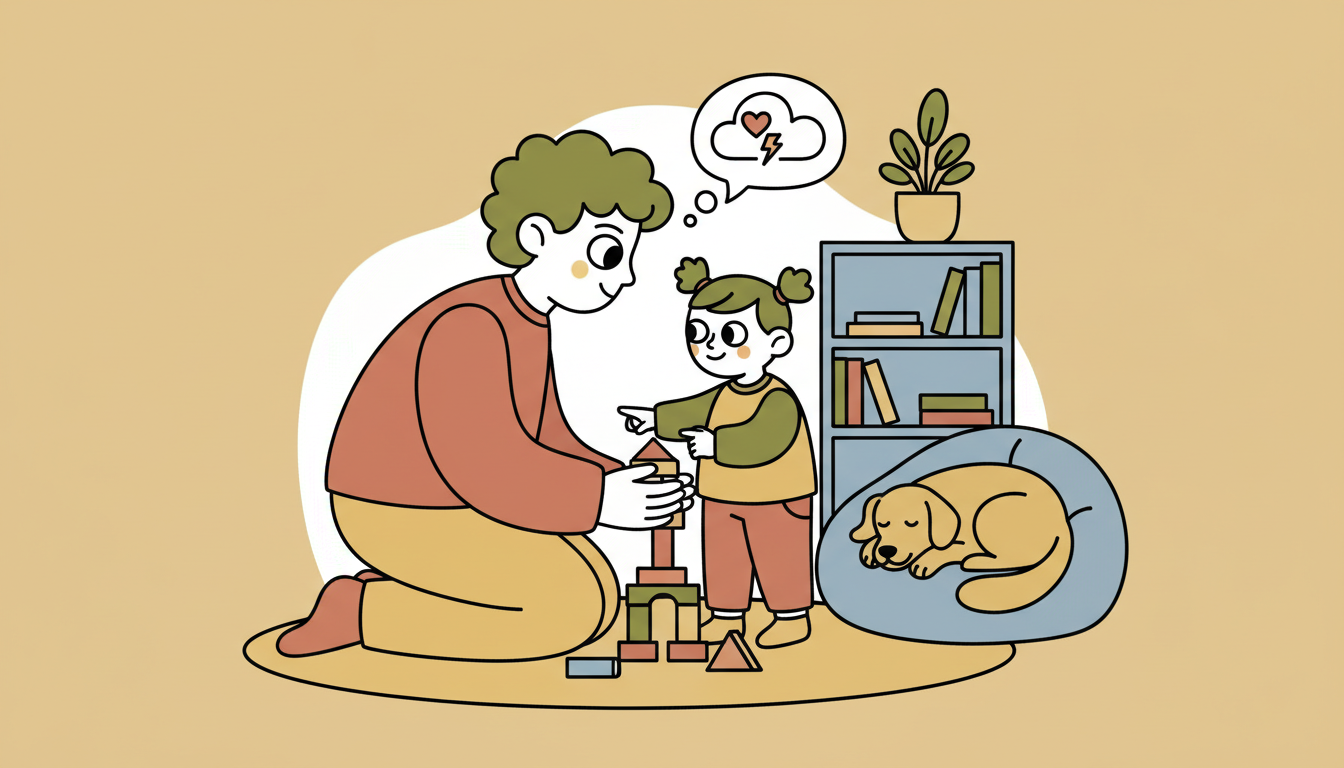
As you play together, narrate the feelings you observe. When your child laughs, say 'You are so happy playing with the blocks.' If they get frustrated, say 'You feel frustrated when the tower falls down. That is hard.' Naming feelings in the moment helps your child connect emotions to experiences.
Parte del viaje de desarrollo de Steadily — personalizado para tu peque.
Cómo hacer esta actividad
As you play together, narrate the feelings you observe. When your child laughs, say 'You are so happy playing with the blocks.' If they get frustrated, say 'You feel frustrated when the tower falls down. That is hard.' Naming feelings in the moment helps your child connect emotions to experiences.
Por qué funciona
Validating children's empathetic and emotional responses in real time builds emotional intelligence. When parents show empathy to their child while teaching about emotions, children develop the safe foundation needed to recognize emotions in themselves and others (Bhansali, B., 2023). Children with empathetic parents show significantly higher social competence (Liu, S., Wang, L., Zhang, L., & Tian, L., 2020).
Consejos para padres
Notice and name both positive and challenging emotions. All feelings are valid.
Use simple, clear words. Repeat the same emotion words across different situations so your child learns the patterns.
Materiales necesarios
Whatever toys you are already playing with
Métodos de aprendizaje
Symbolic and Pretend PlaySongs, Stories, and RhymesSocial Learning Through Peers

¿Te encantó esta actividad? Deja que nosotros planifiquemos por ti.
Steadily personaliza cada actividad para tu hijo/a —sus intereses, su etapa, los rasgos que está desarrollando— para que la hora de jugar sea más divertida y cada momento cuente.
Descubre cómo funciona Steadily →