Calm voice practice
4–5 añosFamily ConnectionNo se necesitan materiales
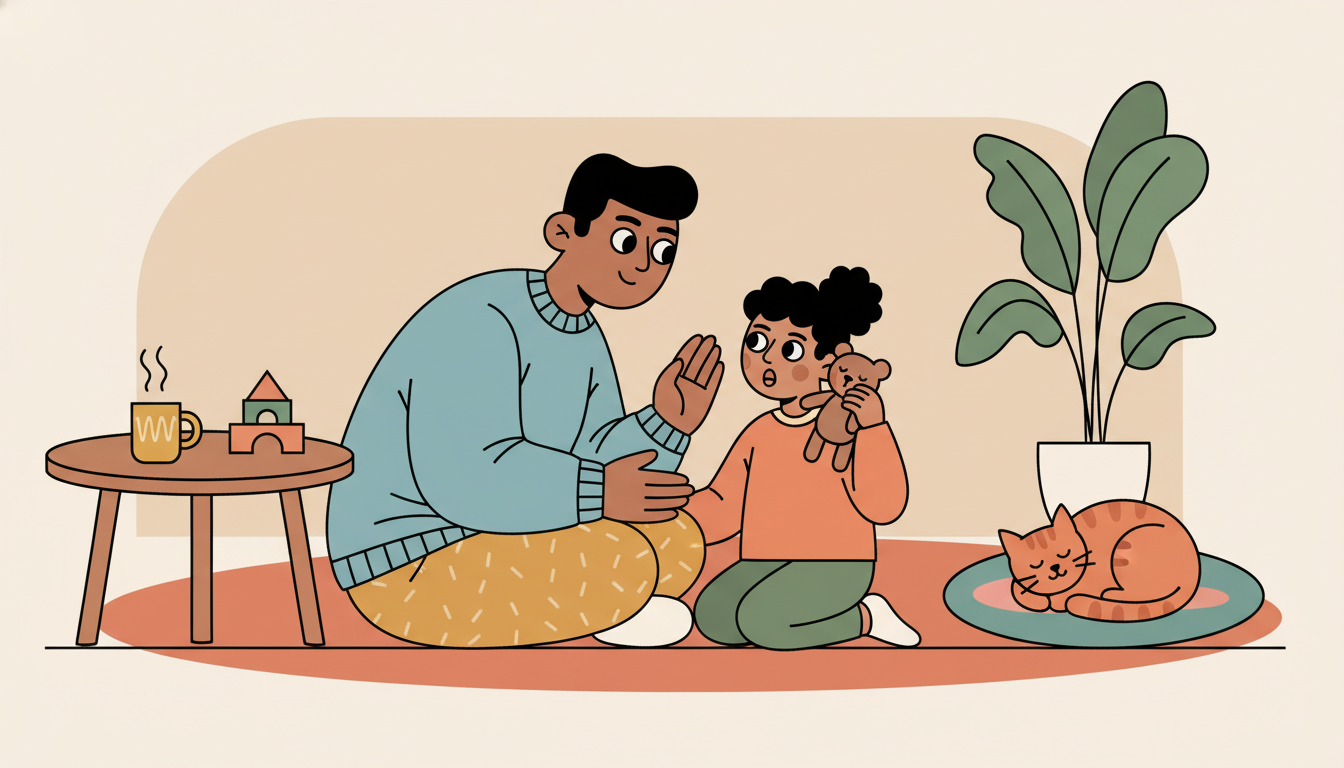
When your child gets upset during a disagreement, model and teach using a calm voice to express feelings. You might say your own feelings in a calm way first, then coach your child to try the same. Praise any effort to use words instead of yelling or physical responses. If needed, take a brief calm-down break before continuing the conversation about the conflict.
Parte del viaje de desarrollo de Steadily — personalizado para tu peque.
Cómo hacer esta actividad
When your child gets upset during a disagreement, model and teach using a calm voice to express feelings. You might say your own feelings in a calm way first, then coach your child to try the same. Praise any effort to use words instead of yelling or physical responses. If needed, take a brief calm-down break before continuing the conversation about the conflict.
Por qué funciona
Children who learn to calmly discuss disagreements show 30% better emotional regulation and relationship maintenance throughout development (Shantz, 1987). Staying regulated during your child's dysregulation models the exact skill you want them to develop. At this age, children can understand explicit teaching about emotional expression and have the language capacity to express frustration with words when coached.
Consejos para padres
Your own calm tone matters more than what you say. Children learn by watching you.
Keep your coaching brief. A simple reminder like calm words helps is often enough.
Recognize that learning this skill takes time and many practice opportunities.
Materiales necesarios
None
Métodos de aprendizaje
Cooperative LearningMetacognitive StrategiesStructured Academic Learning

¿Te encantó esta actividad? Deja que nosotros planifiquemos por ti.
Steadily personaliza cada actividad para tu hijo/a —sus intereses, su etapa, los rasgos que está desarrollando— para que la hora de jugar sea más divertida y cada momento cuente.
Descubre cómo funciona Steadily →