Body feelings map
4–5 añosEmotional WellbeingMateriales: Paper
Crayons or markers
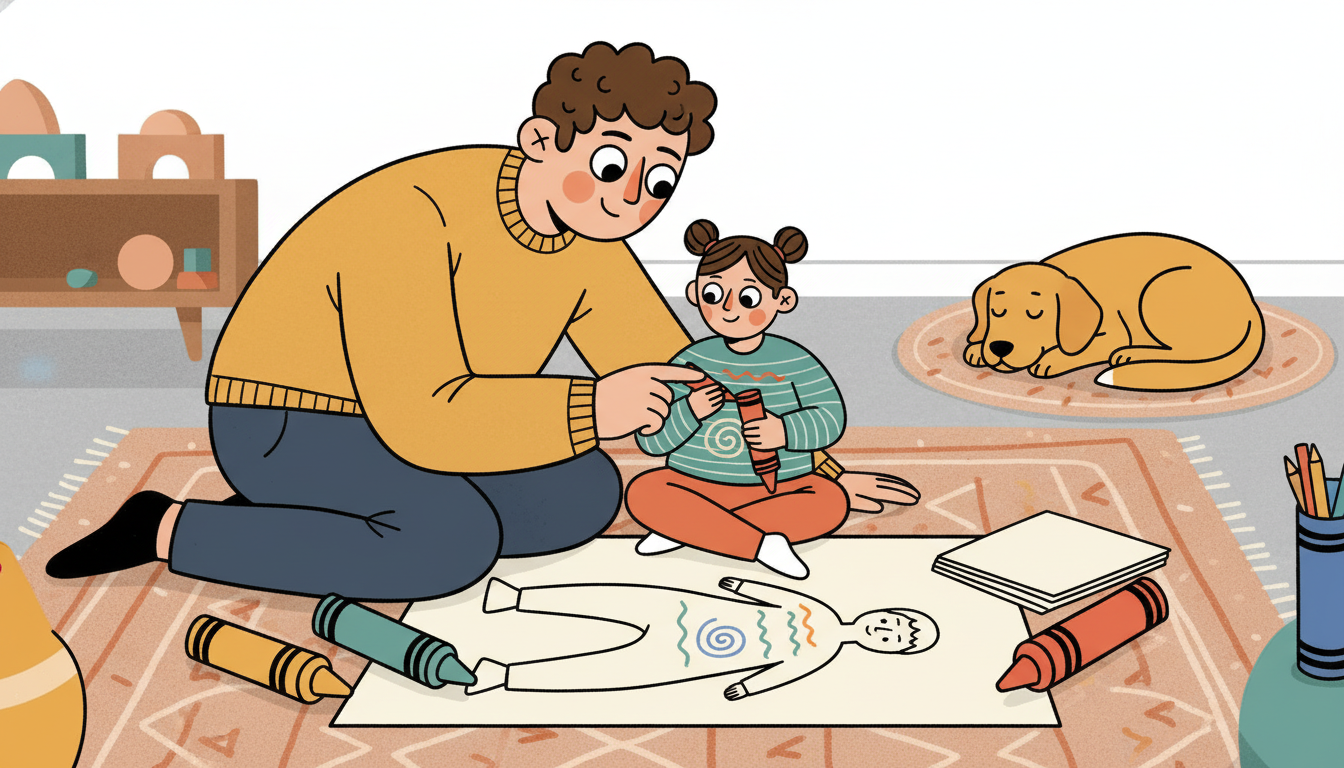
Draw an outline of a body together and talk about where different emotions show up physically. Discuss how anger might feel hot in the chest, worry might feel like butterflies in the stomach, or happiness might feel light. Let your child color or mark where they feel different emotions. This helps them recognize emotions through body signals before feelings become overwhelming.
Parte del viaje de desarrollo de Steadily — personalizado para tu peque.
Cómo hacer esta actividad
Draw an outline of a body together and talk about where different emotions show up physically. Discuss how anger might feel hot in the chest, worry might feel like butterflies in the stomach, or happiness might feel light. Let your child color or mark where they feel different emotions. This helps them recognize emotions through body signals before feelings become overwhelming.
Por qué funciona
Connecting emotions to physical sensations builds the self-awareness component of emotional intelligence. This activity makes abstract emotional experiences concrete, which aligns with children's cognitive ability to understand concrete situations at this age. Children with higher emotional intelligence experience significantly better mental health and relationship satisfaction throughout life (Bar-On, R., 2006). Teaching children to recognize early physical signs of emotions gives them more time to use regulation strategies before emotions escalate. This early awareness is foundational for the emotional regulation skills that contribute to lifelong emotional intelligence and well-being.
Consejos para padres
Share where you feel emotions in your own body. This normalizes the physical experience of emotions.
Revisit this map when your child experiences strong emotions. Ask where they feel it in their body.
Keep the body outline simple. A basic stick figure or oval works perfectly for this activity.
Materiales necesarios
Paper
Crayons or markers
Métodos de aprendizaje
Metacognitive StrategiesCooperative LearningStructured Academic Learning

¿Te encantó esta actividad? Deja que nosotros planifiquemos por ti.
Steadily personaliza cada actividad para tu hijo/a —sus intereses, su etapa, los rasgos que está desarrollando— para que la hora de jugar sea más divertida y cada momento cuente.
Descubre cómo funciona Steadily →