Balancing challenge
2–3 añosEmotional WellbeingMateriales: A thick book, small step stool, or masking tape for a floor line
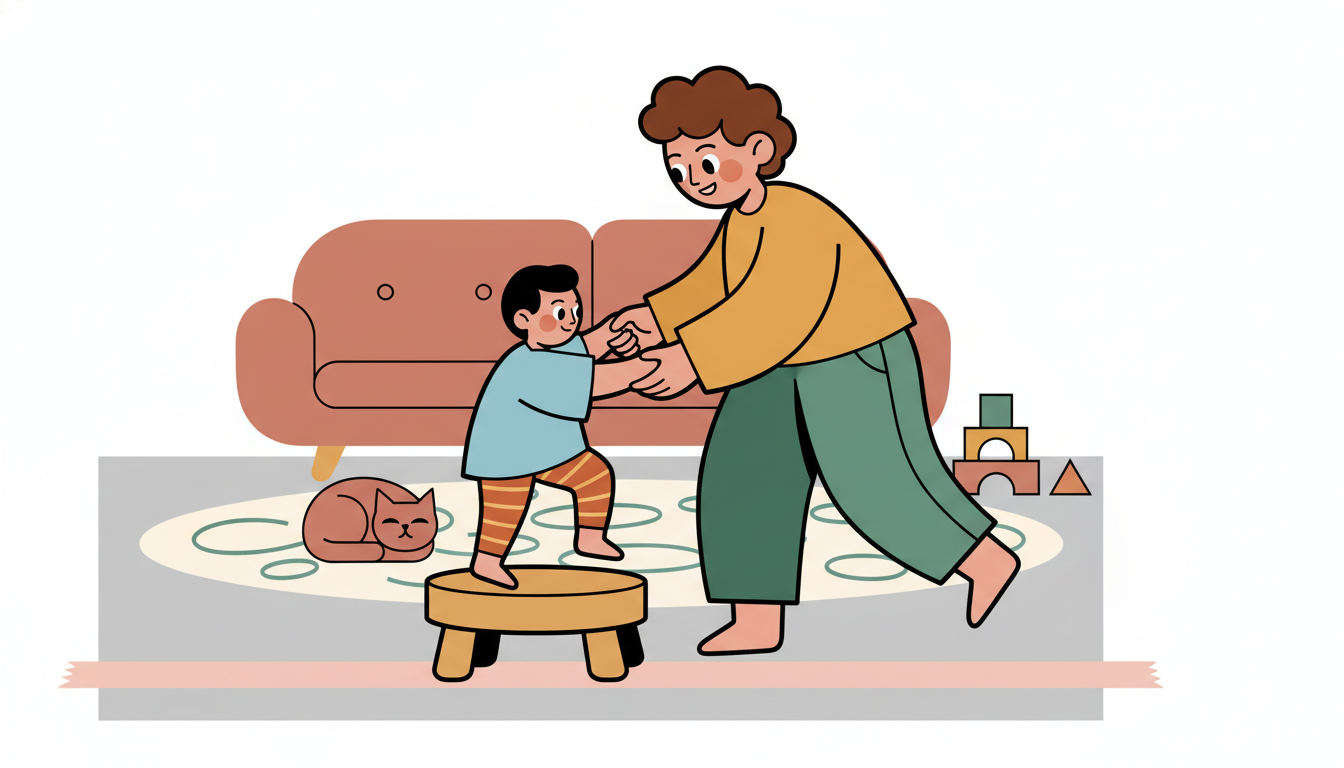
Create a simple balance challenge using a low, stable surface like a thick book or a small step stool. Hold your child's hand and let them practice stepping up and down. You can also place a piece of tape on the floor and practice walking along it. These physical challenges naturally involve wobbling and trying again, which teaches persistence through the body. The success of maintaining balance or getting back up builds confidence that effort leads to success.
Parte del viaje de desarrollo de Steadily — personalizado para tu peque.
Cómo hacer esta actividad
Create a simple balance challenge using a low, stable surface like a thick book or a small step stool. Hold your child's hand and let them practice stepping up and down. You can also place a piece of tape on the floor and practice walking along it. These physical challenges naturally involve wobbling and trying again, which teaches persistence through the body. The success of maintaining balance or getting back up builds confidence that effort leads to success.
Por qué funciona
Physical challenges engage your child's developing gross motor skills while building resilience through natural trial and error. The neurobiology of stress and development shows that manageable physical challenges help children develop healthy stress response systems (Gunnar & Quevedo, 2007). Research confirms that children who experience supported frustration during age-appropriate challenges at age two to three show better stress management in later childhood. Your supportive presence during physical challenges teaches your child that they can handle difficult things with help nearby.
Consejos para padres
Stay close and offer a hand for safety, but let your child do the work of balancing. This builds both skill and confidence.
When your child wobbles or steps off, say, 'Oops, let's try again,' in a calm, encouraging voice. Your tone teaches them that setbacks are normal.
Make it playful. Count steps together or pretend you're walking on a bridge. Play makes persistence easier.
Materiales necesarios
A thick book, small step stool, or masking tape for a floor line
Métodos de aprendizaje
Interactive Play-Based LearningSymbolic and Pretend PlaySocial Learning Through Peers

¿Te encantó esta actividad? Deja que nosotros planifiquemos por ti.
Steadily personaliza cada actividad para tu hijo/a —sus intereses, su etapa, los rasgos que está desarrollando— para que la hora de jugar sea más divertida y cada momento cuente.
Descubre cómo funciona Steadily →