What helps you feel better
3–4 añosEmotional WellbeingNo se necesitan materiales
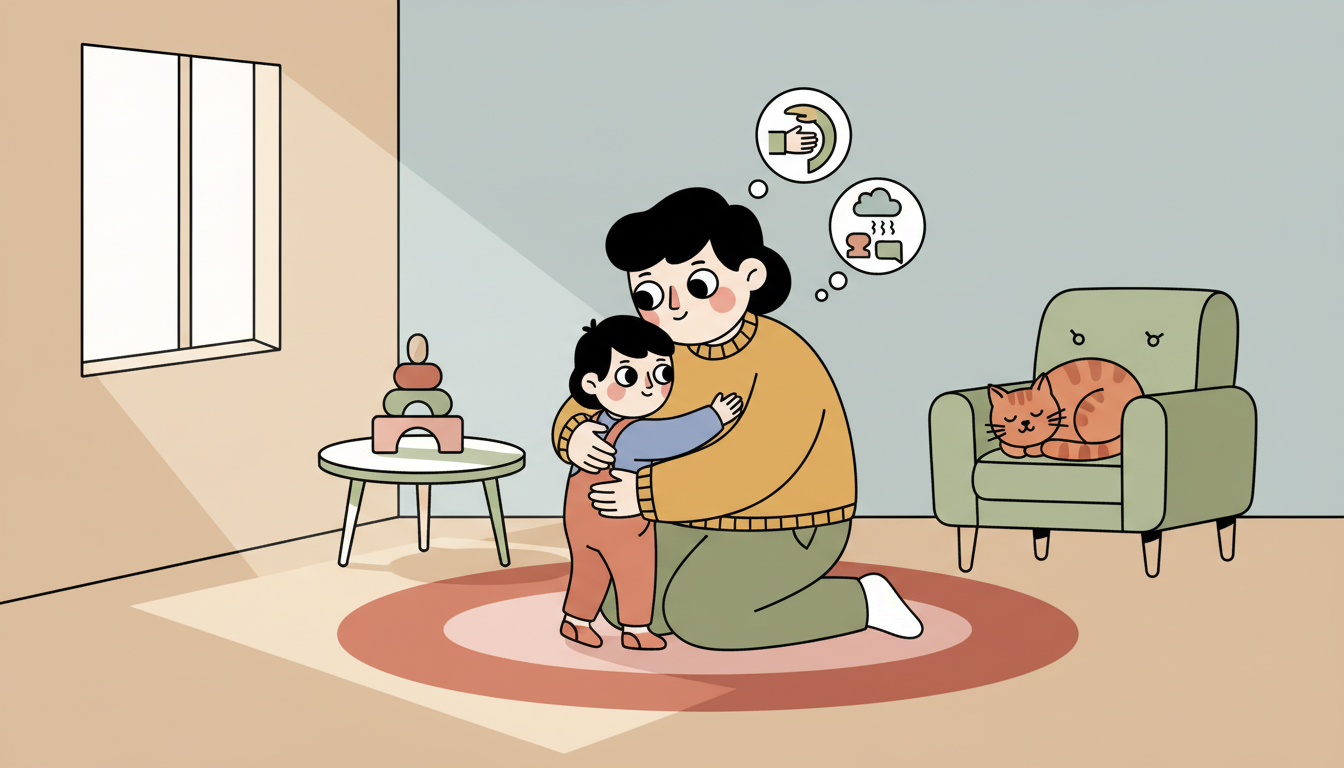
During quiet activities together, ask your child to think about times they felt upset and what made them feel better. Was it a hug, taking deep breaths, or talking about it? Help them notice what works for them. This builds self-awareness and gives them tools for future challenges.
Parte del viaje de desarrollo de Steadily — personalizado para tu peque.
Cómo hacer esta actividad
During quiet activities together, ask your child to think about times they felt upset and what made them feel better. Was it a hug, taking deep breaths, or talking about it? Help them notice what works for them. This builds self-awareness and gives them tools for future challenges.
Por qué funciona
Identifying personal coping strategies builds the self-awareness and emotional regulation that underpin resilience. Research demonstrates that resilience interventions teaching students to identify and use coping skills lead to significant increases in emotional regulation and adaptive behaviors (Castro-Olivo et al., 2022). Children who develop this self-knowledge show better ability to manage stress throughout their lives.
Consejos para padres
Start with recent, specific examples your child can remember.
Validate all their answers, even if they seem simple like "Mommy's hug."
Revisit this conversation regularly as your child grows and discovers new coping strategies.
Materiales necesarios
None
Métodos de aprendizaje
Project-Based LearningInquiry-Based LearningStructured Learning Activities

¿Te encantó esta actividad? Deja que nosotros planifiquemos por ti.
Steadily personaliza cada actividad para tu hijo/a —sus intereses, su etapa, los rasgos que está desarrollando— para que la hora de jugar sea más divertida y cada momento cuente.
Descubre cómo funciona Steadily →