Wait for the timer
2–3 añosSuccess MindsetMateriales: Kitchen timer or phone timer
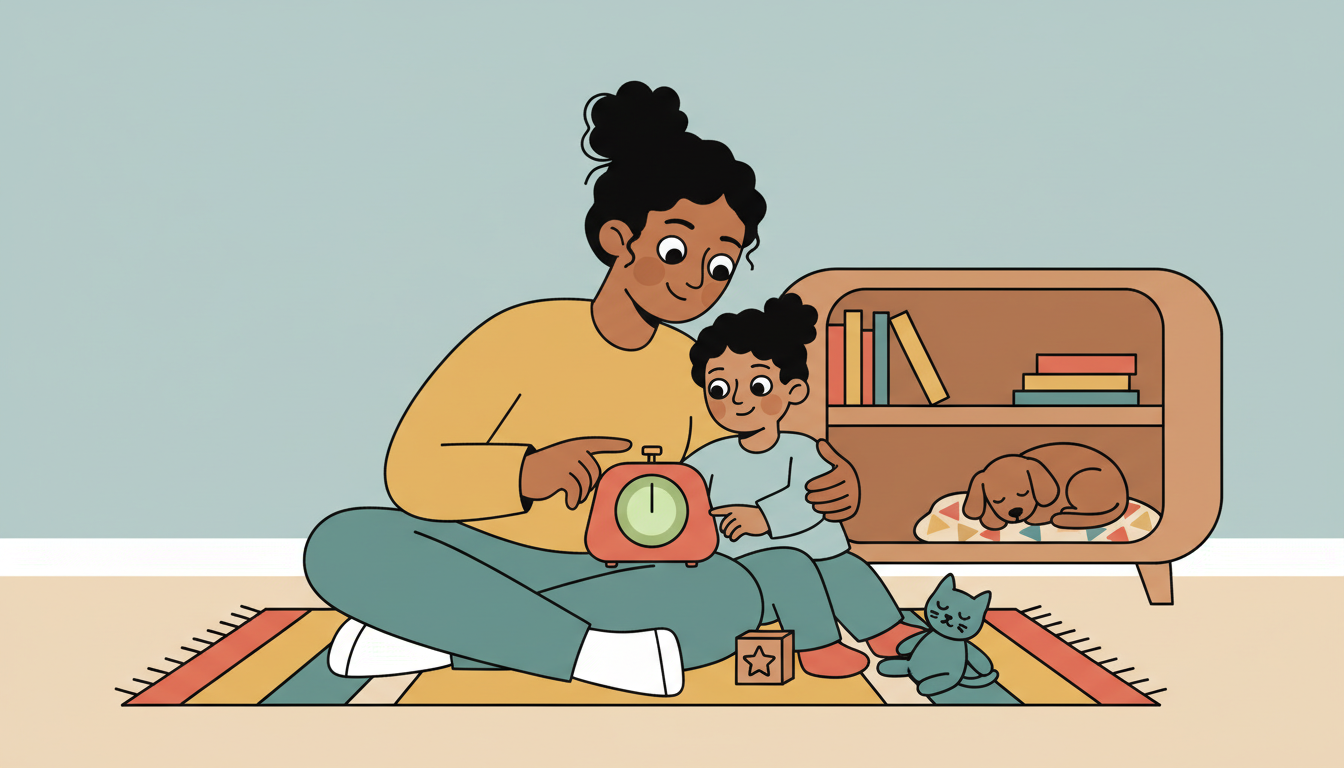
Set a kitchen timer for one to two minutes and practice waiting together. Start with small waits like 30 seconds, then gradually increase. You can wait for a snack, a toy, or a turn at something fun. Let your child watch the timer count down so waiting feels more concrete.
Parte del viaje de desarrollo de Steadily — personalizado para tu peque.
Cómo hacer esta actividad
Set a kitchen timer for one to two minutes and practice waiting together. Start with small waits like 30 seconds, then gradually increase. You can wait for a snack, a toy, or a turn at something fun. Let your child watch the timer count down so waiting feels more concrete.
Por qué funciona
Making waiting visible and predictable helps toddlers develop self-control during this critical period when the prefrontal cortex is rapidly developing. Using concrete tools like timers provides the structure needed for children ages 24-36 months to practice self-regulation successfully. Research shows that cool self-regulation skills developed at age 3 are directly related to academic achievement by age 6 (Liew, Chen, & Hughes, 2010).
Consejos para padres
Start with very short waits and gradually build up time.
Give your child language to use while waiting, like 'almost time' or 'timer will beep soon'.
Stay nearby during the wait to offer support and encouragement.
Materiales necesarios
Kitchen timer or phone timer
Métodos de aprendizaje
Interactive Play-Based LearningSongs, Stories, and RhymesSocial Learning Through Peers

¿Te encantó esta actividad? Deja que nosotros planifiquemos por ti.
Steadily personaliza cada actividad para tu hijo/a —sus intereses, su etapa, los rasgos que está desarrollando— para que la hora de jugar sea más divertida y cada momento cuente.
Descubre cómo funciona Steadily →