Story feelings talk
3–4 añosEmotional WellbeingMateriales: Picture books
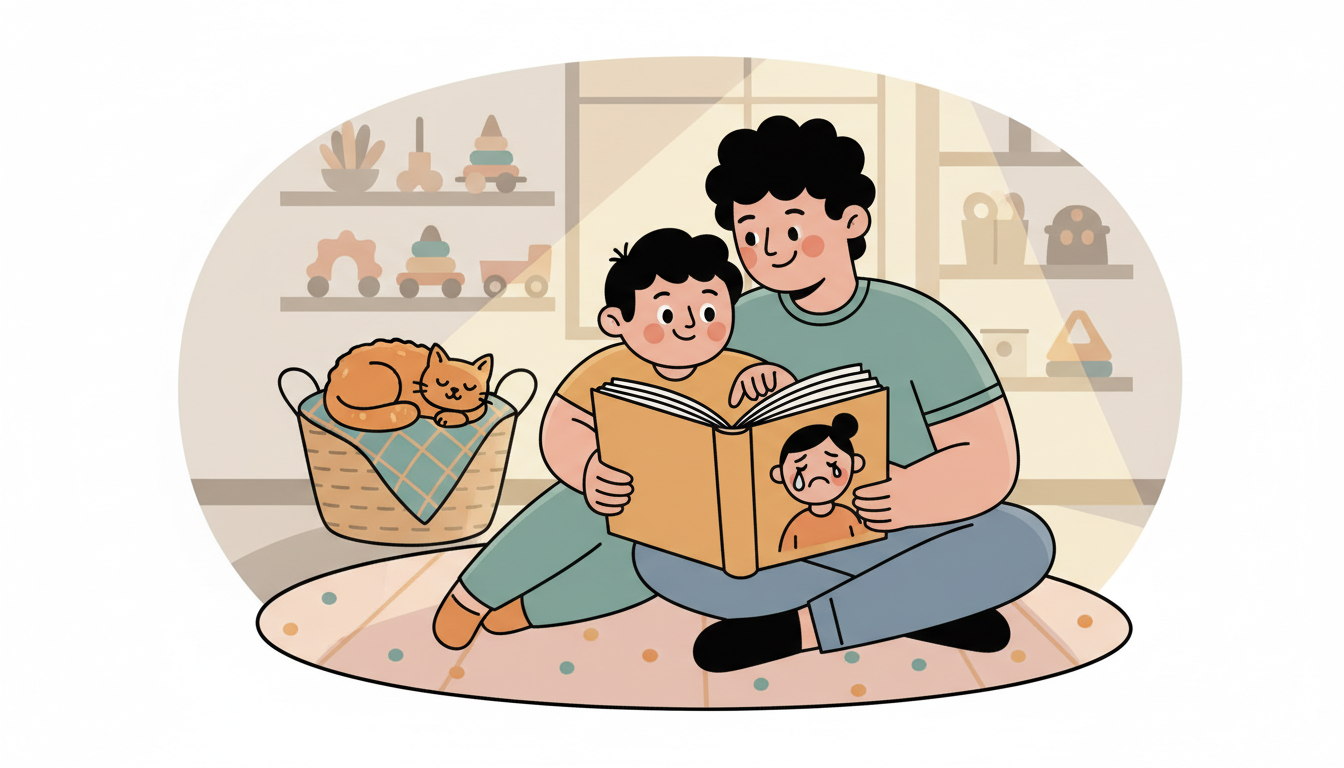
During your reading time, pause to discuss how story characters feel. Ask your child why they think the character feels that way. Point to facial expressions in pictures. Connect character emotions to times your child felt similar feelings. This builds empathy and emotional vocabulary through familiar stories.
Parte del viaje de desarrollo de Steadily — personalizado para tu peque.
Cómo hacer esta actividad
During your reading time, pause to discuss how story characters feel. Ask your child why they think the character feels that way. Point to facial expressions in pictures. Connect character emotions to times your child felt similar feelings. This builds empathy and emotional vocabulary through familiar stories.
Por qué funciona
Theory of mind emerges at this age, enabling understanding of others' perspectives and emotions for the first time. Students with higher emotional intelligence show significantly better psychological well-being and enhanced social interactions (Brackett et al., 2011). Story discussions strengthen emotional understanding during this sensitive period.
Consejos para padres
Choose books with clear facial expressions in the illustrations.
Ask how do you think they feel before giving answers.
Connect story emotions to your child's real experiences.
Materiales necesarios
Picture books
Métodos de aprendizaje
Narrative and Literacy-Rich ExperiencesCollaborative and Cooperative PlayInquiry-Based Learning

¿Te encantó esta actividad? Deja que nosotros planifiquemos por ti.
Steadily personaliza cada actividad para tu hijo/a —sus intereses, su etapa, los rasgos que está desarrollando— para que la hora de jugar sea más divertida y cada momento cuente.
Descubre cómo funciona Steadily →