Giving hugs for help
1–2 añosEmotional WellbeingNo se necesitan materiales
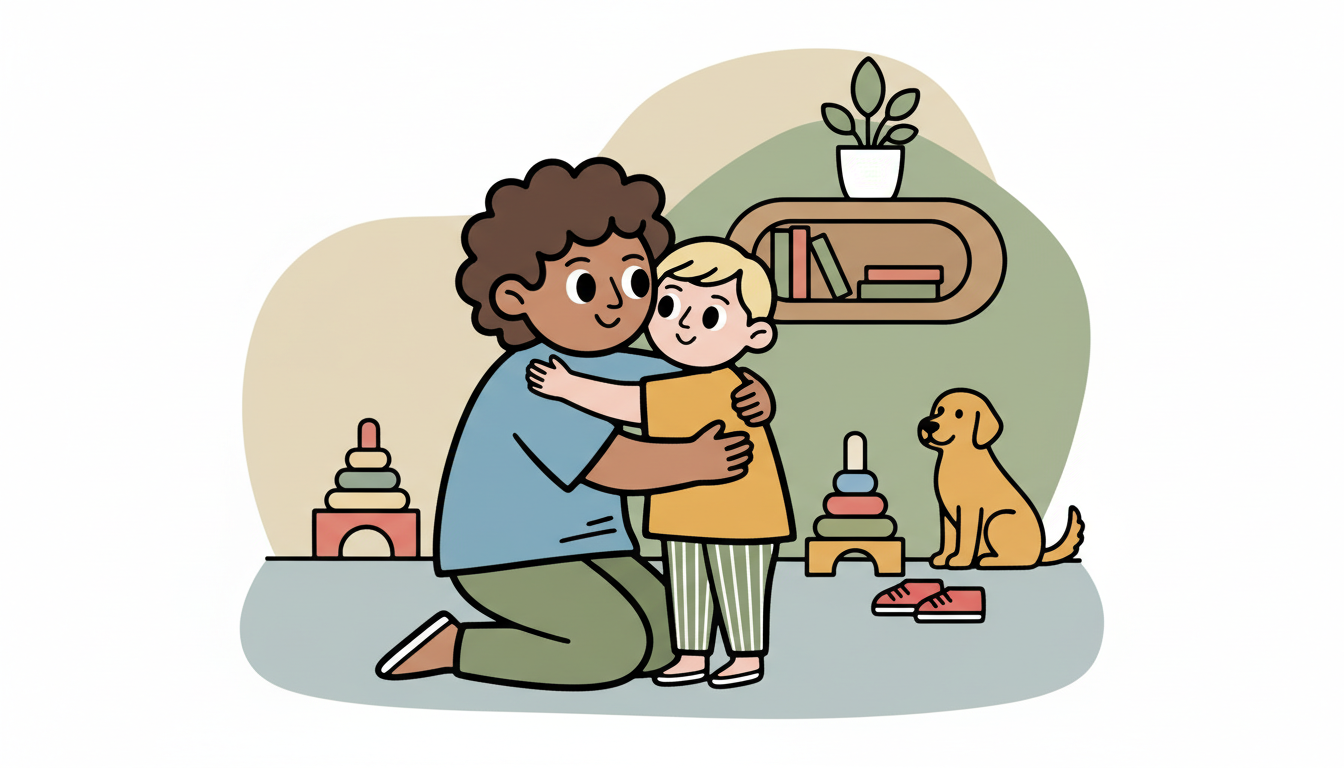
When someone helps your child with something like putting on shoes or cleaning up toys, suggest a thank you hug. Model by giving a hug yourself, then encourage your child to do the same. This physical expression of thanks feels natural for toddlers. It connects appreciation with warm, positive feelings and strengthens relationships through affection.
Parte del viaje de desarrollo de Steadily — personalizado para tu peque.
Cómo hacer esta actividad
When someone helps your child with something like putting on shoes or cleaning up toys, suggest a thank you hug. Model by giving a hug yourself, then encourage your child to do the same. This physical expression of thanks feels natural for toddlers. It connects appreciation with warm, positive feelings and strengthens relationships through affection.
Por qué funciona
Physical expressions of gratitude match the developmental stage where toddlers are learning non-verbal communication. Showing appreciation through hugs reinforces positive relationships and creates emotional connections to thankfulness. Research shows that childhood gratitude habits developed through regular acknowledgment predict adult gratitude practices, which are linked to 15% greater life satisfaction and reduced stress (Emmons & McCullough, 2003).
Consejos para padres
Always ask if the other person wants a hug before encouraging your child.
Model gentle, brief hugs so your child learns appropriate touch.
Praise your child when they show appreciation in any way.
Materiales necesarios
None
Métodos de aprendizaje
Language-Rich EnvironmentImitation and Modeling

¿Te encantó esta actividad? Deja que nosotros planifiquemos por ti.
Steadily personaliza cada actividad para tu hijo/a —sus intereses, su etapa, los rasgos que está desarrollando— para que la hora de jugar sea más divertida y cada momento cuente.
Descubre cómo funciona Steadily →