Emotion matching partners
3–4 añosSuccess MindsetMateriales: Mirror (optional)
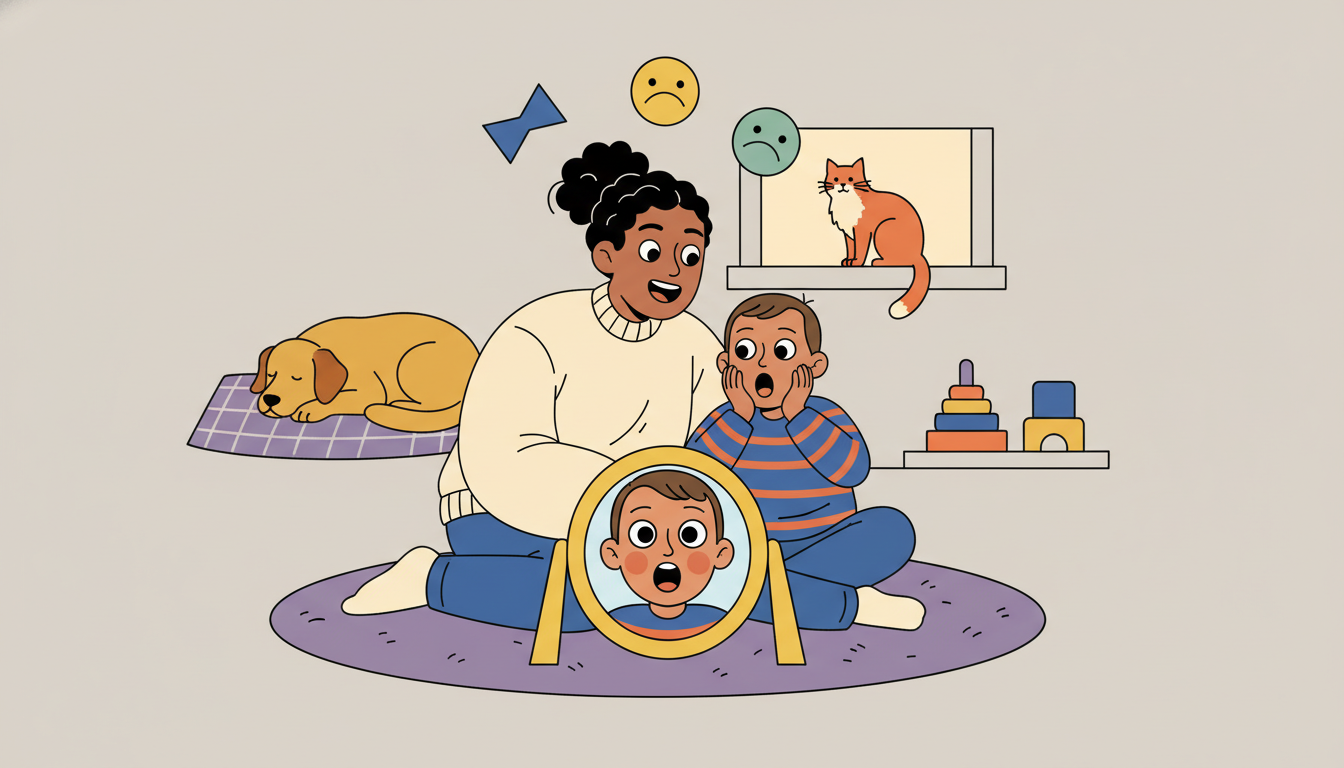
Take turns making facial expressions showing different emotions while the other person guesses the feeling. Then discuss times when you've both felt that way. This helps your child read social cues and understand that others have feelings too. You can use a mirror to practice together.
Parte del viaje de desarrollo de Steadily — personalizado para tu peque.
Cómo hacer esta actividad
Take turns making facial expressions showing different emotions while the other person guesses the feeling. Then discuss times when you've both felt that way. This helps your child read social cues and understand that others have feelings too. You can use a mirror to practice together.
Por qué funciona
Understanding and responding to social cues is a core component of social intelligence that predicts later success. Children with better social skills showed 50-70% higher likelihood of stable adult employment and educational completion (Durlak et al., 2011). At 36-48 months, theory of mind development enables perspective-taking, making this the optimal window for practicing emotion recognition and empathy skills that form the foundation of positive peer relationships.
Consejos para padres
Start with basic emotions like happy, sad, angry, and surprised before moving to more complex ones.
Share real examples: 'I felt frustrated when the car wouldn't start. When do you feel frustrated?'
Validate your child's interpretations even if they're not exact. The practice of reading cues matters most.
Materiales necesarios
Mirror (optional)
Métodos de aprendizaje
Collaborative and Cooperative PlayStructured Learning ActivitiesProject-Based Learning

¿Te encantó esta actividad? Deja que nosotros planifiquemos por ti.
Steadily personaliza cada actividad para tu hijo/a —sus intereses, su etapa, los rasgos que está desarrollando— para que la hora de jugar sea más divertida y cada momento cuente.
Descubre cómo funciona Steadily →