Emotion check-in time
3–4 añosFamily ConnectionNo se necesitan materiales
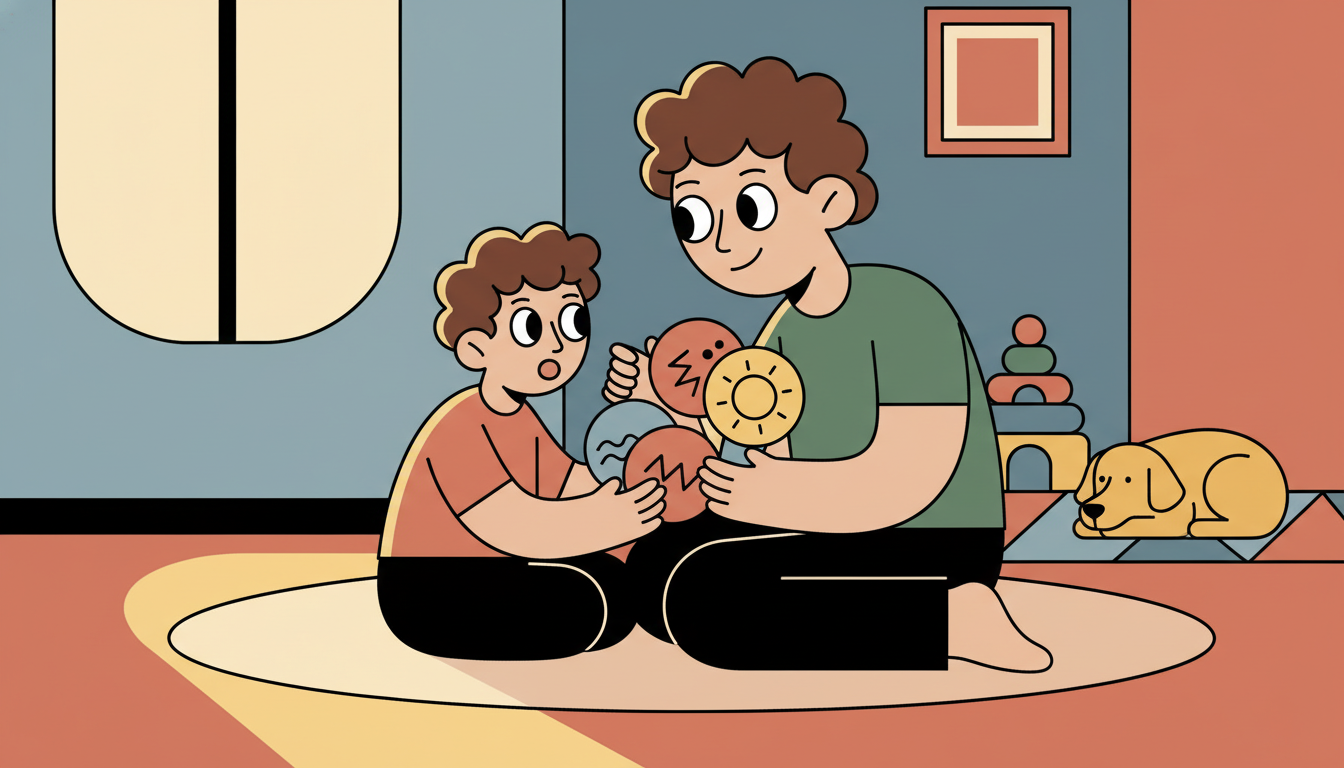
Set aside a few minutes each day to ask your child how they are feeling. Listen closely and reflect back what you hear. You might say, "It sounds like you felt frustrated when your tower fell down." This simple practice helps your child feel understood and builds trust between you.
Parte del viaje de desarrollo de Steadily — personalizado para tu peque.
Cómo hacer esta actividad
Set aside a few minutes each day to ask your child how they are feeling. Listen closely and reflect back what you hear. You might say, "It sounds like you felt frustrated when your tower fell down." This simple practice helps your child feel understood and builds trust between you.
Por qué funciona
Secure attachment helps children learn to express emotions appropriately and develop better emotional regulation throughout life (Ainsworth et al., 1978). When you attune to and validate your child's emotions, you strengthen their ability to trust you with their feelings. Research shows securely attached children demonstrate better emotion understanding and modulation, as they learn to appraise situations with changing demands (Thompson, 2008).
Consejos para padres
Let your child lead the conversation. You do not need to fix their feelings, just acknowledge them.
Use simple feeling words like happy, sad, frustrated, or excited. Your child will learn to name their emotions.
If your child is not ready to talk, that is okay. You can try again later. Stay patient and available.
Materiales necesarios
None
Métodos de aprendizaje
Collaborative and Cooperative PlayNarrative and Literacy-Rich ExperiencesProject-Based Learning

¿Te encantó esta actividad? Deja que nosotros planifiquemos por ti.
Steadily personaliza cada actividad para tu hijo/a —sus intereses, su etapa, los rasgos que está desarrollando— para que la hora de jugar sea más divertida y cada momento cuente.
Descubre cómo funciona Steadily →