Voice tone feelings
6–12 mesesEmotional WellbeingNo se necesitan materiales
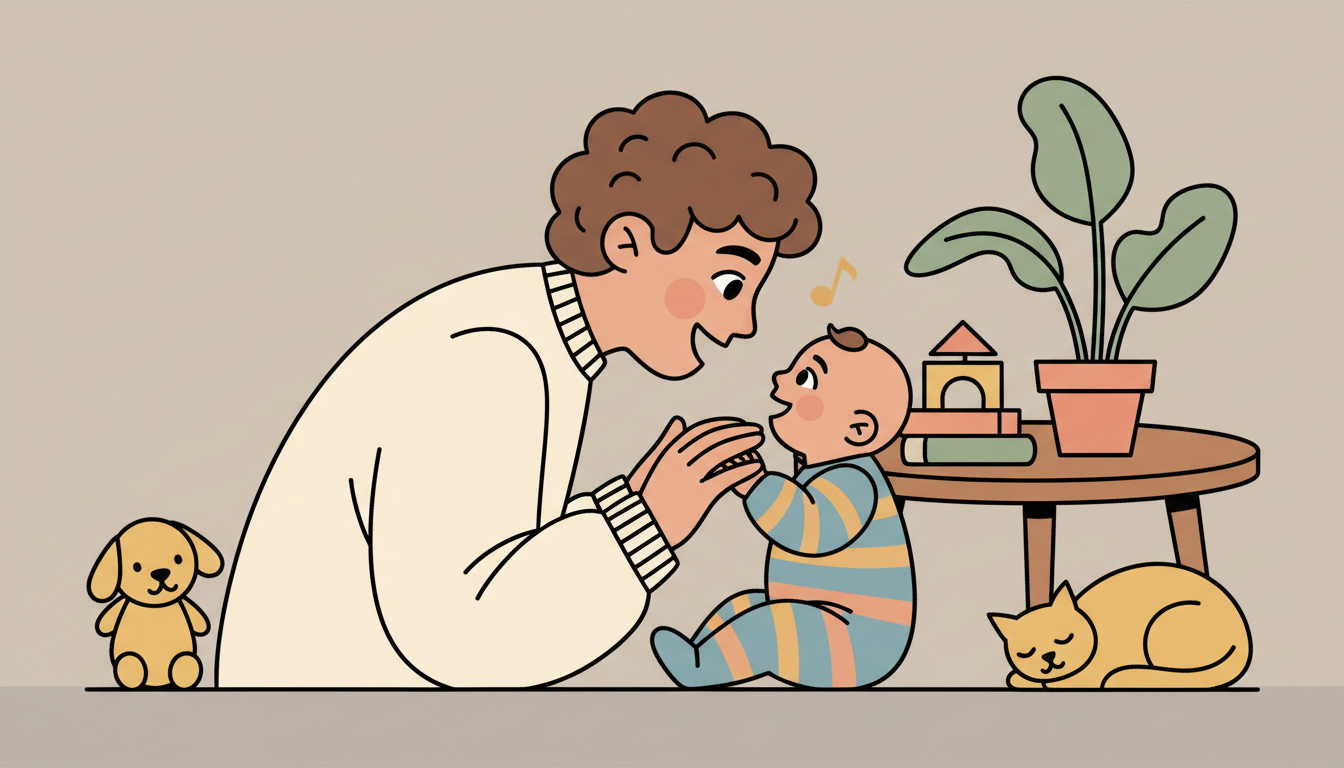
Use different tones of voice while talking to your child and notice their response. Try a calm, slow voice. Try a playful, higher voice. Try a warm, gentle voice. Your child will start to recognize what different tones communicate.
Parte del viaje de desarrollo de Steadily — personalizado para tu peque.
Cómo hacer esta actividad
Use different tones of voice while talking to your child and notice their response. Try a calm, slow voice. Try a playful, higher voice. Try a warm, gentle voice. Your child will start to recognize what different tones communicate.
Your tone of voice is an emotion all by itself. It teaches your child how to recognize feelings just by listening.
Por qué funciona
Responsive interaction through vocal communication helps infants learn to recognize and respond to different emotional cues. Caregivers who vary their tone of voice teach children that emotions are expressed in multiple ways and help build emotional awareness. This sensory exploration of emotional communication, combined with responsive interaction, builds the emotional recognition skills that form the foundation of emotional intelligence (Goleman, 1995).
Consejos para padres
Exaggerate your tones a bit so your child can clearly hear the difference. This helps them learn to recognize emotional nuance.
Watch your child's response. Do they smile at playful tones? Do they settle with calm tones? Your child will guide you toward what works for them.
Materiales necesarios
None
Métodos de aprendizaje
Responsive InteractionSensory Exploration

¿Te encantó esta actividad? Deja que nosotros planifiquemos por ti.
Steadily personaliza cada actividad para tu hijo/a —sus intereses, su etapa, los rasgos que está desarrollando— para que la hora de jugar sea más divertida y cada momento cuente.
Descubre cómo funciona Steadily →