Happy ending stories
2–3 añosEmotional WellbeingMateriales: Picture books or none for made-up stories
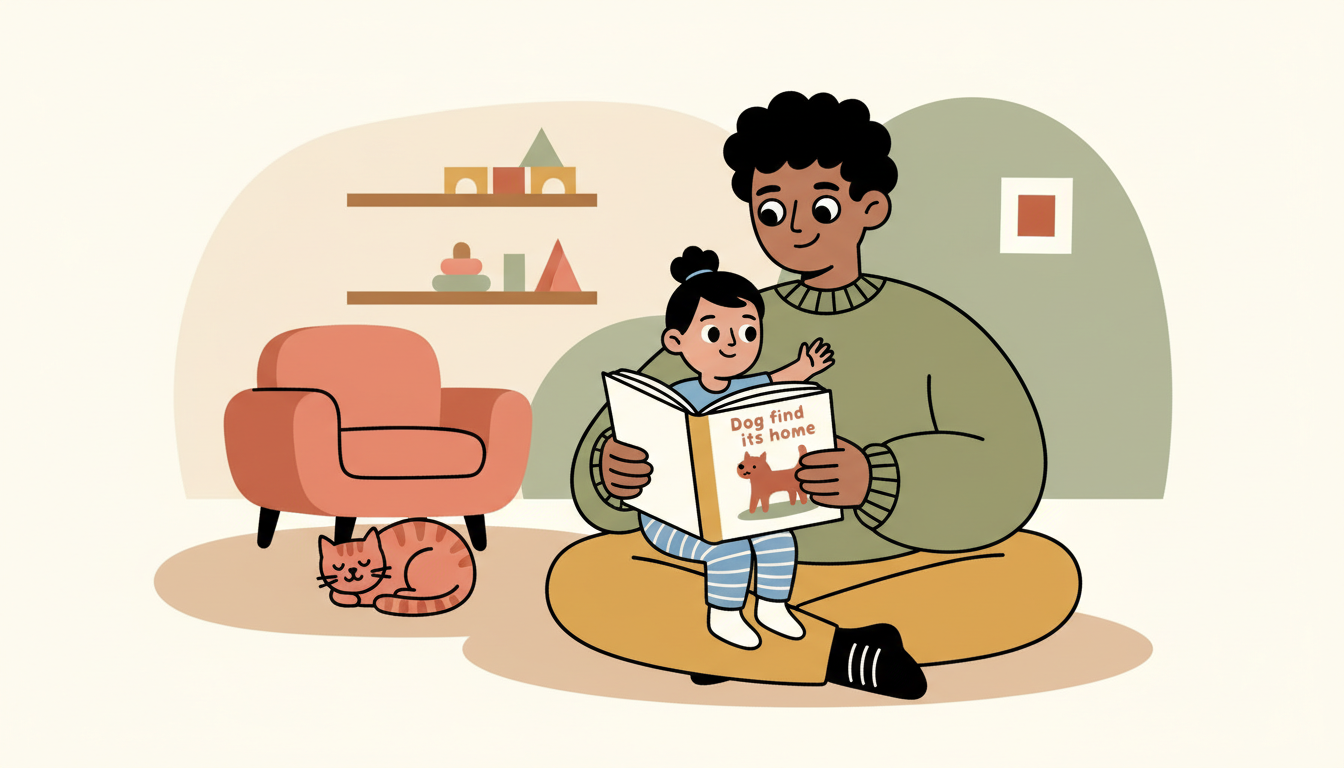
Read or tell simple stories where characters face small challenges but things work out well. For example, "The puppy was lost, but then he found his way home." Keep stories short and clear. Point out how things got better at the end. This teaches your child that problems can have positive solutions.
Parte del viaje de desarrollo de Steadily — personalizado para tu peque.
Cómo hacer esta actividad
Read or tell simple stories where characters face small challenges but things work out well. For example, "The puppy was lost, but then he found his way home." Keep stories short and clear. Point out how things got better at the end. This teaches your child that problems can have positive solutions.
Por qué funciona
Stories with positive resolutions help children develop optimistic expectations about outcomes. Research demonstrates that learned optimism can be taught and significantly improves confidence and perseverance (Seligman, M. E. P., Ernst, R. M., Gillham, J., Reivich, K., & Linkins, M. (2009). Positive education: Positive psychology and classroom interventions. Oxford Review of Education, 35(3), 293-311.). At this age, narrative learning is powerful because children are beginning to understand simple cause and effect, and positive story patterns shape their expectations about how situations resolve.
Consejos para padres
Use picture books you already have, or make up simple stories about everyday situations.
Emphasize the positive resolution. You might say, "See, it was okay in the end."
Connect stories to your child's experiences when possible. This helps them see how positive outcomes happen in real life too.
Materiales necesarios
Picture books or none for made-up stories
Métodos de aprendizaje
Songs, Stories, and RhymesSymbolic and Pretend PlaySocial Learning Through Peers

¿Te encantó esta actividad? Deja que nosotros planifiquemos por ti.
Steadily personaliza cada actividad para tu hijo/a —sus intereses, su etapa, los rasgos que está desarrollando— para que la hora de jugar sea más divertida y cada momento cuente.
Descubre cómo funciona Steadily →