Feelings song and movement
2–3 añosFamily ConnectionNo se necesitan materiales
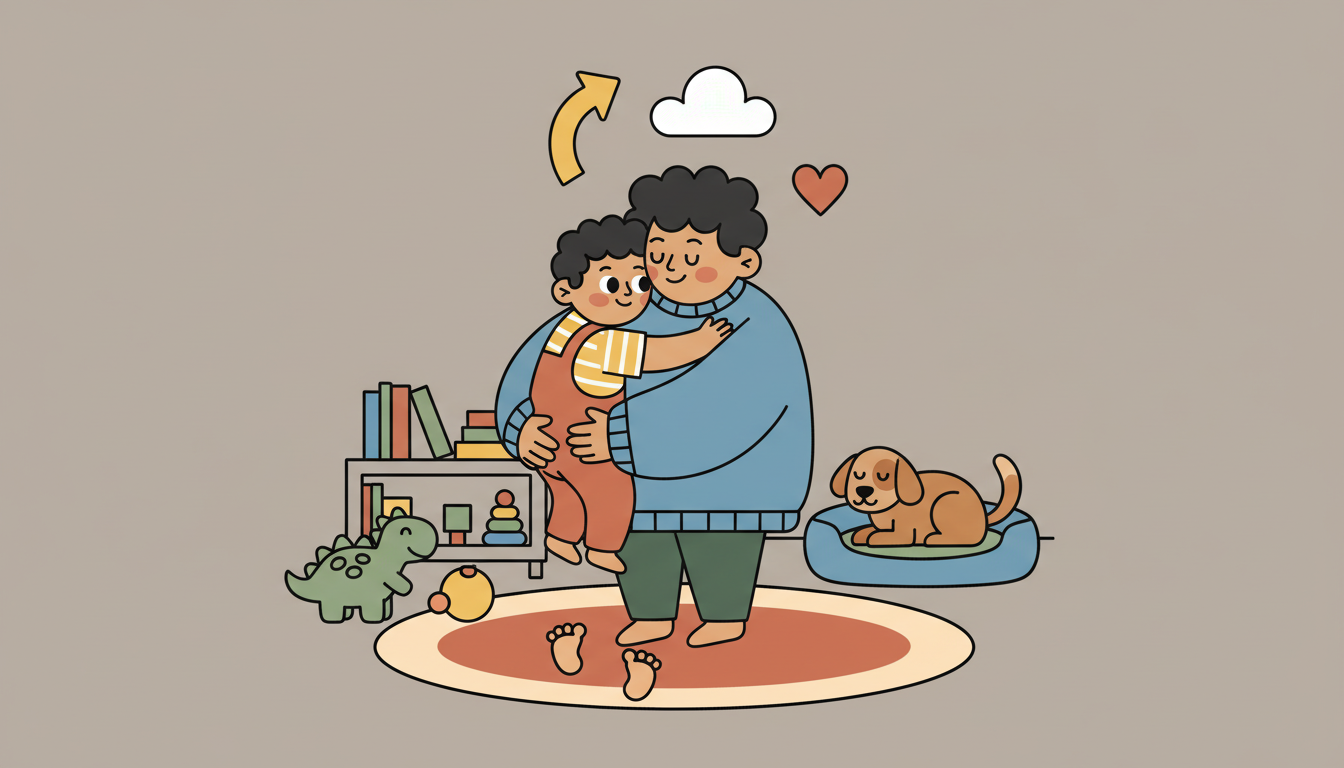
Sing simple songs about feelings with your child and add movements. For example, sing to a familiar tune "When I feel happy, I can smile" (smile together) or "When I feel scared, I can hug" (hug together). Make it playful and interactive. This teaches your child they can express emotions and come to you for comfort.
Parte del viaje de desarrollo de Steadily — personalizado para tu peque.
Cómo hacer esta actividad
Sing simple songs about feelings with your child and add movements. For example, sing to a familiar tune "When I feel happy, I can smile" (smile together) or "When I feel scared, I can hug" (hug together). Make it playful and interactive. This teaches your child they can express emotions and come to you for comfort.
Por qué funciona
Songs and repetitive patterns help young children learn and remember important concepts. Research shows that securely attached children exhibited better emotional recovery and more appropriate emotion expression (Borelli et al., 2021). Using music to practice emotional expression and comfort-seeking makes these skills more accessible and memorable for your child, strengthening their ability to seek support when they need it.
Consejos para padres
Keep the song simple with movements your child can do. Repeat the same song often so it becomes familiar.
Use the song during real emotional moments too. If your child is upset, you might softly sing "When I feel sad, I can hug."
Make it fun and light. The goal is connection and learning, not perfect singing or movements.
Materiales necesarios
None
Métodos de aprendizaje
Symbolic and Pretend PlaySongs, Stories, and RhymesInteractive Play-Based Learning

¿Te encantó esta actividad? Deja que nosotros planifiquemos por ti.
Steadily personaliza cada actividad para tu hijo/a —sus intereses, su etapa, los rasgos que está desarrollando— para que la hora de jugar sea más divertida y cada momento cuente.
Descubre cómo funciona Steadily →