Emotion story time
2–3 añosEmotional WellbeingMateriales: Picture books
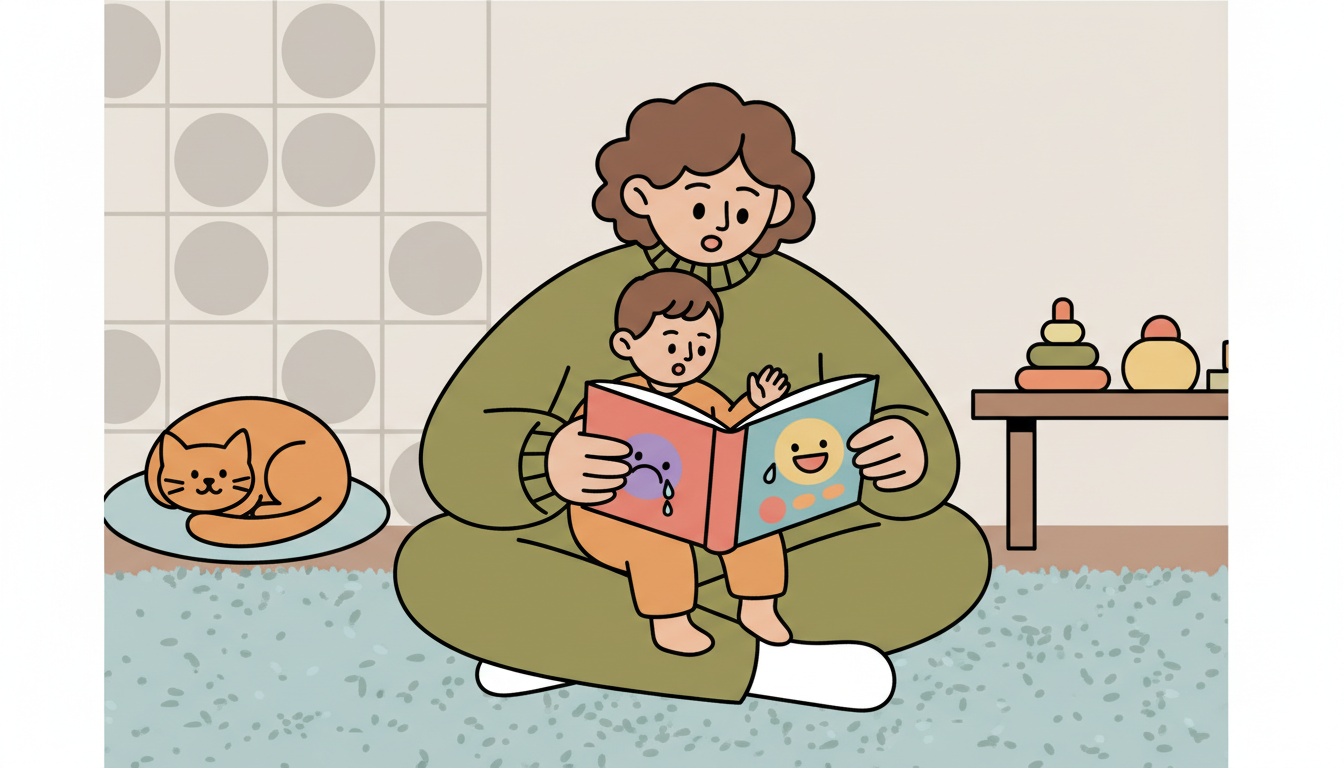
Read a picture book together and pause to talk about how characters might be feeling. Point to facial expressions and ask simple questions like, 'Is he happy or sad?' Name the emotions you see.
Parte del viaje de desarrollo de Steadily — personalizado para tu peque.
Cómo hacer esta actividad
Read a picture book together and pause to talk about how characters might be feeling. Point to facial expressions and ask simple questions like, 'Is he happy or sad?' Name the emotions you see.
This turns regular reading time into emotional learning. Stories provide a safe way to explore different feelings and build empathy.
Por qué funciona
The language explosion at 24-36 months makes this the optimal time for emotional vocabulary development. Early emotional coaching through stories significantly improves children's emotional intelligence (Goleman, 1995). Children with higher emotional intelligence experience better relationship satisfaction and mental health in adulthood (Bar-On, 2006). Stories help children recognize emotions in others, building the empathy component of EQ.
Consejos para padres
Use simple feeling words at first like happy, sad, mad, and scared. You can add more complex emotions as your child grows.
Connect the story to your child's experiences. Try saying, 'Remember when you felt sad like that?'
Materiales necesarios
Picture books
Métodos de aprendizaje
Symbolic and Pretend PlaySongs, Stories, and RhymesSocial Learning Through Peers

¿Te encantó esta actividad? Deja que nosotros planifiquemos por ti.
Steadily personaliza cada actividad para tu hijo/a —sus intereses, su etapa, los rasgos que está desarrollando— para que la hora de jugar sea más divertida y cada momento cuente.
Descubre cómo funciona Steadily →