Emotion naming practice
6–12 mesesFamily ConnectionNo se necesitan materiales
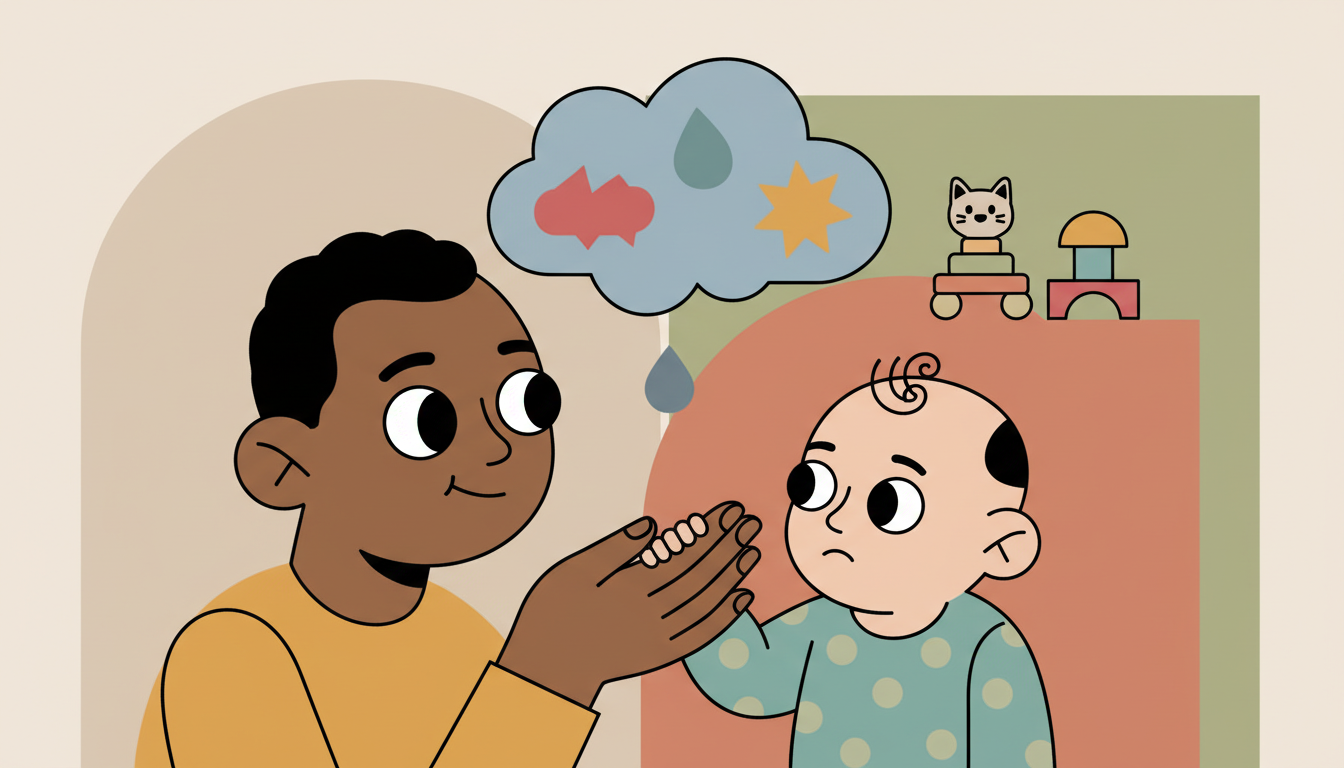
When your child shows distress, name what you see in simple words. Say "You feel upset" or "That was frustrating" in a calm voice. This validates their experience and teaches that emotions are normal and manageable. Your calm naming helps them begin to understand their own feelings.
Parte del viaje de desarrollo de Steadily — personalizado para tu peque.
Cómo hacer esta actividad
When your child shows distress, name what you see in simple words. Say "You feel upset" or "That was frustrating" in a calm voice. This validates their experience and teaches that emotions are normal and manageable. Your calm naming helps them begin to understand their own feelings.
Por qué funciona
Naming emotions calmly teaches that feelings are normal and can be discussed peacefully. This builds the foundation for verbal conflict resolution. Early training in conflict resolution and problem-solving skills leads to significantly better peer relationships and reduced aggression, with children showing 25% fewer behavioral problems (Webster-Stratton & Reid, 2004). Your calm emotion coaching now prepares your child to use words for conflict resolution as they grow.
Consejos para padres
Use simple emotion words like upset, sad, mad, or frustrated consistently.
Keep your voice calm and accepting when naming emotions. Avoid sounding worried or stressed.
Pair emotion naming with soothing so your child learns feelings can be managed.
Materiales necesarios
None
Métodos de aprendizaje
Responsive Interaction

¿Te encantó esta actividad? Deja que nosotros planifiquemos por ti.
Steadily personaliza cada actividad para tu hijo/a —sus intereses, su etapa, los rasgos que está desarrollando— para que la hora de jugar sea más divertida y cada momento cuente.
Descubre cómo funciona Steadily →