Voice tone feelings
6–12 MonateEmotional WellbeingKeine Materialien erforderlich
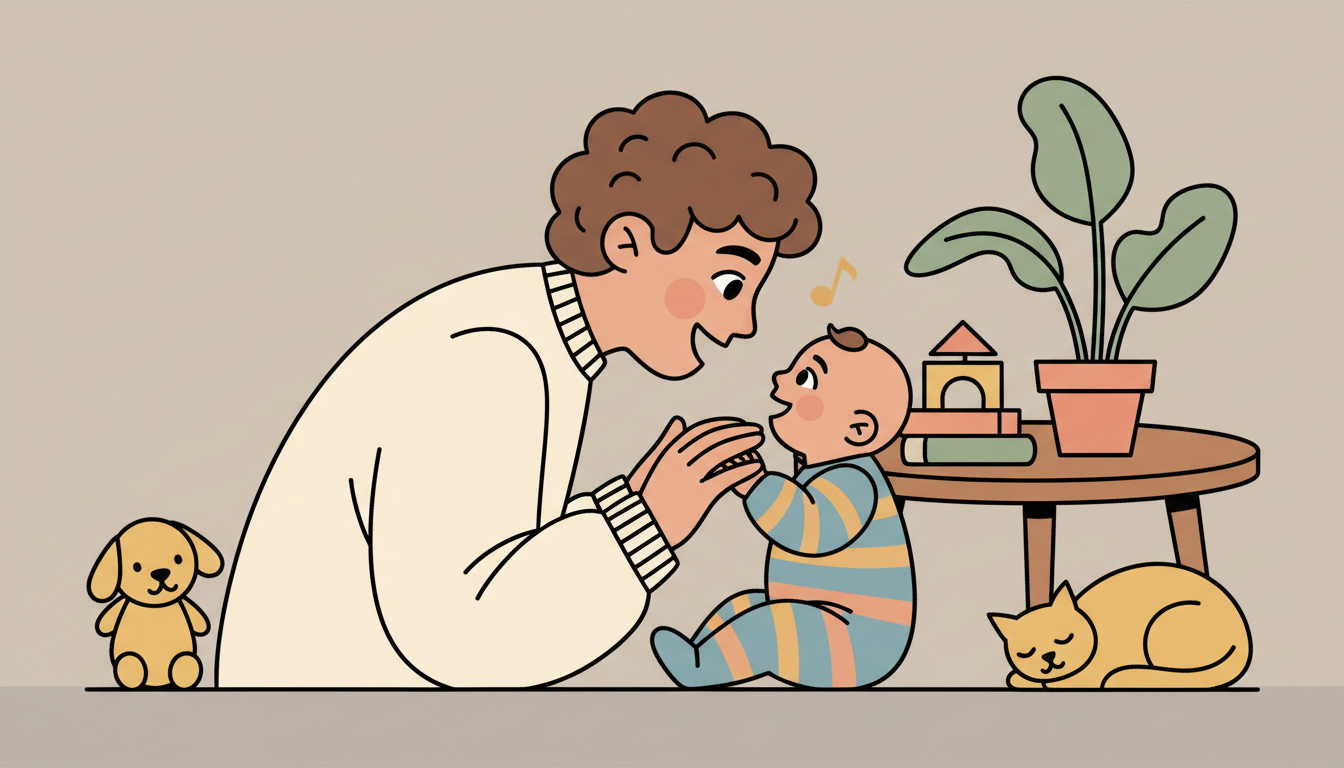
Use different tones of voice while talking to your child and notice their response. Try a calm, slow voice. Try a playful, higher voice. Try a warm, gentle voice. Your child will start to recognize what different tones communicate.
Teil der Steadily-Entwicklungsreise — personalisiert für dein Kind.
So geht diese Aktivität
Use different tones of voice while talking to your child and notice their response. Try a calm, slow voice. Try a playful, higher voice. Try a warm, gentle voice. Your child will start to recognize what different tones communicate.
Your tone of voice is an emotion all by itself. It teaches your child how to recognize feelings just by listening.
Warum es funktioniert
Responsive interaction through vocal communication helps infants learn to recognize and respond to different emotional cues. Caregivers who vary their tone of voice teach children that emotions are expressed in multiple ways and help build emotional awareness. This sensory exploration of emotional communication, combined with responsive interaction, builds the emotional recognition skills that form the foundation of emotional intelligence (Goleman, 1995).
Tipps für Eltern
Exaggerate your tones a bit so your child can clearly hear the difference. This helps them learn to recognize emotional nuance.
Watch your child's response. Do they smile at playful tones? Do they settle with calm tones? Your child will guide you toward what works for them.
Benötigte Materialien
None
Lernmethoden
Responsive InteractionSensory Exploration

Hat dir diese Aktivität gefallen? Lass uns die Planung für dich übernehmen.
Steadily personalisiert jede Aktivität für dein Kind — seine Interessen, seine Entwicklungsstufe, die Eigenschaften, die es aufbaut — damit die Spielzeit mehr Spaß macht und jeder Moment zählt.
Erfahre, wie Steadily funktioniert →