Calm transition helper
6–12 MonateFamily ConnectionKeine Materialien erforderlich
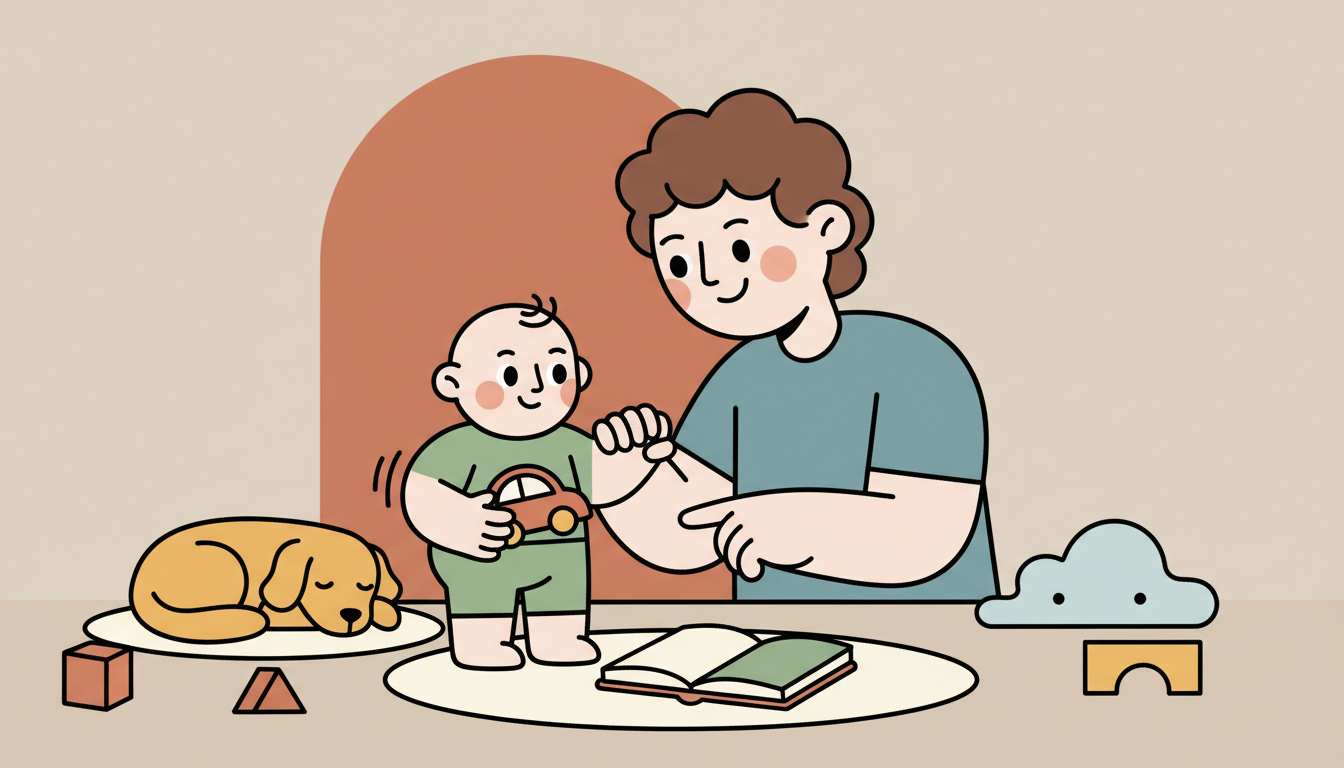
When your child resists ending playtime or changing activities, practice staying calm and using a gentle, consistent approach. Take a deep breath, speak in a soft voice, and give simple cues like showing the next activity. This teaches your child that transitions can be peaceful rather than stressful.
Teil der Steadily-Entwicklungsreise — personalisiert für dein Kind.
So geht diese Aktivität
When your child resists ending playtime or changing activities, practice staying calm and using a gentle, consistent approach. Take a deep breath, speak in a soft voice, and give simple cues like showing the next activity. This teaches your child that transitions can be peaceful rather than stressful.
Warum es funktioniert
Your calm response during transitions builds the foundation for healthy conflict resolution. When you stay regulated during your child's dysregulation, you teach co-regulation skills that become internal capacities later. Research shows that collaborative problem-solving approaches in families predict better parent-child relationships during adolescence and young adulthood (Robin & Foster, 1989). These early co-regulation experiences lay the groundwork for those future skills.
Tipps für Eltern
Take three slow breaths before responding to resistance. This helps you stay regulated.
Use the same phrase each time, like "Time to change" with a gentle tone.
Stay close and offer comfort if your child becomes upset during the transition.
Benötigte Materialien
None
Lernmethoden
Responsive Interaction

Hat dir diese Aktivität gefallen? Lass uns die Planung für dich übernehmen.
Steadily personalisiert jede Aktivität für dein Kind — seine Interessen, seine Entwicklungsstufe, die Eigenschaften, die es aufbaut — damit die Spielzeit mehr Spaß macht und jeder Moment zählt.
Erfahre, wie Steadily funktioniert →