What helps you feel better
3–4 JahreEmotional WellbeingKeine Materialien erforderlich
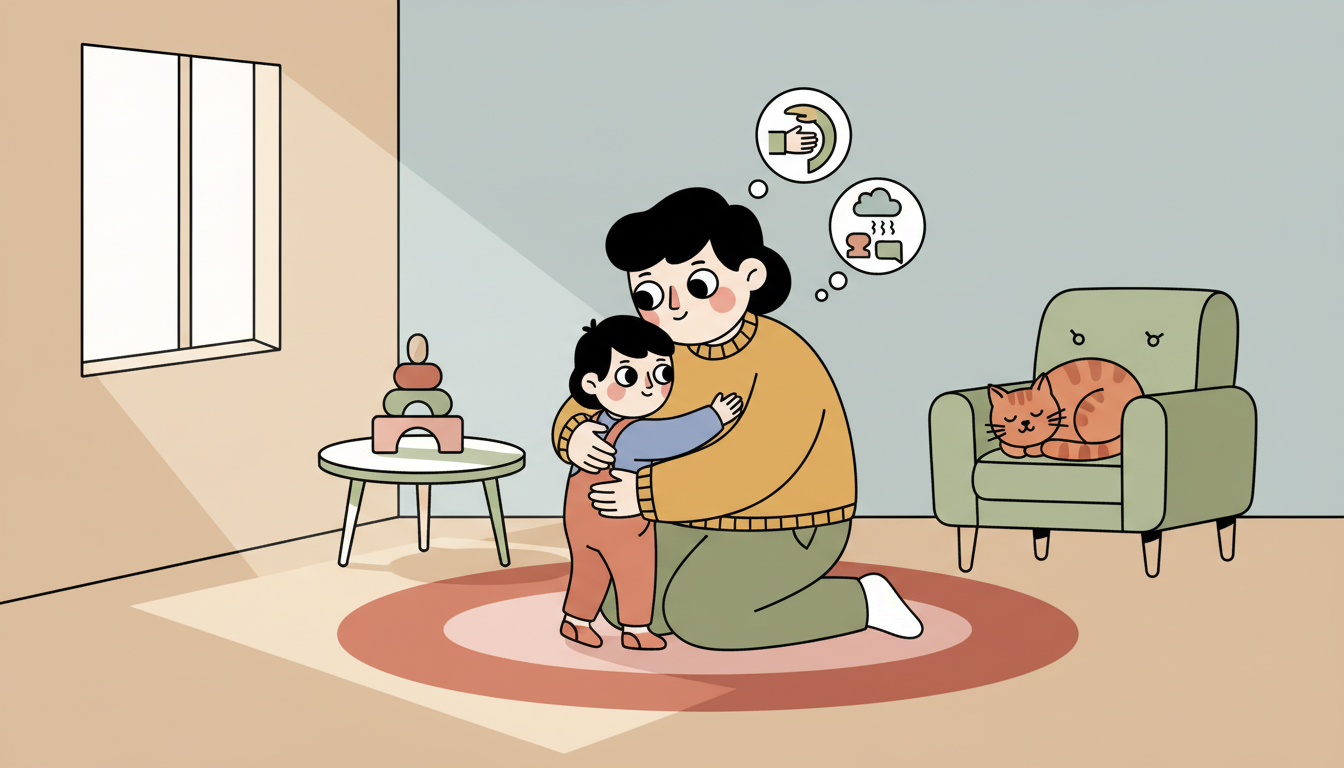
During quiet activities together, ask your child to think about times they felt upset and what made them feel better. Was it a hug, taking deep breaths, or talking about it? Help them notice what works for them. This builds self-awareness and gives them tools for future challenges.
Teil der Steadily-Entwicklungsreise — personalisiert für dein Kind.
So geht diese Aktivität
During quiet activities together, ask your child to think about times they felt upset and what made them feel better. Was it a hug, taking deep breaths, or talking about it? Help them notice what works for them. This builds self-awareness and gives them tools for future challenges.
Warum es funktioniert
Identifying personal coping strategies builds the self-awareness and emotional regulation that underpin resilience. Research demonstrates that resilience interventions teaching students to identify and use coping skills lead to significant increases in emotional regulation and adaptive behaviors (Castro-Olivo et al., 2022). Children who develop this self-knowledge show better ability to manage stress throughout their lives.
Tipps für Eltern
Start with recent, specific examples your child can remember.
Validate all their answers, even if they seem simple like "Mommy's hug."
Revisit this conversation regularly as your child grows and discovers new coping strategies.
Benötigte Materialien
None
Lernmethoden
Project-Based LearningInquiry-Based LearningStructured Learning Activities

Hat dir diese Aktivität gefallen? Lass uns die Planung für dich übernehmen.
Steadily personalisiert jede Aktivität für dein Kind — seine Interessen, seine Entwicklungsstufe, die Eigenschaften, die es aufbaut — damit die Spielzeit mehr Spaß macht und jeder Moment zählt.
Erfahre, wie Steadily funktioniert →