The two-choice solution
3–4 JahreFamily ConnectionKeine Materialien erforderlich
When you and your child disagree, offer two acceptable choices instead of a yes or no decision. For example, if they don't want to leave the park, say 'We can leave now and read two books at home, or leave in five minutes and read one book.' This teaches negotiation and gives them some control while still meeting your needs.
Teil der Steadily-Entwicklungsreise — personalisiert für dein Kind.
So geht diese Aktivität
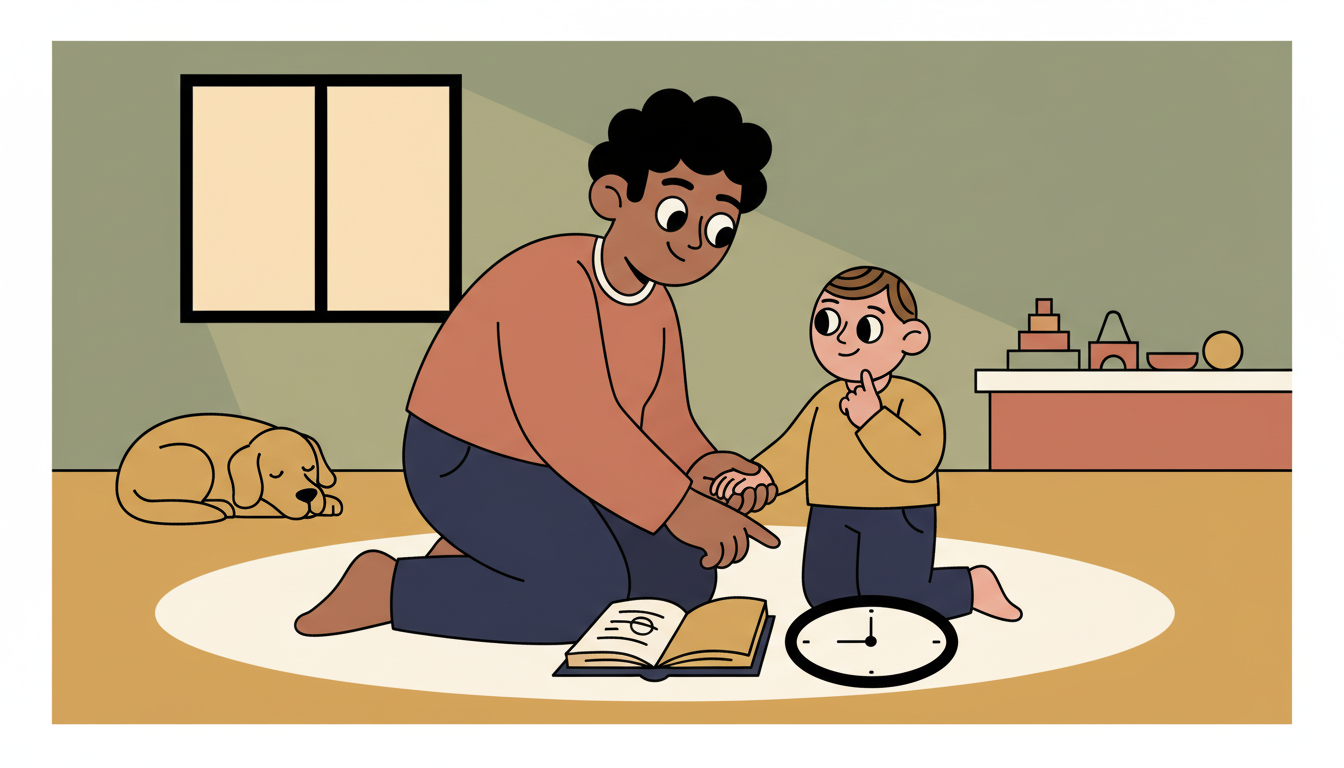
When you and your child disagree, offer two acceptable choices instead of a yes or no decision. For example, if they don't want to leave the park, say 'We can leave now and read two books at home, or leave in five minutes and read one book.' This teaches negotiation and gives them some control while still meeting your needs.
Warum es funktioniert
Collaborative problem-solving approaches predict better parent-child relationships during adolescence and young adulthood (Robin & Foster, 1989). Starting this practice now teaches children that their preferences matter and that working together leads to solutions everyone can accept. This builds the foundation for healthy negotiation skills throughout life.
Tipps für Eltern
Make sure both choices work for you. Don't offer options you can't accept.
Let your child think about the choices. Give them time to decide.
Stick to the choice they make. This builds trust in the negotiation process.
Benötigte Materialien
None
Lernmethoden
Collaborative and Cooperative PlayNarrative and Literacy-Rich ExperiencesStructured Learning Activities

Hat dir diese Aktivität gefallen? Lass uns die Planung für dich übernehmen.
Steadily personalisiert jede Aktivität für dein Kind — seine Interessen, seine Entwicklungsstufe, die Eigenschaften, die es aufbaut — damit die Spielzeit mehr Spaß macht und jeder Moment zählt.
Erfahre, wie Steadily funktioniert →