The feelings and solutions chat
3–4 JahreFamily ConnectionKeine Materialien erforderlich
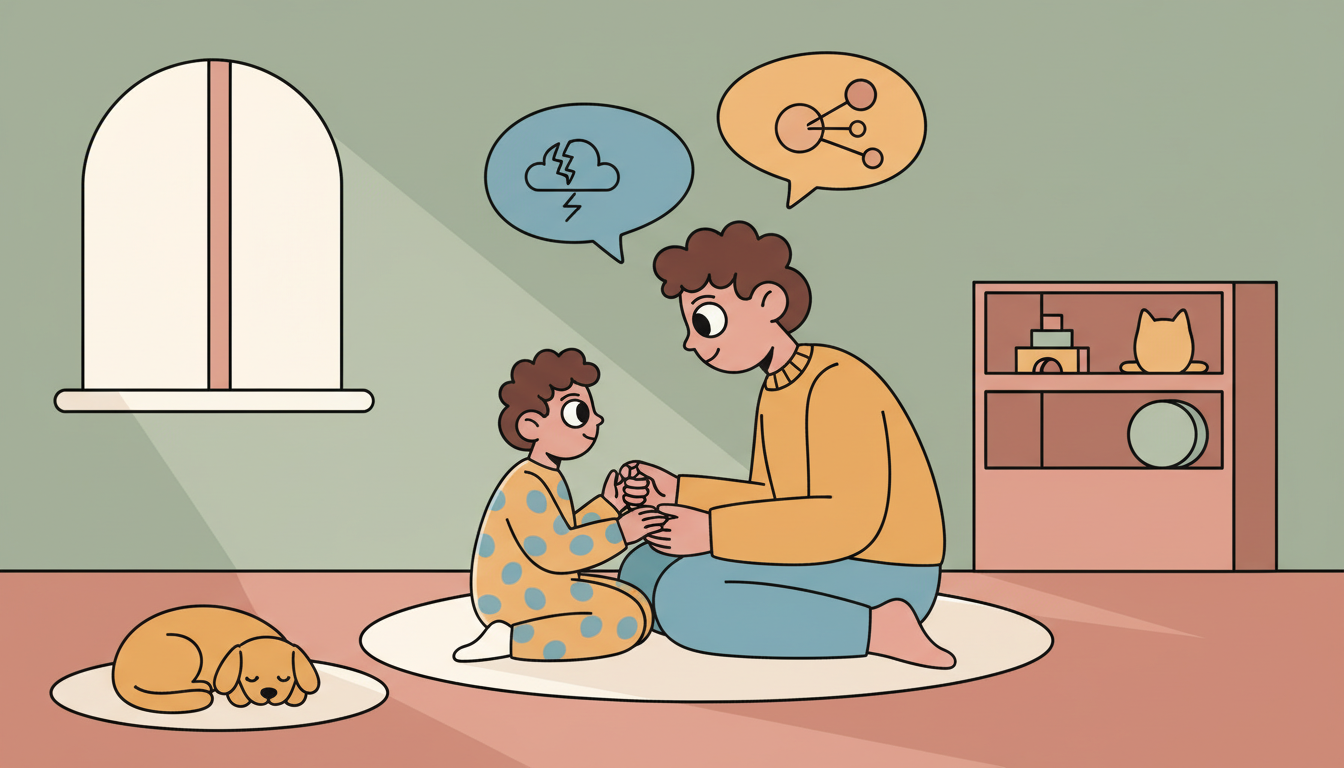
After a disagreement with your child, sit together and talk about what happened. Ask them how they felt and how you felt. Then work together to think of better ways to handle it next time. Keep it simple with questions like, 'What made you angry?' and 'What could we try instead?' This helps them learn that talking through problems makes things better.
Teil der Steadily-Entwicklungsreise — personalisiert für dein Kind.
So geht diese Aktivität
After a disagreement with your child, sit together and talk about what happened. Ask them how they felt and how you felt. Then work together to think of better ways to handle it next time. Keep it simple with questions like, 'What made you angry?' and 'What could we try instead?' This helps them learn that talking through problems makes things better.
Warum es funktioniert
Adults who effectively manage disagreements with parents report higher relationship satisfaction and 45% lower stress levels (Laursen & Collins, 2009). Starting this practice early builds the foundation for lifelong healthy conflict management. Talking through conflicts teaches children that disagreements are normal and can strengthen relationships when handled well.
Tipps für Eltern
Wait until everyone is calm before starting this conversation. Rushing into it while emotions are high won't work well.
Use simple words that match your child's language level. Avoid long explanations.
End on a positive note by agreeing on one thing to try differently next time.
Benötigte Materialien
None
Lernmethoden
Collaborative and Cooperative PlayNarrative and Literacy-Rich ExperiencesStructured Learning Activities

Hat dir diese Aktivität gefallen? Lass uns die Planung für dich übernehmen.
Steadily personalisiert jede Aktivität für dein Kind — seine Interessen, seine Entwicklungsstufe, die Eigenschaften, die es aufbaut — damit die Spielzeit mehr Spaß macht und jeder Moment zählt.
Erfahre, wie Steadily funktioniert →