Story feelings talk
3–4 JahreEmotional WellbeingMaterialien: Picture books
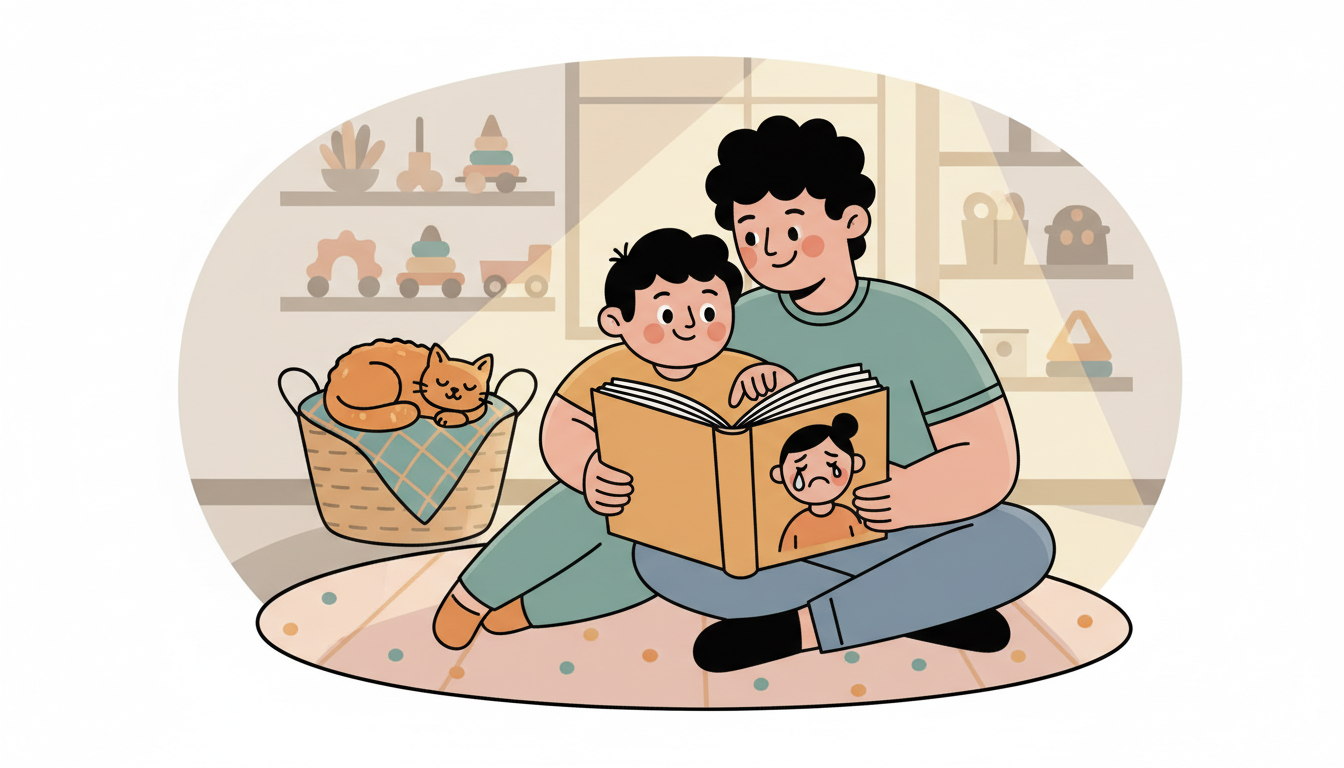
During your reading time, pause to discuss how story characters feel. Ask your child why they think the character feels that way. Point to facial expressions in pictures. Connect character emotions to times your child felt similar feelings. This builds empathy and emotional vocabulary through familiar stories.
Teil der Steadily-Entwicklungsreise — personalisiert für dein Kind.
So geht diese Aktivität
During your reading time, pause to discuss how story characters feel. Ask your child why they think the character feels that way. Point to facial expressions in pictures. Connect character emotions to times your child felt similar feelings. This builds empathy and emotional vocabulary through familiar stories.
Warum es funktioniert
Theory of mind emerges at this age, enabling understanding of others' perspectives and emotions for the first time. Students with higher emotional intelligence show significantly better psychological well-being and enhanced social interactions (Brackett et al., 2011). Story discussions strengthen emotional understanding during this sensitive period.
Tipps für Eltern
Choose books with clear facial expressions in the illustrations.
Ask how do you think they feel before giving answers.
Connect story emotions to your child's real experiences.
Benötigte Materialien
Picture books
Lernmethoden
Narrative and Literacy-Rich ExperiencesCollaborative and Cooperative PlayInquiry-Based Learning

Hat dir diese Aktivität gefallen? Lass uns die Planung für dich übernehmen.
Steadily personalisiert jede Aktivität für dein Kind — seine Interessen, seine Entwicklungsstufe, die Eigenschaften, die es aufbaut — damit die Spielzeit mehr Spaß macht und jeder Moment zählt.
Erfahre, wie Steadily funktioniert →