Respectful disagreement practice
4–5 JahreFamily ConnectionKeine Materialien erforderlich
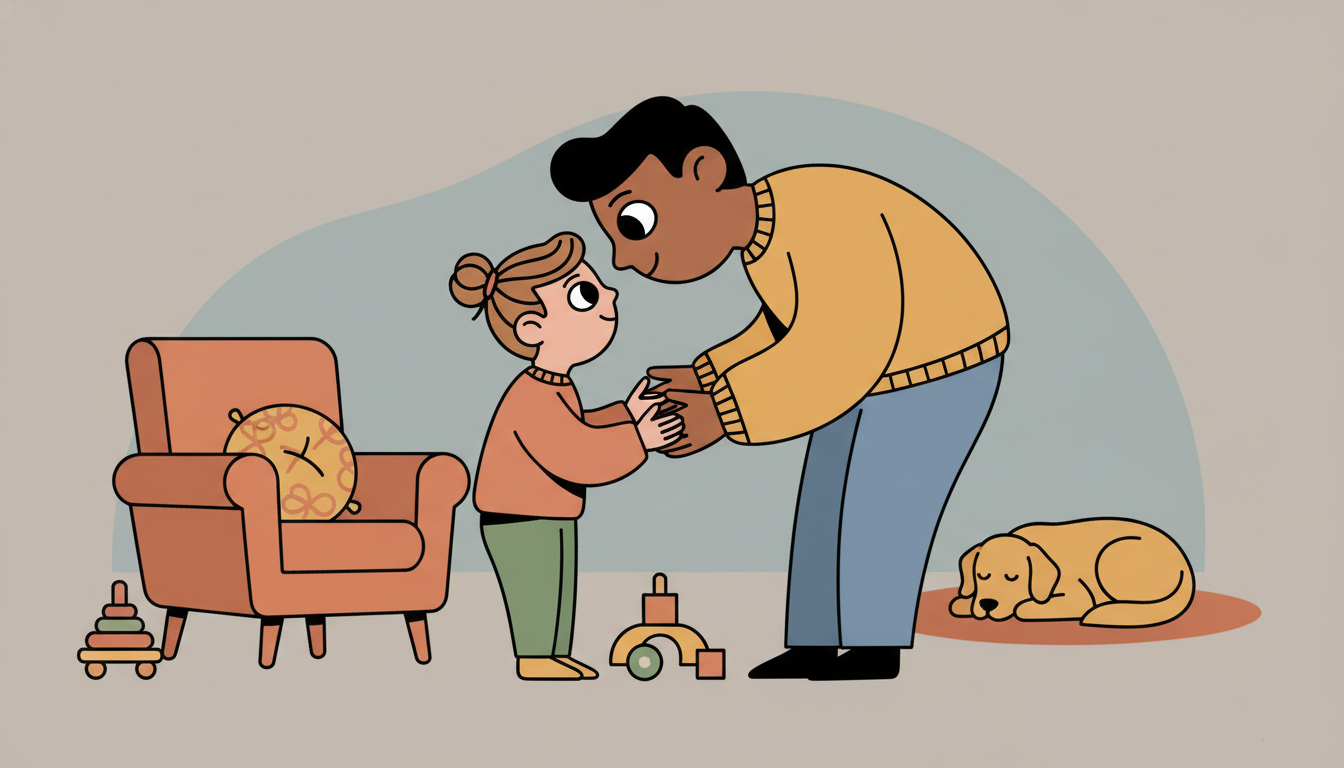
When you and your child have different preferences during activities, model how to disagree respectfully. Use phrases like I see it differently or I understand your point. Explain your thinking calmly and ask your child to share theirs. This teaches children that disagreement can happen within respectful, caring communication and does not threaten relationships.
Teil der Steadily-Entwicklungsreise — personalisiert für dein Kind.
So geht diese Aktivität
When you and your child have different preferences during activities, model how to disagree respectfully. Use phrases like I see it differently or I understand your point. Explain your thinking calmly and ask your child to share theirs. This teaches children that disagreement can happen within respectful, caring communication and does not threaten relationships.
Warum es funktioniert
Research shows that validation and active listening are more important than agreement in determining communication quality and relationship satisfaction (Hartos & Power, 2000). Teaching children to communicate respectfully even during disagreement builds social competencies essential for school and relationships (Widiastuti & Purwandari, 2019). Mirroring and empathy during conflict strengthen relationship quality (Zhang & Li, 2024).
Tipps für Eltern
Stay calm and use a normal tone during disagreements.
Acknowledge what your child wants before explaining your view.
Look for compromise solutions when appropriate.
Benötigte Materialien
None
Lernmethoden
Cooperative LearningStructured Academic LearningProject-Based and Thematic Learning

Hat dir diese Aktivität gefallen? Lass uns die Planung für dich übernehmen.
Steadily personalisiert jede Aktivität für dein Kind — seine Interessen, seine Entwicklungsstufe, die Eigenschaften, die es aufbaut — damit die Spielzeit mehr Spaß macht und jeder Moment zählt.
Erfahre, wie Steadily funktioniert →