Feelings face mirror play
3–4 JahreEmotional WellbeingMaterialien: Mirror
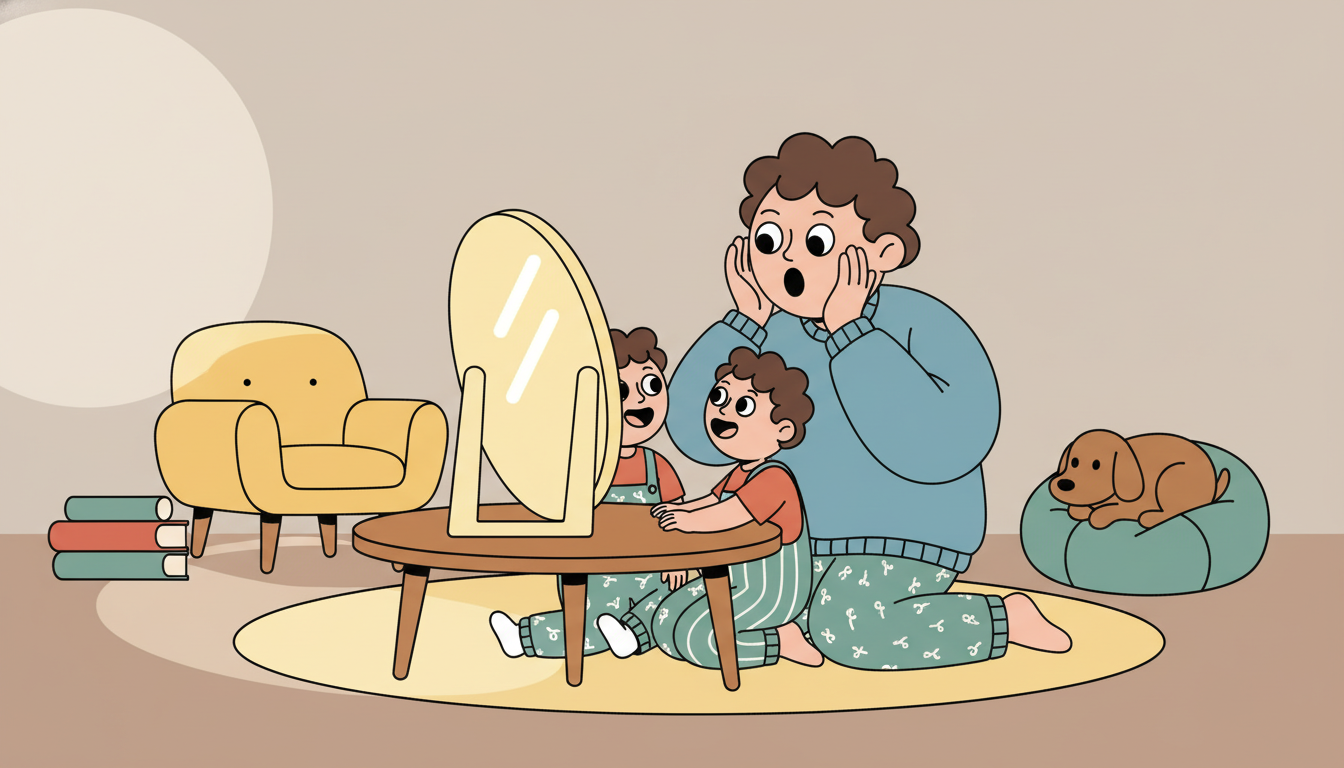
Sit with your child and take turns making different emotion faces in a mirror together. Name each emotion as you make the face. Try happy, sad, angry, surprised, and worried. Ask your child to copy your expressions and then let them lead. This helps build emotional recognition skills while having fun together.
Teil der Steadily-Entwicklungsreise — personalisiert für dein Kind.
So geht diese Aktivität
Sit with your child and take turns making different emotion faces in a mirror together. Name each emotion as you make the face. Try happy, sad, angry, surprised, and worried. Ask your child to copy your expressions and then let them lead. This helps build emotional recognition skills while having fun together.
Warum es funktioniert
Learning to recognize emotions in faces builds emotional intelligence during a critical developmental window. Children with better emotion understanding and regulation at age four show better peer relationships years later. Emotional intelligence development in early childhood leads to better emotional recognition, expression, and regulation skills in adulthood (Goleman, 1995).
Tipps für Eltern
Start with easy emotions like happy and sad.
Exaggerate your expressions to make it easier.
Let your child be the leader sometimes.
Benötigte Materialien
Mirror
Lernmethoden
Narrative and Literacy-Rich ExperiencesCollaborative and Cooperative PlayInquiry-Based Learning

Hat dir diese Aktivität gefallen? Lass uns die Planung für dich übernehmen.
Steadily personalisiert jede Aktivität für dein Kind — seine Interessen, seine Entwicklungsstufe, die Eigenschaften, die es aufbaut — damit die Spielzeit mehr Spaß macht und jeder Moment zählt.
Erfahre, wie Steadily funktioniert →