Feelings face drawing
4–5 JahreEmotional WellbeingMaterialien: Paper
Crayons or markers
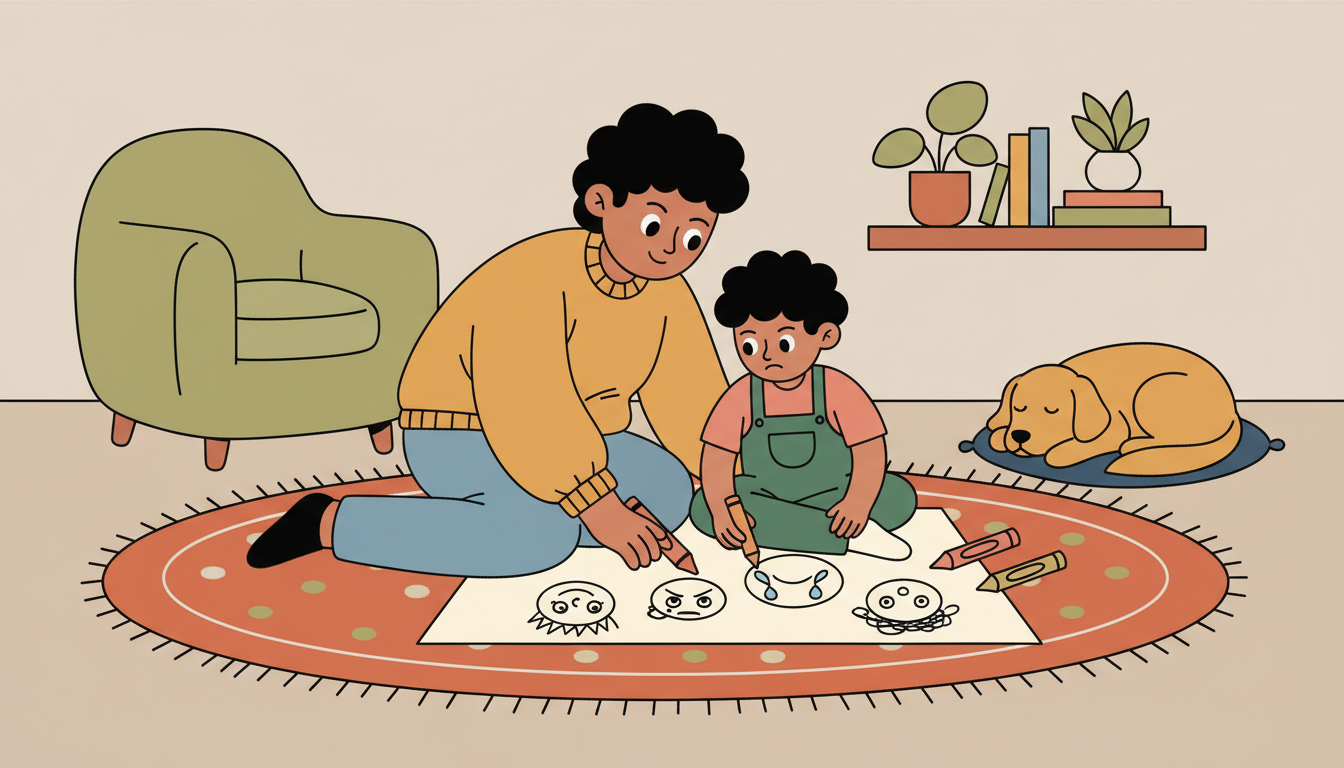
During your time together, draw different emotion faces with your child. Start with basic emotions like happy, sad, angry, and scared. Then introduce complex emotions like frustrated, disappointed, proud, or embarrassed. Take turns drawing and naming emotions. Talk about times when you each felt these emotions. This builds emotional vocabulary in a fun, creative way.
Teil der Steadily-Entwicklungsreise — personalisiert für dein Kind.
So geht diese Aktivität
During your time together, draw different emotion faces with your child. Start with basic emotions like happy, sad, angry, and scared. Then introduce complex emotions like frustrated, disappointed, proud, or embarrassed. Take turns drawing and naming emotions. Talk about times when you each felt these emotions. This builds emotional vocabulary in a fun, creative way.
Warum es funktioniert
Building rich emotional vocabulary is essential for emotional intelligence development. When children can identify and label their emotions accurately, they develop better emotional regulation and self-awareness. Research shows that emotional knowledge at age five predicts social competence and academic achievement, as children who can identify and understand emotions show better peer relationships and classroom behavior (Brackett, M. A., Rivers, S. E., & Salovey, P., 2011). At this age, children's theory of mind is fully developed, enabling them to understand sophisticated emotions beyond basic feelings.
Tipps für Eltern
Let your child lead sometimes by choosing which emotion to draw next. This builds their confidence.
Ask what each emotion feels like in their body. This helps them recognize emotions when they happen.
Keep drawings simple. Stick figures work perfectly for this activity.
Benötigte Materialien
Paper
Crayons or markers
Lernmethoden
Metacognitive StrategiesCooperative LearningStructured Academic Learning

Hat dir diese Aktivität gefallen? Lass uns die Planung für dich übernehmen.
Steadily personalisiert jede Aktivität für dein Kind — seine Interessen, seine Entwicklungsstufe, die Eigenschaften, die es aufbaut — damit die Spielzeit mehr Spaß macht und jeder Moment zählt.
Erfahre, wie Steadily funktioniert →