Emotion check-in time
3–4 JahreFamily ConnectionKeine Materialien erforderlich
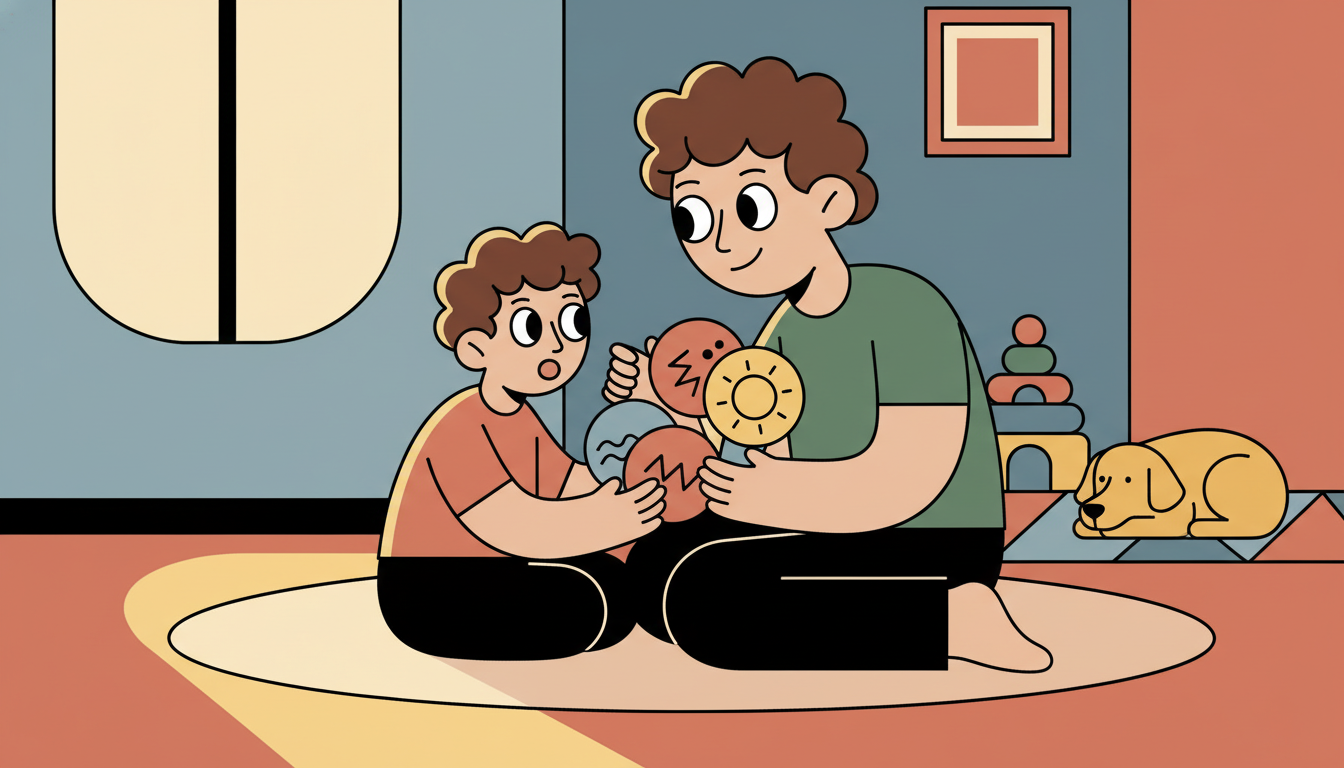
Set aside a few minutes each day to ask your child how they are feeling. Listen closely and reflect back what you hear. You might say, "It sounds like you felt frustrated when your tower fell down." This simple practice helps your child feel understood and builds trust between you.
Teil der Steadily-Entwicklungsreise — personalisiert für dein Kind.
So geht diese Aktivität
Set aside a few minutes each day to ask your child how they are feeling. Listen closely and reflect back what you hear. You might say, "It sounds like you felt frustrated when your tower fell down." This simple practice helps your child feel understood and builds trust between you.
Warum es funktioniert
Secure attachment helps children learn to express emotions appropriately and develop better emotional regulation throughout life (Ainsworth et al., 1978). When you attune to and validate your child's emotions, you strengthen their ability to trust you with their feelings. Research shows securely attached children demonstrate better emotion understanding and modulation, as they learn to appraise situations with changing demands (Thompson, 2008).
Tipps für Eltern
Let your child lead the conversation. You do not need to fix their feelings, just acknowledge them.
Use simple feeling words like happy, sad, frustrated, or excited. Your child will learn to name their emotions.
If your child is not ready to talk, that is okay. You can try again later. Stay patient and available.
Benötigte Materialien
None
Lernmethoden
Collaborative and Cooperative PlayNarrative and Literacy-Rich ExperiencesProject-Based Learning

Hat dir diese Aktivität gefallen? Lass uns die Planung für dich übernehmen.
Steadily personalisiert jede Aktivität für dein Kind — seine Interessen, seine Entwicklungsstufe, die Eigenschaften, die es aufbaut — damit die Spielzeit mehr Spaß macht und jeder Moment zählt.
Erfahre, wie Steadily funktioniert →