Collaborative problem solving
4–5 JahreFamily ConnectionKeine Materialien erforderlich
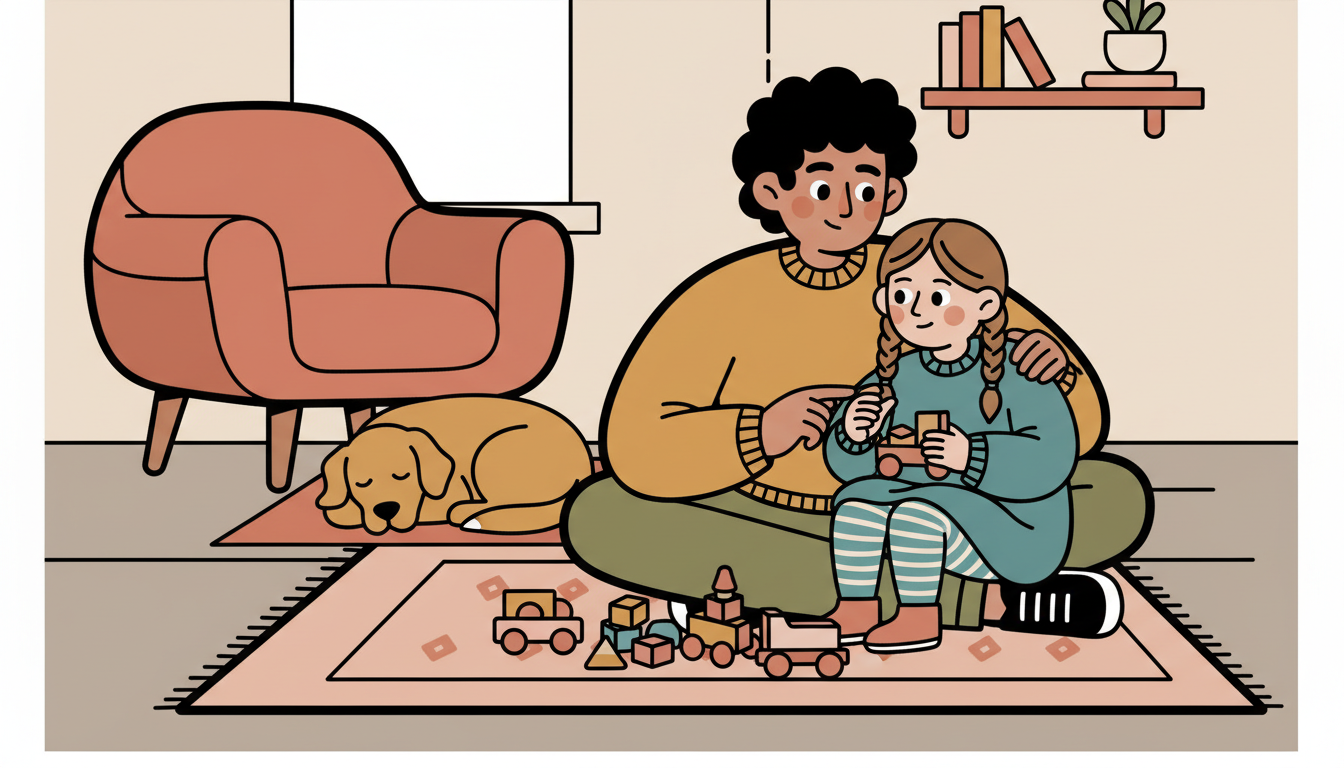
When small conflicts arise, solve them together instead of imposing solutions. Present the problem neutrally and ask for your child's ideas first. Then share your thoughts. Work toward a solution you both can accept. For example, if toys are not getting cleaned up, ask, "The toys are still out and we need to set the table. What ideas do you have?"
Teil der Steadily-Entwicklungsreise — personalisiert für dein Kind.
So geht diese Aktivität
When small conflicts arise, solve them together instead of imposing solutions. Present the problem neutrally and ask for your child's ideas first. Then share your thoughts. Work toward a solution you both can accept. For example, if toys are not getting cleaned up, ask, "The toys are still out and we need to set the table. What ideas do you have?"
Warum es funktioniert
Solving problems together shows that you value your child's thinking and respect their perspective. Reciprocal trust and respect established early predict lower rates of parent-child conflict and better cooperation during challenging developmental periods (Collins & Steinberg, 2006). At this age, children can think logically about concrete situations and participate meaningfully in finding solutions.
Tipps für Eltern
Focus on problems you both want to solve, not major discipline issues. Start with low-stakes situations like choosing activities or organizing toys.
If their solution will not work, explain why respectfully and suggest modifications rather than rejecting it completely.
Benötigte Materialien
None
Lernmethoden
Cooperative LearningMetacognitive StrategiesProject-Based and Thematic Learning

Hat dir diese Aktivität gefallen? Lass uns die Planung für dich übernehmen.
Steadily personalisiert jede Aktivität für dein Kind — seine Interessen, seine Entwicklungsstufe, die Eigenschaften, die es aufbaut — damit die Spielzeit mehr Spaß macht und jeder Moment zählt.
Erfahre, wie Steadily funktioniert →