Calm voice practice
4–5 JahreFamily ConnectionKeine Materialien erforderlich
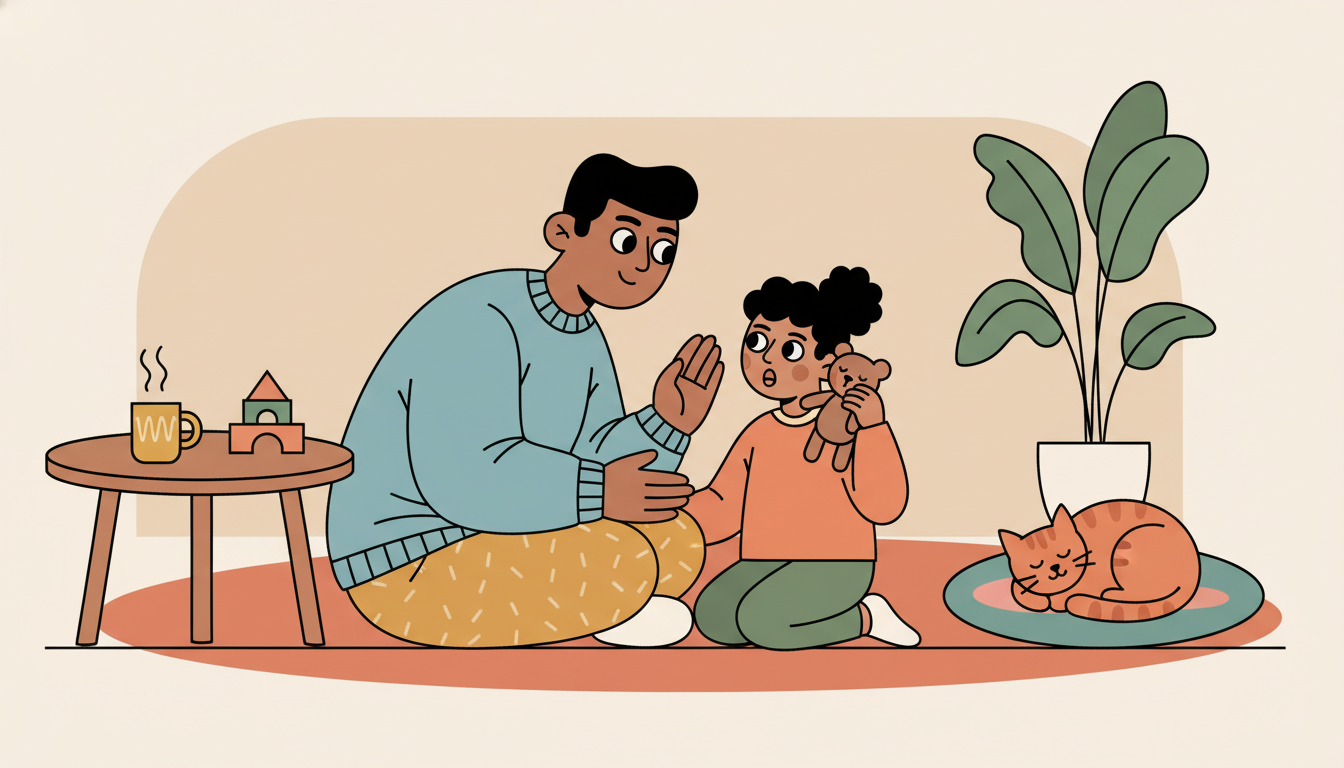
When your child gets upset during a disagreement, model and teach using a calm voice to express feelings. You might say your own feelings in a calm way first, then coach your child to try the same. Praise any effort to use words instead of yelling or physical responses. If needed, take a brief calm-down break before continuing the conversation about the conflict.
Teil der Steadily-Entwicklungsreise — personalisiert für dein Kind.
So geht diese Aktivität
When your child gets upset during a disagreement, model and teach using a calm voice to express feelings. You might say your own feelings in a calm way first, then coach your child to try the same. Praise any effort to use words instead of yelling or physical responses. If needed, take a brief calm-down break before continuing the conversation about the conflict.
Warum es funktioniert
Children who learn to calmly discuss disagreements show 30% better emotional regulation and relationship maintenance throughout development (Shantz, 1987). Staying regulated during your child's dysregulation models the exact skill you want them to develop. At this age, children can understand explicit teaching about emotional expression and have the language capacity to express frustration with words when coached.
Tipps für Eltern
Your own calm tone matters more than what you say. Children learn by watching you.
Keep your coaching brief. A simple reminder like calm words helps is often enough.
Recognize that learning this skill takes time and many practice opportunities.
Benötigte Materialien
None
Lernmethoden
Cooperative LearningMetacognitive StrategiesStructured Academic Learning

Hat dir diese Aktivität gefallen? Lass uns die Planung für dich übernehmen.
Steadily personalisiert jede Aktivität für dein Kind — seine Interessen, seine Entwicklungsstufe, die Eigenschaften, die es aufbaut — damit die Spielzeit mehr Spaß macht und jeder Moment zählt.
Erfahre, wie Steadily funktioniert →