Truth-telling puppet show
2–3 JahreSuccess MindsetMaterialien: Stuffed animals or simple puppets
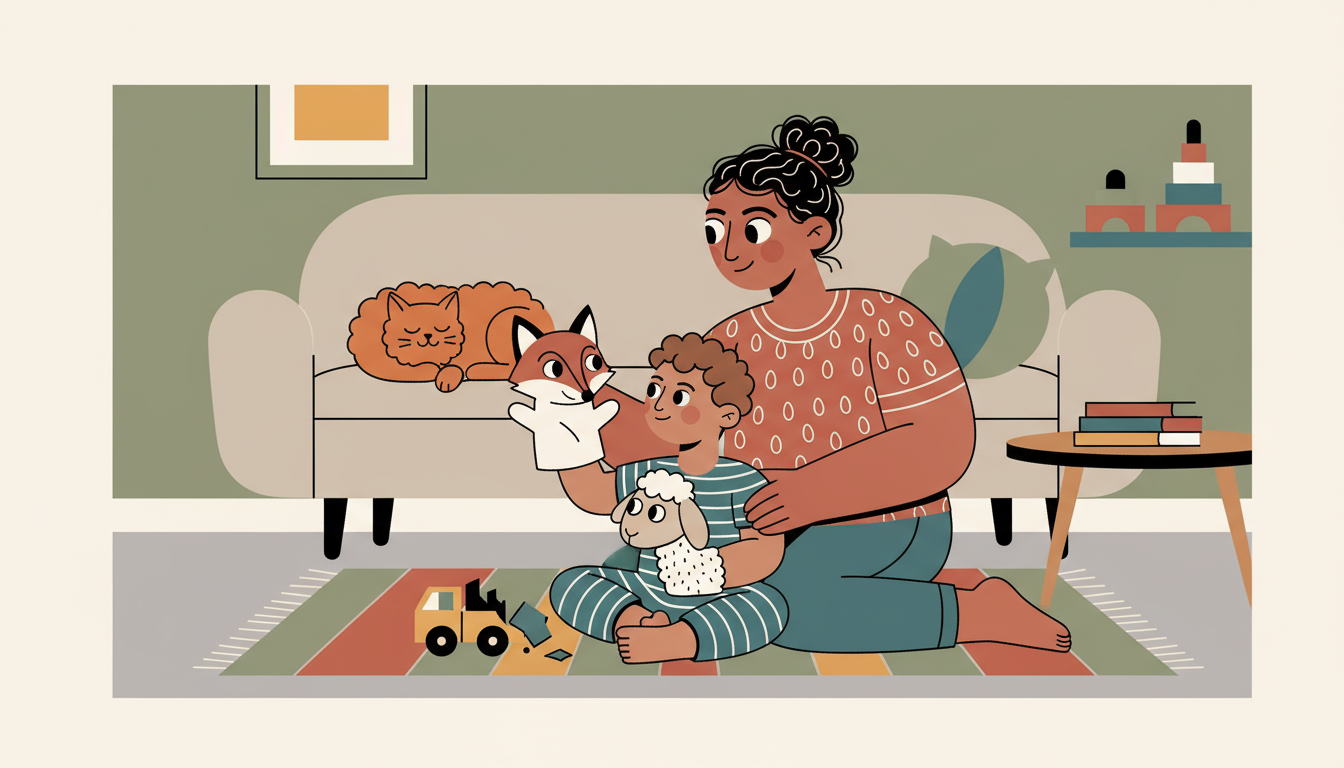
Use stuffed animals or simple hand puppets to act out short scenarios where a character faces a choice about telling the truth. Keep scenes simple, like a puppet accidentally breaking a toy and deciding whether to tell. After each scene, talk with your child about what happened and what the puppet should do.
Teil der Steadily-Entwicklungsreise — personalisiert für dein Kind.
So geht diese Aktivität
Use stuffed animals or simple hand puppets to act out short scenarios where a character faces a choice about telling the truth. Keep scenes simple, like a puppet accidentally breaking a toy and deciding whether to tell. After each scene, talk with your child about what happened and what the puppet should do.
Warum es funktioniert
Role-playing and pretend play help young children explore moral concepts in a safe, playful context. Children who demonstrate truthfulness and accountability for mistakes show stronger trust-building capabilities, which correlate with better collaborative relationships and academic success in group settings (Hoffman, 2000). At this age, symbolic play allows children to practice honesty scenarios without the pressure of real consequences.
Tipps für Eltern
Keep scenarios very simple and relatable to your child's daily experiences. Use a warm, calm tone when the puppet admits mistakes.
Praise your child when they identify the honest choice. You can say something like, "You're right, telling the truth helps everyone feel better."
Benötigte Materialien
Stuffed animals or simple puppets
Lernmethoden
Symbolic and Pretend PlaySongs, Stories, and Rhymes

Hat dir diese Aktivität gefallen? Lass uns die Planung für dich übernehmen.
Steadily personalisiert jede Aktivität für dein Kind — seine Interessen, seine Entwicklungsstufe, die Eigenschaften, die es aufbaut — damit die Spielzeit mehr Spaß macht und jeder Moment zählt.
Erfahre, wie Steadily funktioniert →