Puppet emotion play
3–4 JahreEmotional WellbeingMaterialien: Stuffed animals or simple puppets
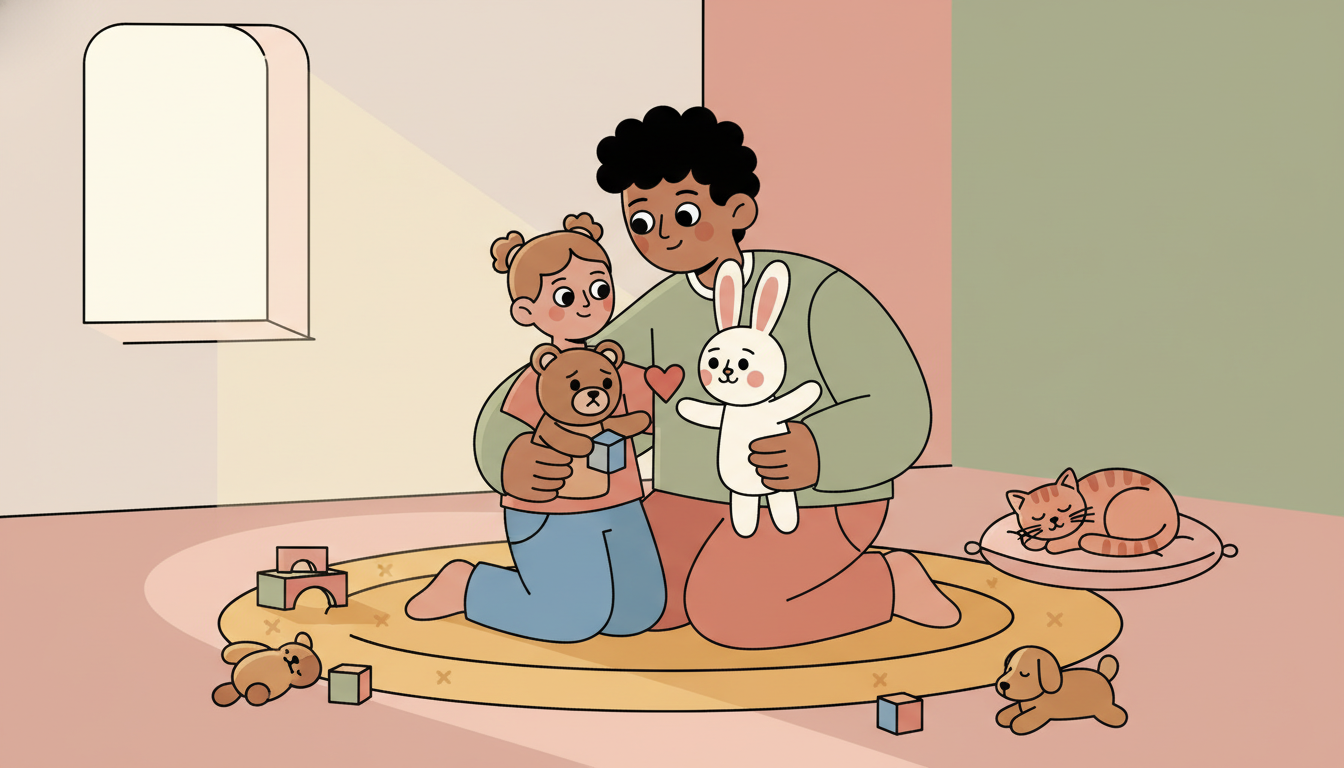
Use stuffed animals or simple puppets to act out emotional scenarios. Have one puppet lose a toy and feel sad, then work through the feeling together. Let your child guide the puppets through different situations. This provides safe distance to explore big emotions and practice empathy through pretend play.
Teil der Steadily-Entwicklungsreise — personalisiert für dein Kind.
So geht diese Aktivität
Use stuffed animals or simple puppets to act out emotional scenarios. Have one puppet lose a toy and feel sad, then work through the feeling together. Let your child guide the puppets through different situations. This provides safe distance to explore big emotions and practice empathy through pretend play.
Warum es funktioniert
Pretend play builds theory of mind and perspective-taking abilities during this critical developmental window. Children with higher emotional intelligence experience better relationship satisfaction and mental health (Bar-On, 2006). Using puppets gives children safe practice with emotional situations when emotional competence becomes developmentally possible.
Tipps für Eltern
Start with simple scenarios your child can relate to easily.
Let your child choose what happens next in the story.
Validate all emotions the puppets express during play.
Benötigte Materialien
Stuffed animals or simple puppets
Lernmethoden
Narrative and Literacy-Rich ExperiencesCollaborative and Cooperative PlayInquiry-Based Learning

Hat dir diese Aktivität gefallen? Lass uns die Planung für dich übernehmen.
Steadily personalisiert jede Aktivität für dein Kind — seine Interessen, seine Entwicklungsstufe, die Eigenschaften, die es aufbaut — damit die Spielzeit mehr Spaß macht und jeder Moment zählt.
Erfahre, wie Steadily funktioniert →