Name the helper game
1–2 JahreEmotional WellbeingKeine Materialien erforderlich
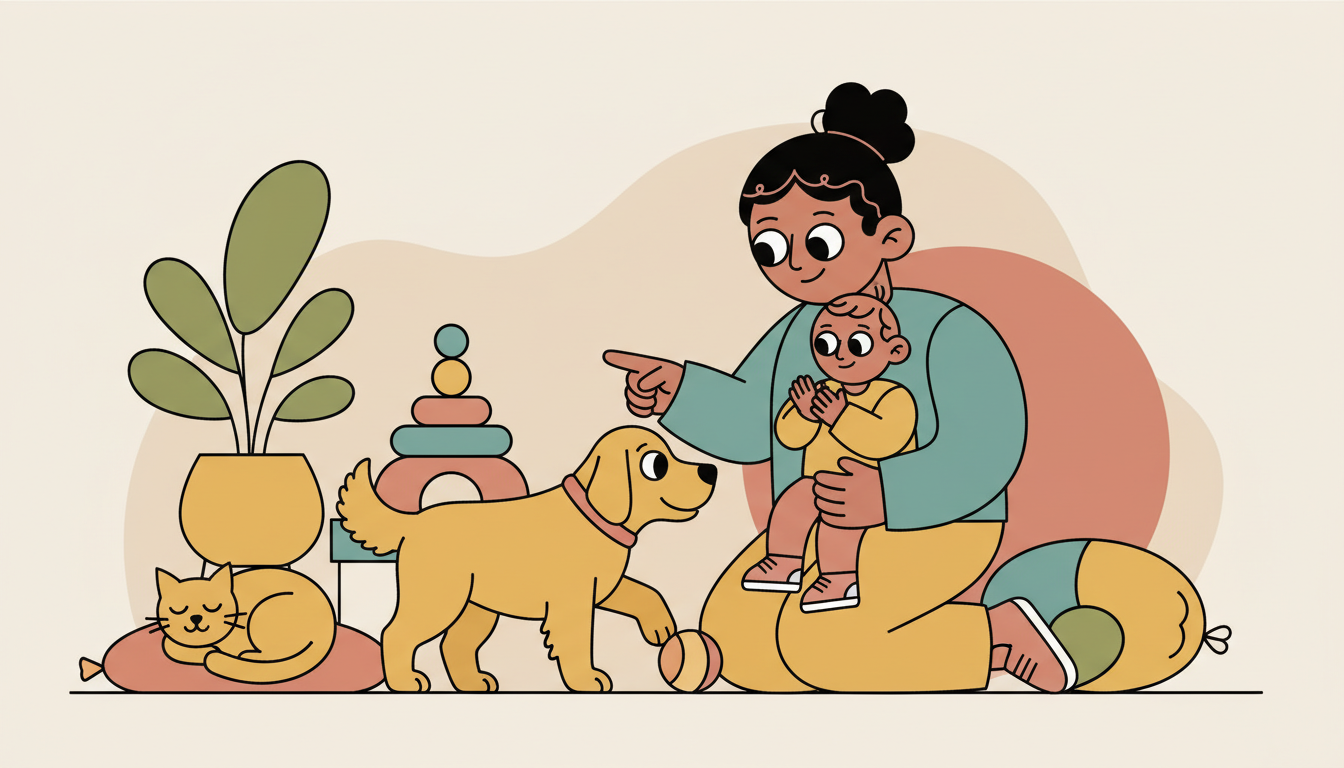
Throughout your day together, point out when someone helps you or your child. Say their name and what they did. For example, when dad brings water, say dad brought water for us. When grandma picks up a dropped toy, say grandma helped us. Keep your words simple and repeat the pattern. Your child begins to notice kind actions from others.
Teil der Steadily-Entwicklungsreise — personalisiert für dein Kind.
So geht diese Aktivität
Throughout your day together, point out when someone helps you or your child. Say their name and what they did. For example, when dad brings water, say dad brought water for us. When grandma picks up a dropped toy, say grandma helped us. Keep your words simple and repeat the pattern. Your child begins to notice kind actions from others.
Warum es funktioniert
A language-rich environment supports vocabulary development during this stage when toddlers experience a vocabulary explosion. Naming helpers and their actions builds awareness of others' contributions. Regular acknowledgment and appreciation in childhood develops strong gratitude habits that predict well-being in adulthood (Emmons & McCullough, 2003). Gratitude practices enhance engagement and positive relationships across the lifespan.
Tipps für Eltern
Use the same simple sentence pattern each time so your child can learn it.
Point to the person as you name them to help your child connect words and actions.
Your child may not respond at first, but they are listening and learning.
Benötigte Materialien
None
Lernmethoden
Language-Rich EnvironmentImitation and Modeling

Hat dir diese Aktivität gefallen? Lass uns die Planung für dich übernehmen.
Steadily personalisiert jede Aktivität für dein Kind — seine Interessen, seine Entwicklungsstufe, die Eigenschaften, die es aufbaut — damit die Spielzeit mehr Spaß macht und jeder Moment zählt.
Erfahre, wie Steadily funktioniert →