Name the feeling game
3–4 JahreFamily ConnectionKeine Materialien erforderlich
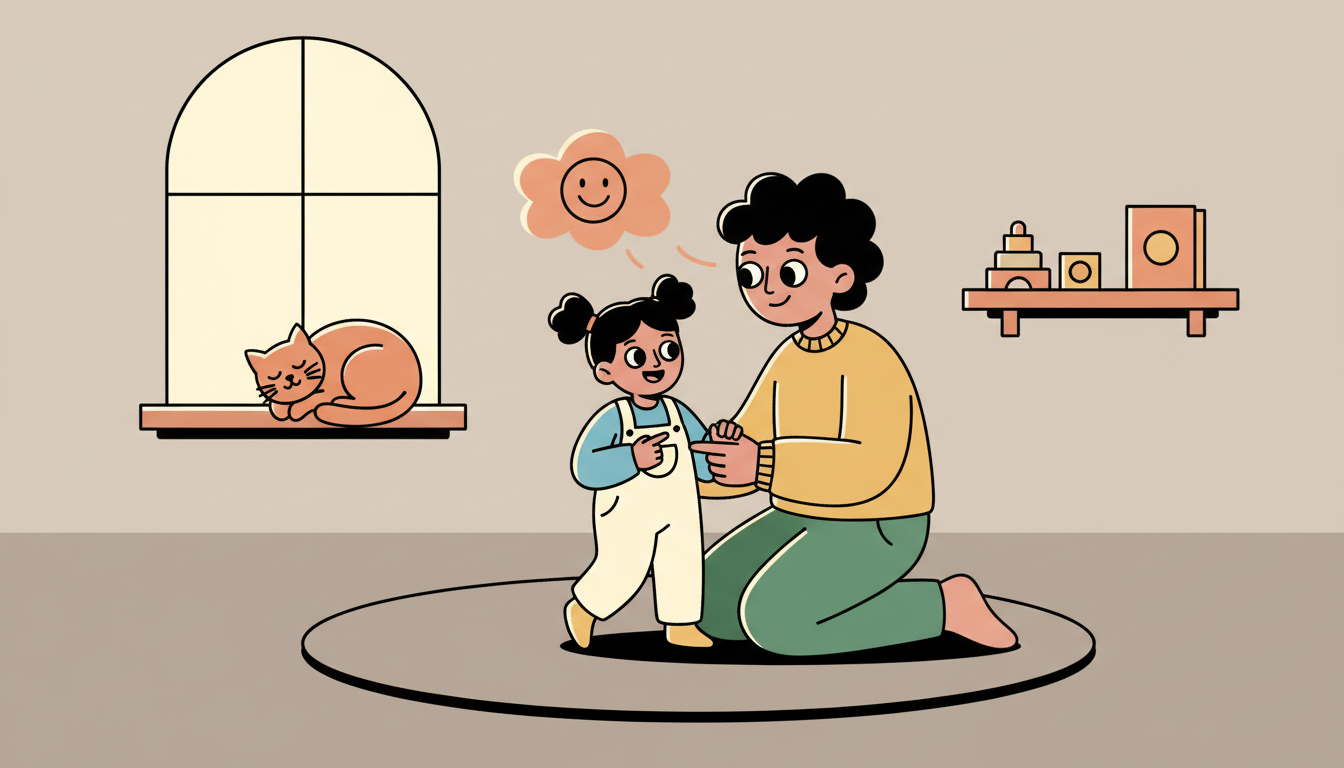
Throughout the day, help your child name their feelings as they experience them. When you notice an emotion, gently label it. "You look excited about going to the park." Or, "I see you are feeling sad about saying goodbye." This helps your child develop emotional vocabulary and feel understood.
Teil der Steadily-Entwicklungsreise — personalisiert für dein Kind.
So geht diese Aktivität
Throughout the day, help your child name their feelings as they experience them. When you notice an emotion, gently label it. "You look excited about going to the park." Or, "I see you are feeling sad about saying goodbye." This helps your child develop emotional vocabulary and feel understood.
Warum es funktioniert
Helping your child identify and express emotions builds emotional literacy and strengthens your bond. Securely attached children showed greater decrease in negative affect and better emotional recovery when parents were attuned to their emotions (Borelli et al., 2021). This emotional validation promotes developmental competence in emotion expression and helps children appraise situations more effectively (Thompson, 2008).
Tipps für Eltern
Start with basic emotions like happy, sad, angry, scared, and excited. Build vocabulary gradually.
Describe what you see without judgment. Simply notice and name the emotion.
Share your own feelings too. "I feel tired right now" helps your child learn emotions are normal.
Benötigte Materialien
None
Lernmethoden
Collaborative and Cooperative PlayNarrative and Literacy-Rich ExperiencesProject-Based Learning

Hat dir diese Aktivität gefallen? Lass uns die Planung für dich übernehmen.
Steadily personalisiert jede Aktivität für dein Kind — seine Interessen, seine Entwicklungsstufe, die Eigenschaften, die es aufbaut — damit die Spielzeit mehr Spaß macht und jeder Moment zählt.
Erfahre, wie Steadily funktioniert →