Happy meal planning
1–2 JahreEmotional WellbeingMaterialien: Regular meal or snack foods
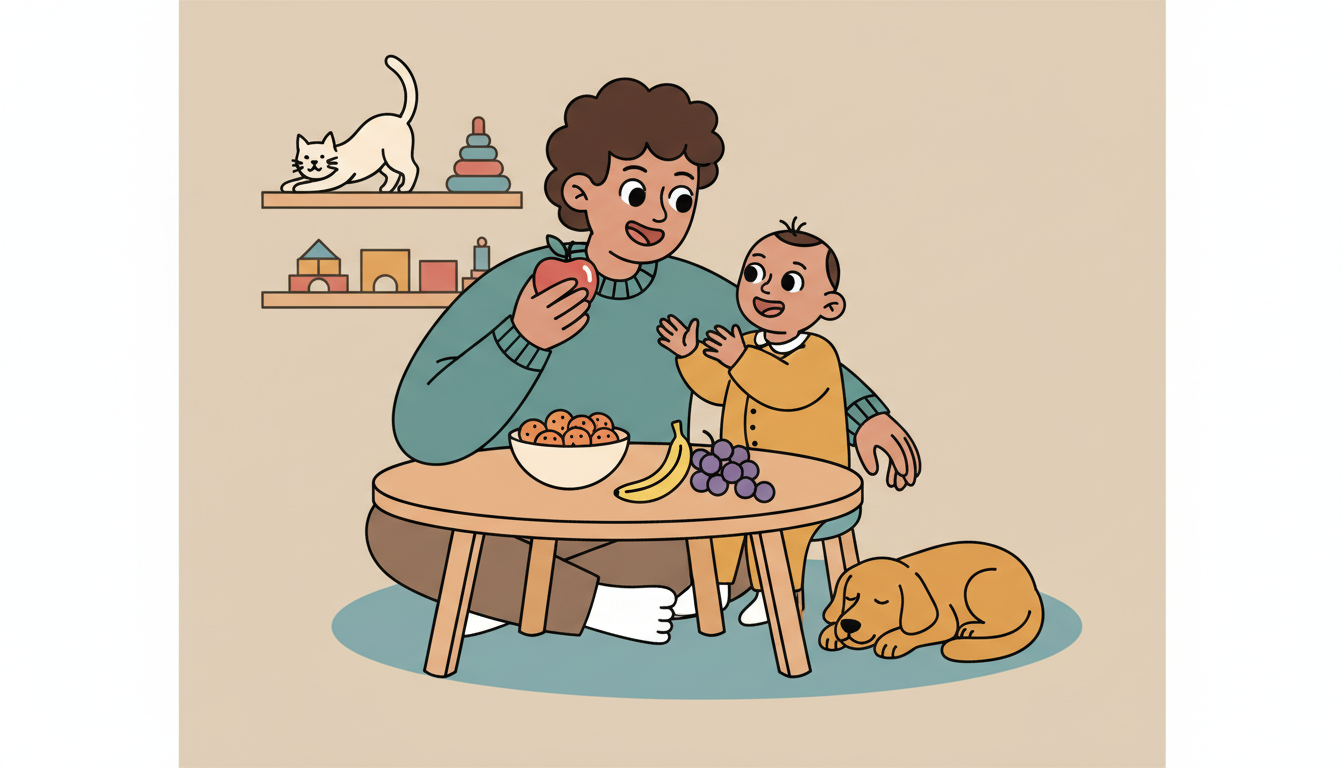
During meals or snack preparation, talk positively about the food you're offering. Say "This apple is going to taste good" or "You might like these crackers." Even if your child rejects food, stay positive and say "Maybe next time." This creates positive expectations around eating and shows that trying new things is safe and potentially enjoyable.
Teil der Steadily-Entwicklungsreise — personalisiert für dein Kind.
So geht diese Aktivität
During meals or snack preparation, talk positively about the food you're offering. Say "This apple is going to taste good" or "You might like these crackers." Even if your child rejects food, stay positive and say "Maybe next time." This creates positive expectations around eating and shows that trying new things is safe and potentially enjoyable.
Warum es funktioniert
Using positive language about experiences helps children develop optimistic expectations about trying new things. Research shows that optimism showed positive effects on adaptation and that students with optimistic dispositions demonstrated better coping strategies when facing challenges (Tetzner & Becker, 2018). By framing food positively, you help your child approach new experiences with openness rather than fear.
Tipps für Eltern
Avoid pressure. Offer food with optimism but accept refusal calmly.
Use positive language about food. Say "This is crunchy" instead of "You won't like this."
Model enjoying food yourself. Your child learns by watching you.
Benötigte Materialien
Regular meal or snack foods
Lernmethoden
Language-Rich EnvironmentImitation and Modeling

Hat dir diese Aktivität gefallen? Lass uns die Planung für dich übernehmen.
Steadily personalisiert jede Aktivität für dein Kind — seine Interessen, seine Entwicklungsstufe, die Eigenschaften, die es aufbaut — damit die Spielzeit mehr Spaß macht und jeder Moment zählt.
Erfahre, wie Steadily funktioniert →