Feelings treasure hunt
3–4 JahreEmotional WellbeingMaterialien: Paper
Crayons or markers
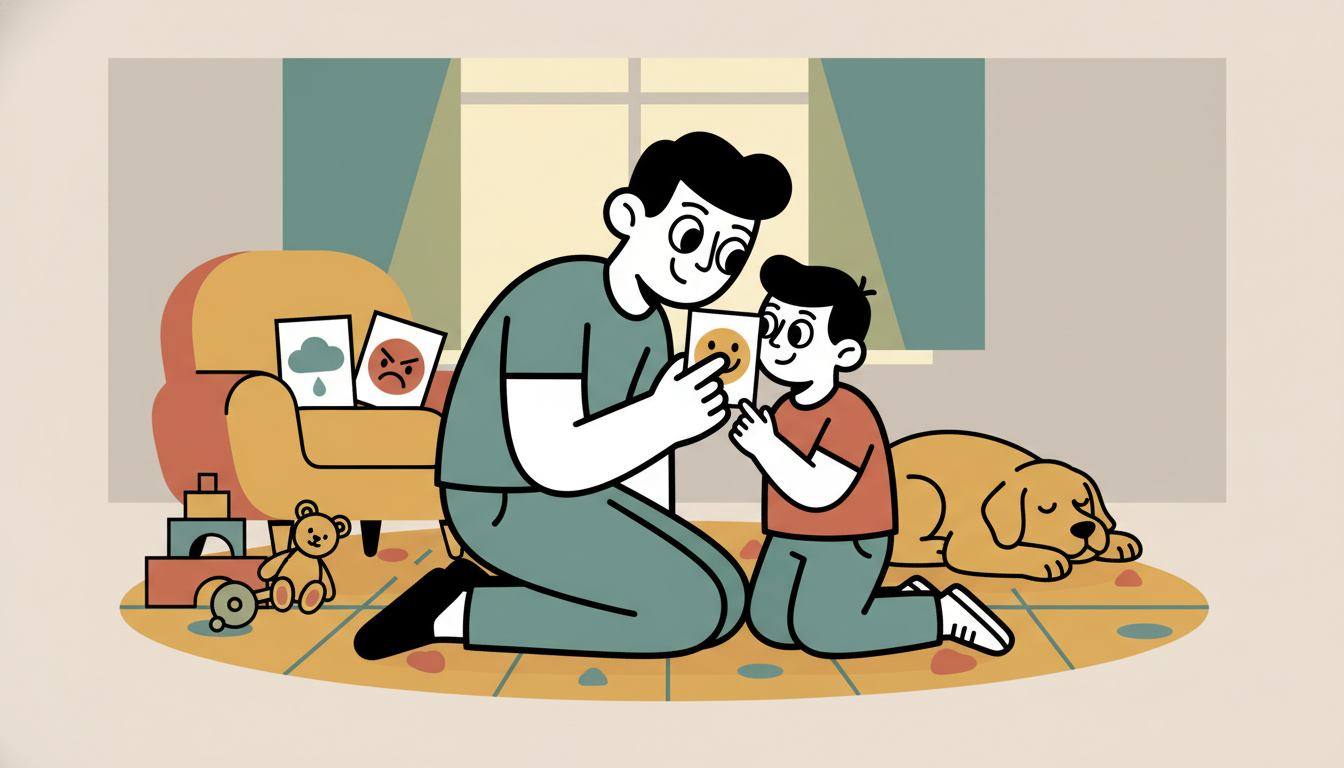
Hide simple feeling cards or drawings around your play area. Go on a treasure hunt together to find them. When your child finds one, talk about that emotion. Ask when they last felt that way or what makes them feel like that. You share your experiences too. This makes emotion exploration active and engaging.
Teil der Steadily-Entwicklungsreise — personalisiert für dein Kind.
So geht diese Aktivität
Hide simple feeling cards or drawings around your play area. Go on a treasure hunt together to find them. When your child finds one, talk about that emotion. Ask when they last felt that way or what makes them feel like that. You share your experiences too. This makes emotion exploration active and engaging.
Warum es funktioniert
Building rich emotional vocabulary supports emotion regulation abilities. Students with higher emotional intelligence showed significantly better academic performance and psychological well-being, with enhanced social interactions (Brackett et al., 2011). Active exploration during this sensitive period strengthens emotional awareness and expression skills.
Tipps für Eltern
Start with four or five basic emotions to keep it simple.
Let your child help draw the feeling faces beforehand.
Take turns sharing experiences for each emotion found.
Benötigte Materialien
Paper
Crayons or markers
Lernmethoden
Narrative and Literacy-Rich ExperiencesCollaborative and Cooperative PlayInquiry-Based Learning

Hat dir diese Aktivität gefallen? Lass uns die Planung für dich übernehmen.
Steadily personalisiert jede Aktivität für dein Kind — seine Interessen, seine Entwicklungsstufe, die Eigenschaften, die es aufbaut — damit die Spielzeit mehr Spaß macht und jeder Moment zählt.
Erfahre, wie Steadily funktioniert →