Feelings charades
2–3 JahreEmotional WellbeingKeine Materialien erforderlich
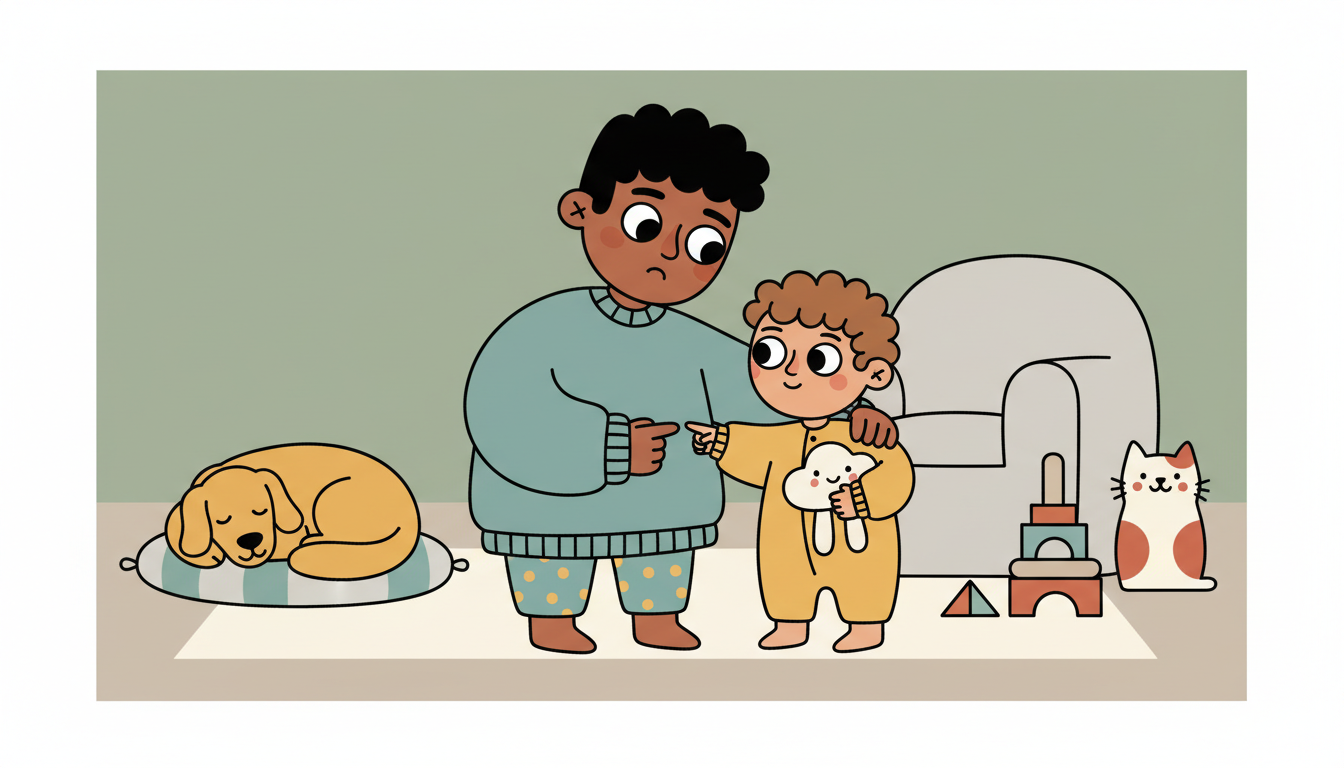
Take turns acting out different emotions while the other person guesses. Start with basic feelings like happy, sad, or sleepy. Use your whole body and face to show each emotion.
Teil der Steadily-Entwicklungsreise — personalisiert für dein Kind.
So geht diese Aktivität
Take turns acting out different emotions while the other person guesses. Start with basic feelings like happy, sad, or sleepy. Use your whole body and face to show each emotion.
This active game helps your child understand that emotions show up in our bodies, not just our faces. It makes emotional learning playful and memorable.
Warum es funktioniert
Pretend play is critical for cognitive, social, and emotional development at this age. Research demonstrates that emotional intelligence development in early childhood, particularly through play-based emotional recognition activities, leads to better emotional expression and regulation skills in adulthood (Goleman, 1995). Students with higher emotional intelligence show significantly better psychological well-being and positive psychological characteristics (Brackett et al., 2011).
Tipps für Eltern
Keep it simple and silly. Exaggerate your expressions and movements to make it easier for your child to guess.
If guessing is too hard, you can both act out the same feeling together while saying the word.
Benötigte Materialien
None
Lernmethoden
Symbolic and Pretend PlaySongs, Stories, and RhymesSocial Learning Through Peers

Hat dir diese Aktivität gefallen? Lass uns die Planung für dich übernehmen.
Steadily personalisiert jede Aktivität für dein Kind — seine Interessen, seine Entwicklungsstufe, die Eigenschaften, die es aufbaut — damit die Spielzeit mehr Spaß macht und jeder Moment zählt.
Erfahre, wie Steadily funktioniert →