Feelings after setbacks
3–4 JahreEmotional WellbeingKeine Materialien erforderlich
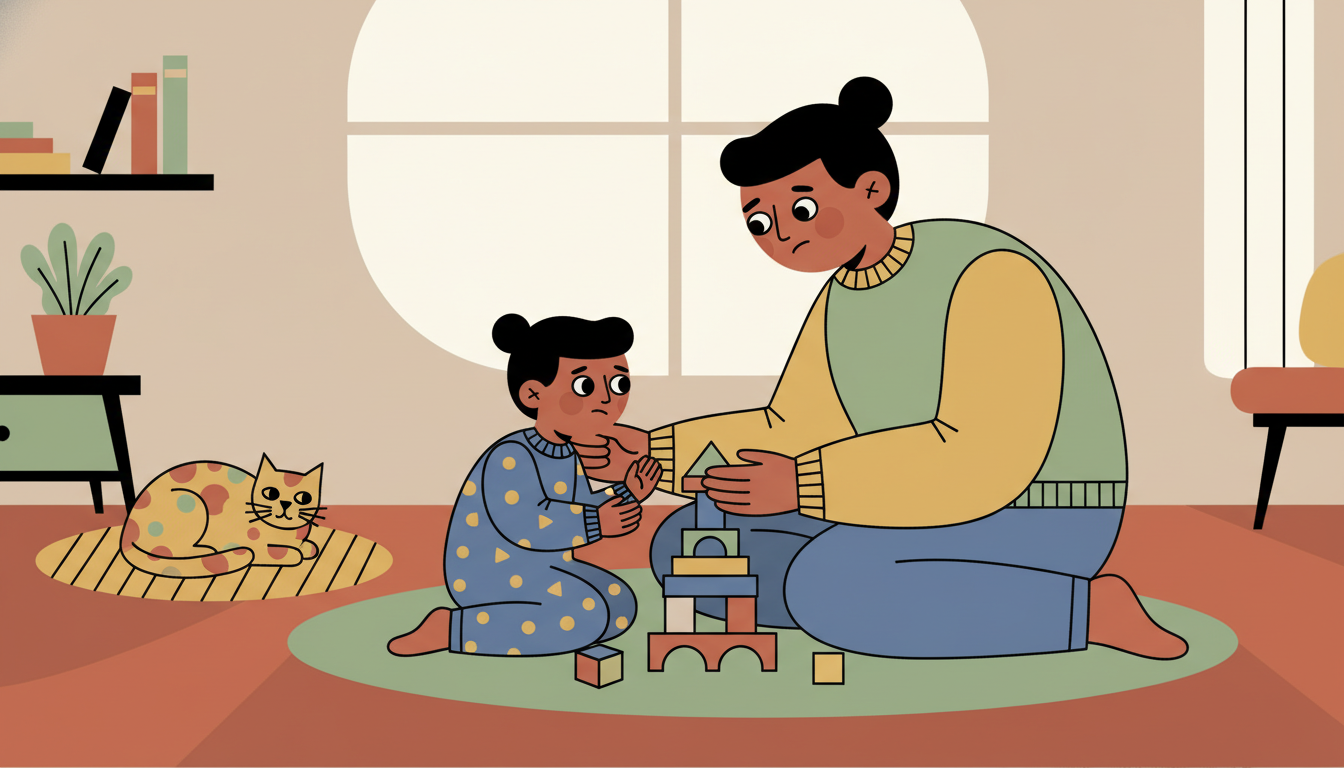
When something doesn't go as planned during play, like a block tower falling or a drawing not turning out right, sit with your child and talk about what happened. Ask how they feel and what might help them feel better. This normalizes disappointment and teaches that we can recover from small setbacks.
Teil der Steadily-Entwicklungsreise — personalisiert für dein Kind.
So geht diese Aktivität
When something doesn't go as planned during play, like a block tower falling or a drawing not turning out right, sit with your child and talk about what happened. Ask how they feel and what might help them feel better. This normalizes disappointment and teaches that we can recover from small setbacks.
Warum es funktioniert
Discussing feelings after challenges builds emotional regulation skills that form the foundation of resilience. Children with higher emotional and behavioral resilience show significantly better outcomes in managing stress and adapting to difficulties (Liew et al., 2008). This practice helps children develop the self-awareness and coping strategies that protect against anxiety and depression later in life.
Tipps für Eltern
Use simple feeling words like sad, frustrated, or disappointed to help your child identify emotions.
Share a time when something similar happened to you and how you handled it.
Offer choices for what to do next, like trying again or doing something different.
Benötigte Materialien
None
Lernmethoden
Project-Based LearningInquiry-Based LearningStructured Learning Activities

Hat dir diese Aktivität gefallen? Lass uns die Planung für dich übernehmen.
Steadily personalisiert jede Aktivität für dein Kind — seine Interessen, seine Entwicklungsstufe, die Eigenschaften, die es aufbaut — damit die Spielzeit mehr Spaß macht und jeder Moment zählt.
Erfahre, wie Steadily funktioniert →