Feeling faces check-in
3–4 JahreFamily ConnectionKeine Materialien erforderlich
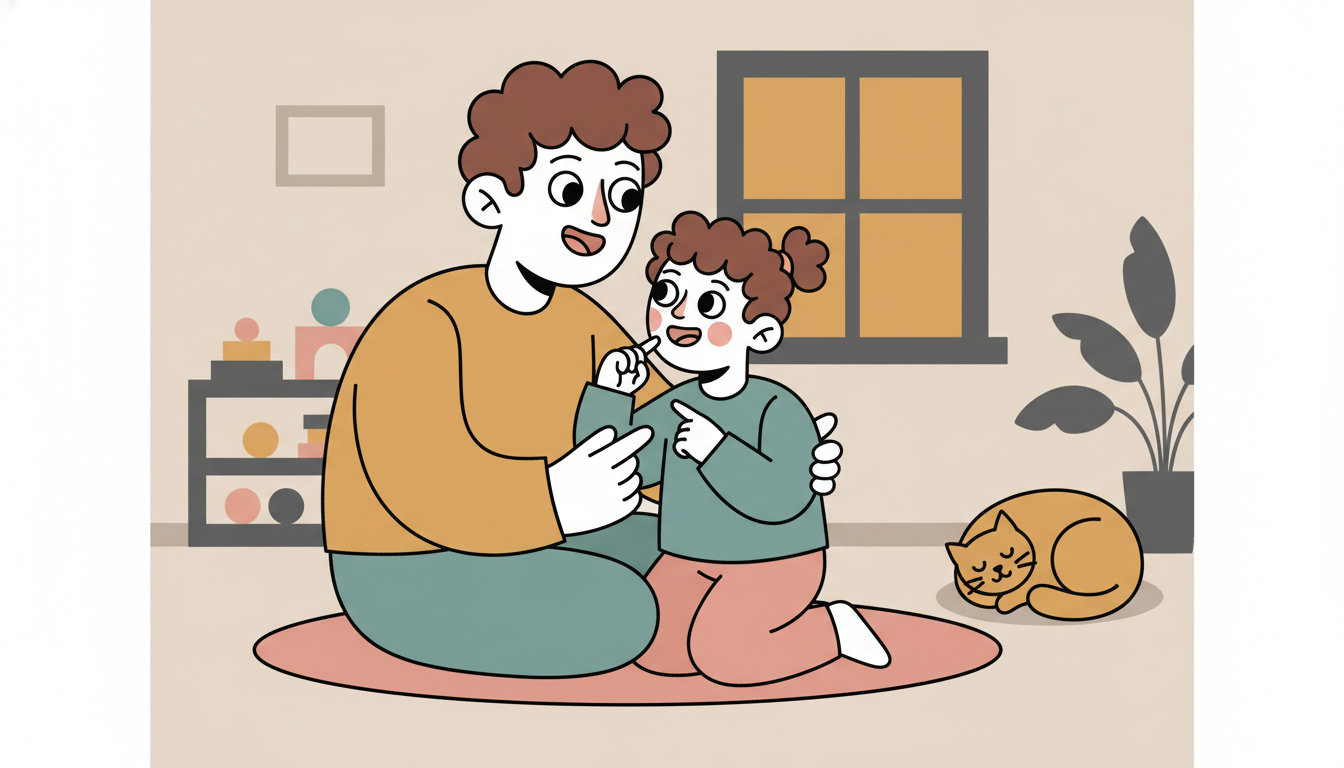
Several times during your time together, pause and ask your child 'How are you feeling right now?' Encourage them to tell you in words rather than just pointing or nodding. Share your own feelings too, using simple statements like 'I feel happy when we play together' or 'I feel tired after work.'
Teil der Steadily-Entwicklungsreise — personalisiert für dein Kind.
So geht diese Aktivität
Several times during your time together, pause and ask your child 'How are you feeling right now?' Encourage them to tell you in words rather than just pointing or nodding. Share your own feelings too, using simple statements like 'I feel happy when we play together' or 'I feel tired after work.'
Warum es funktioniert
Frequent emotional check-ins build the communication quality factors of mirroring and appropriate response that enhance children's psychological development (Zhang & Li, 2024). When parents validate and reflect feelings before problem-solving, children learn that their emotional experiences are understood and valued. This practice establishes the open communication patterns that correlate with enduring parent-child relationships (Hartos & Power, 2000).
Tipps für Eltern
Make this feel natural rather than like a test by weaving it into activities you're already doing.
When your child shares a feeling, reflect it back like 'It sounds like you're feeling frustrated that the blocks keep falling.'
Use your own feeling statements to model how to express emotions clearly.
Benötigte Materialien
None
Lernmethoden
Narrative and Literacy-Rich ExperiencesCollaborative and Cooperative PlayInquiry-Based Learning

Hat dir diese Aktivität gefallen? Lass uns die Planung für dich übernehmen.
Steadily personalisiert jede Aktivität für dein Kind — seine Interessen, seine Entwicklungsstufe, die Eigenschaften, die es aufbaut — damit die Spielzeit mehr Spaß macht und jeder Moment zählt.
Erfahre, wie Steadily funktioniert →