Face feelings match
2–3 JahreFamily ConnectionMaterialien: None, or a mirror if available
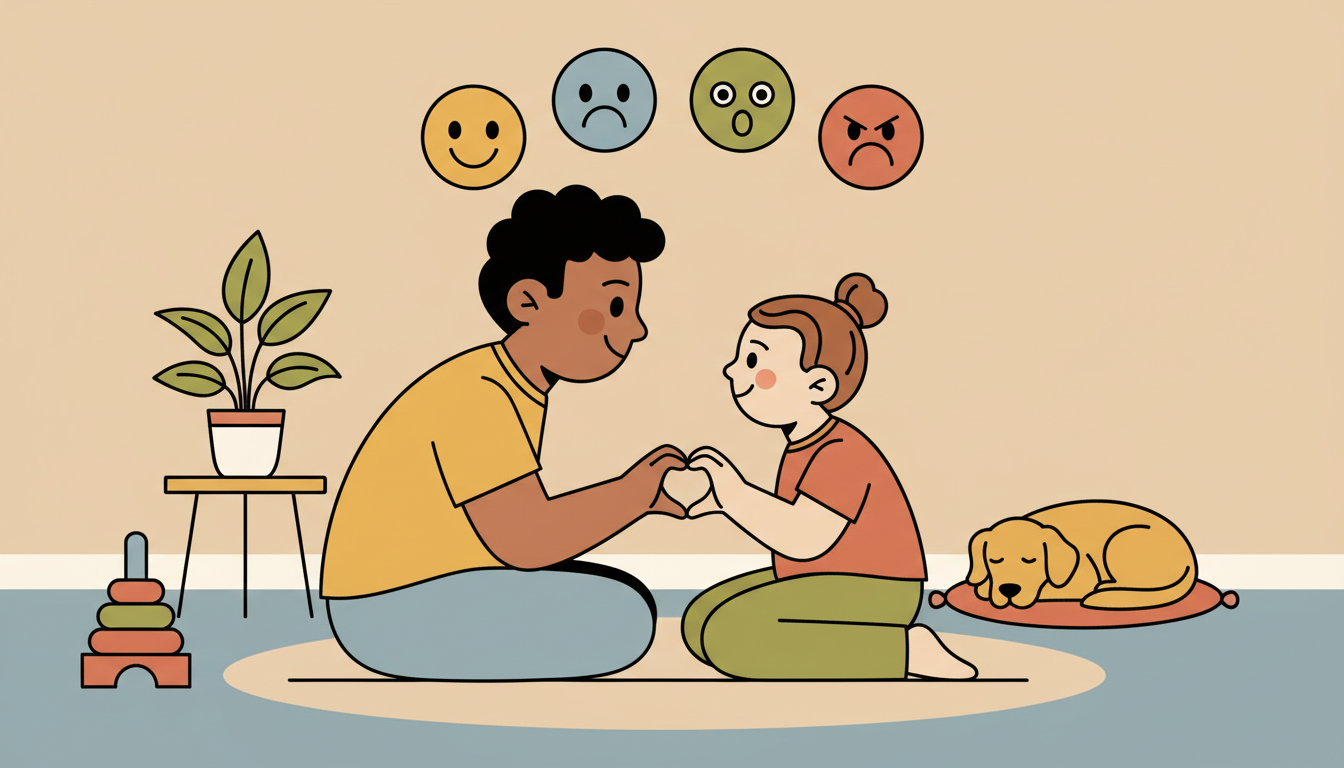
Make simple faces showing different emotions. Say 'I am making a happy face. Can you make one too?' Try sad, surprised, and mad faces. When your child copies you, name what you see: 'You made a sad face. Your mouth goes down when you are sad.' Take turns making faces.
Teil der Steadily-Entwicklungsreise — personalisiert für dein Kind.
So geht diese Aktivität
Make simple faces showing different emotions. Say 'I am making a happy face. Can you make one too?' Try sad, surprised, and mad faces. When your child copies you, name what you see: 'You made a sad face. Your mouth goes down when you are sad.' Take turns making faces.
Warum es funktioniert
Recognizing emotions in self and others is a key developmental indicator of emerging empathy. This activity helps children practice the foundational skill of distinguishing different emotional states. Parental empathy and modeling create the positive family climate that fosters children's empathy abilities and social behavior (Sánchez-Pérez, N., Fuentes, L. J., Jolliffe, D., & González-Salinas, C., 2018). Imitation and social learning are powerful at this age.
Tipps für Eltern
Start with happy and sad. These are easiest for young children to recognize and copy.
Use a mirror if you have one handy. Seeing their own expressions helps children understand emotions better.
Benötigte Materialien
None, or a mirror if available
Lernmethoden
Symbolic and Pretend PlaySongs, Stories, and RhymesSocial Learning Through Peers

Hat dir diese Aktivität gefallen? Lass uns die Planung für dich übernehmen.
Steadily personalisiert jede Aktivität für dein Kind — seine Interessen, seine Entwicklungsstufe, die Eigenschaften, die es aufbaut — damit die Spielzeit mehr Spaß macht und jeder Moment zählt.
Erfahre, wie Steadily funktioniert →