Walking detour game
1–2 JahreEmotional WellbeingMaterialien: Soft pillow or cushion
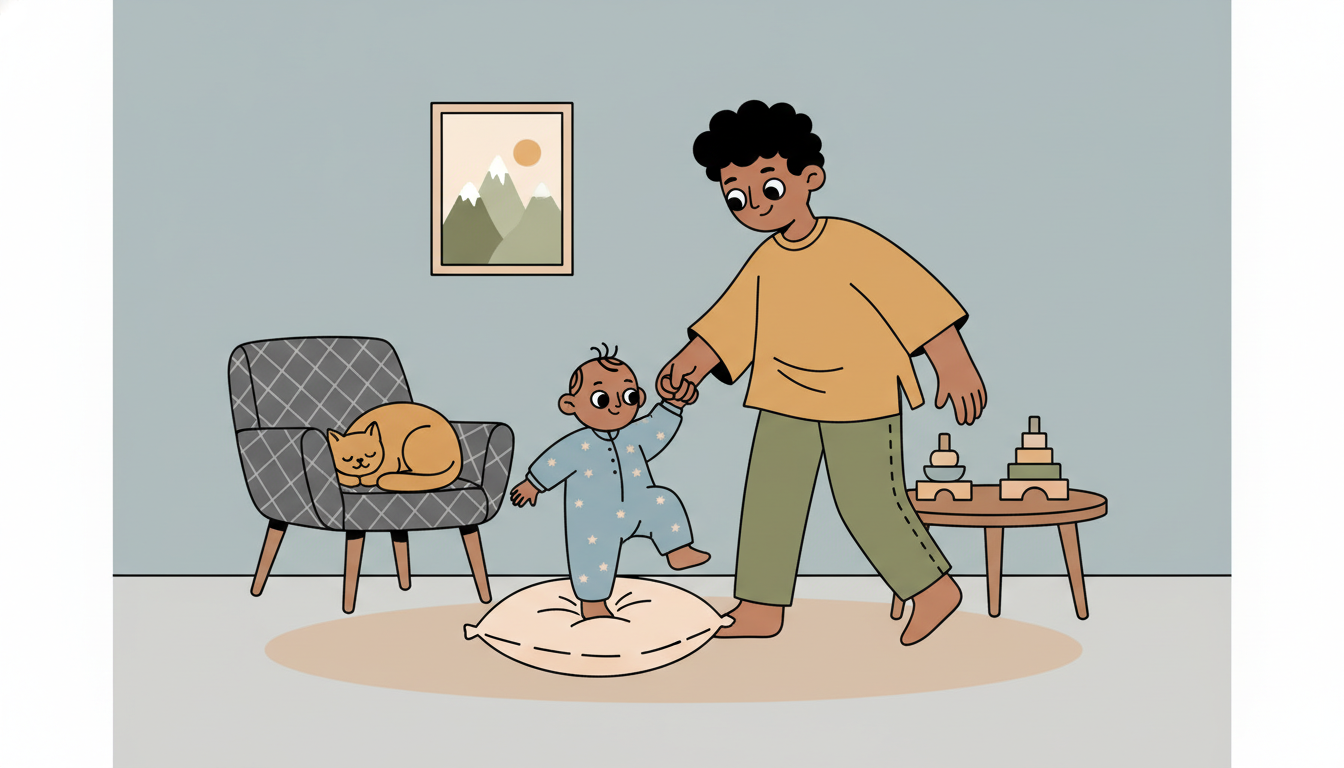
As your child walks around, place a soft pillow or cushion in their path. They'll need to navigate around it or step over it. Some attempts will be wobbly or require a second try. Say something like there's a pillow. How will you get past it. Then watch as they problem-solve, offering a hand for balance if needed.
Teil der Steadily-Entwicklungsreise — personalisiert für dein Kind.
So geht diese Aktivität
As your child walks around, place a soft pillow or cushion in their path. They'll need to navigate around it or step over it. Some attempts will be wobbly or require a second try. Say something like there's a pillow. How will you get past it. Then watch as they problem-solve, offering a hand for balance if needed.
Warum es funktioniert
Gross motor challenges that require problem-solving build both physical skills and resilience. When your child encounters an obstacle and figures out how to navigate it, they're learning that problems have solutions. Children achieving good outcomes despite challenges show better problem-solving skills and emotional regulation, demonstrating the long-term benefits of early resilience building (Martin & Marsh, 2006).
Tipps für Eltern
Use soft, safe obstacles that won't hurt if your child stumbles or falls on them.
Avoid telling your child how to navigate the obstacle. Let them experiment with going around, over, or moving it.
If your child falls or stumbles, stay calm. Say you fell down. Are you okay, and help them get up and try again if they want to.
Benötigte Materialien
Soft pillow or cushion
Lernmethoden
Hands-On ExplorationLanguage-Rich Environment

Hat dir diese Aktivität gefallen? Lass uns die Planung für dich übernehmen.
Steadily personalisiert jede Aktivität für dein Kind — seine Interessen, seine Entwicklungsstufe, die Eigenschaften, die es aufbaut — damit die Spielzeit mehr Spaß macht und jeder Moment zählt.
Erfahre, wie Steadily funktioniert →