Teddy needs care
2–3 JahreFamily ConnectionMaterialien: Stuffed animals or dolls
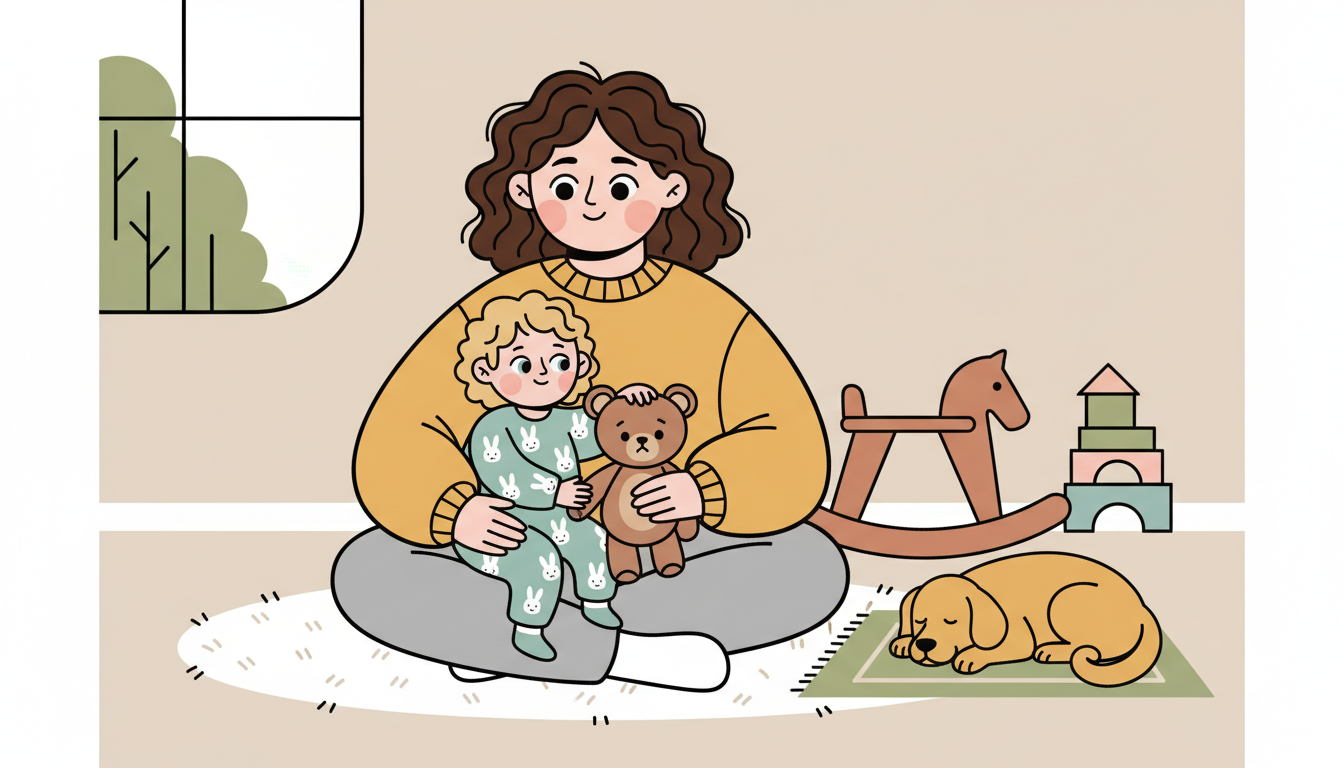
Give your child a stuffed animal or doll and suggest it might be tired, hungry, or sad. Encourage your child to care for it. You might say 'Bunny looks sad. What can we do?' Model gentle touches and soothing words. Let your child practice being kind and caring.
Teil der Steadily-Entwicklungsreise — personalisiert für dein Kind.
So geht diese Aktivität
Give your child a stuffed animal or doll and suggest it might be tired, hungry, or sad. Encourage your child to care for it. You might say 'Bunny looks sad. What can we do?' Model gentle touches and soothing words. Let your child practice being kind and caring.
Warum es funktioniert
Pretend play caring for dolls teaches children to respond compassionately to others' emotions, a key childhood behavior that predicts stronger adult empathy (Eisenberg, N., Spinrad, T. L., & Knafo-Noam, A., 2015). When parents show empathy and model caring responses, children learn to create safe spaces for emotional expression (Bhansali, B., 2023). Symbolic and pretend play is critical for emotional development at this age.
Tipps für Eltern
Keep it simple. Your child may just hug the toy, and that is enough.
Praise caring behaviors warmly. Say 'You are being so gentle. Bunny feels better now.'
Benötigte Materialien
Stuffed animals or dolls
Lernmethoden
Symbolic and Pretend PlaySongs, Stories, and RhymesSocial Learning Through Peers

Hat dir diese Aktivität gefallen? Lass uns die Planung für dich übernehmen.
Steadily personalisiert jede Aktivität für dein Kind — seine Interessen, seine Entwicklungsstufe, die Eigenschaften, die es aufbaut — damit die Spielzeit mehr Spaß macht und jeder Moment zählt.
Erfahre, wie Steadily funktioniert →