Someone is crying
2–3 JahreFamily ConnectionKeine Materialien erforderlich
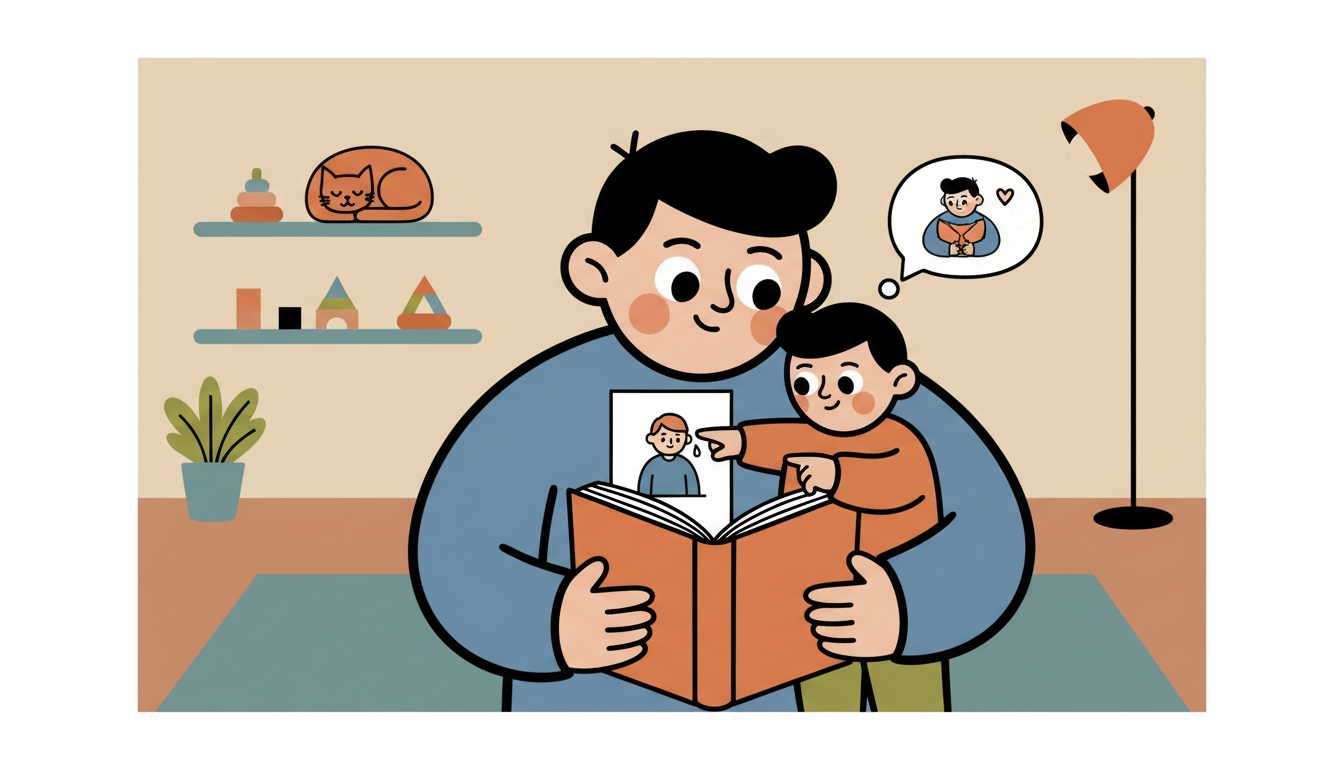
When you notice someone crying in a book, show, or in public, point it out gently. Say 'See, she is crying. She feels sad.' Ask your child 'What could help her feel better?' Suggest simple ideas like a hug or kind words. This teaches your child to notice and care about others' feelings.
Teil der Steadily-Entwicklungsreise — personalisiert für dein Kind.
So geht diese Aktivität
When you notice someone crying in a book, show, or in public, point it out gently. Say 'See, she is crying. She feels sad.' Ask your child 'What could help her feel better?' Suggest simple ideas like a hug or kind words. This teaches your child to notice and care about others' feelings.
Warum es funktioniert
Between 24 and 36 months, children are developing the ability to distinguish self from others and recognize that others have feelings. Pointing out others' emotions helps children move from egocentric thinking toward empathetic awareness (Hoffman, M. L., 2000). Research shows that recognizing and responding sensitively to others' emotions in childhood predicts stronger empathy in adulthood (Eisenberg, N., Spinrad, T. L., & Knafo-Noam, A., 2015).
Tipps für Eltern
Keep your tone calm and gentle. You are teaching awareness, not creating worry.
If your child suggests a way to help, praise the kind thinking even if the idea is not practical.
Benötigte Materialien
None
Lernmethoden
Symbolic and Pretend PlaySongs, Stories, and RhymesSocial Learning Through Peers

Hat dir diese Aktivität gefallen? Lass uns die Planung für dich übernehmen.
Steadily personalisiert jede Aktivität für dein Kind — seine Interessen, seine Entwicklungsstufe, die Eigenschaften, die es aufbaut — damit die Spielzeit mehr Spaß macht und jeder Moment zählt.
Erfahre, wie Steadily funktioniert →