Naming feelings together
1–2 JahreEmotional WellbeingKeine Materialien erforderlich
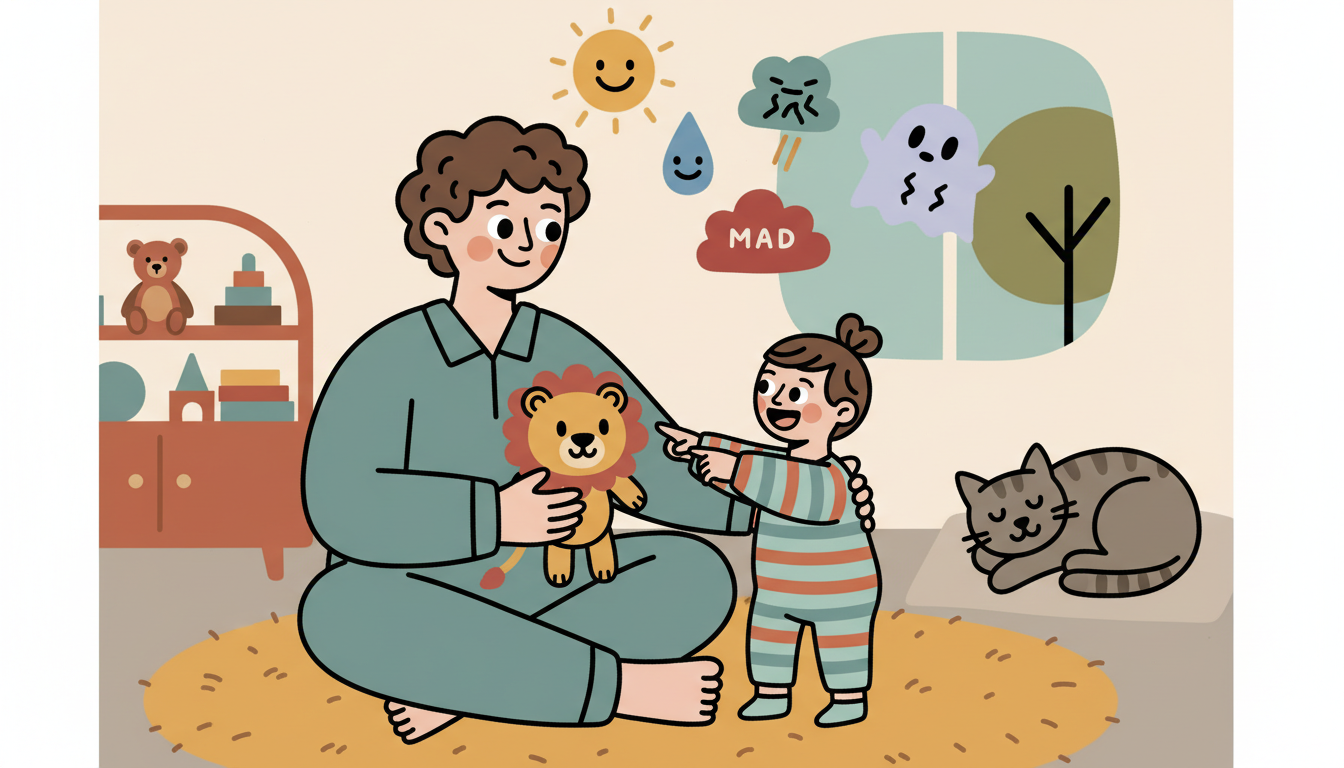
As you play with your child, label emotions as they happen. When your child laughs, say 'You're feeling happy.' When they seem frustrated with a toy, say 'You're feeling frustrated.' Use simple emotion words like happy, sad, mad, and scared. This helps your child connect words to their internal experiences.
Teil der Steadily-Entwicklungsreise — personalisiert für dein Kind.
So geht diese Aktivität
As you play with your child, label emotions as they happen. When your child laughs, say 'You're feeling happy.' When they seem frustrated with a toy, say 'You're feeling frustrated.' Use simple emotion words like happy, sad, mad, and scared. This helps your child connect words to their internal experiences.
Warum es funktioniert
Language development at this age enables explicit emotion labeling and discussion. When children learn to name their emotions, they develop better emotional recognition and expression skills that carry into adulthood (Goleman, 1995). This builds the foundation for self-awareness, a core component of emotional intelligence.
Tipps für Eltern
Keep it simple with one or two emotion words at a time.
Use a calm, matter-of-fact tone when naming emotions.
Label your own emotions too, like 'I'm feeling tired' or 'I'm feeling happy to see you.'
Benötigte Materialien
None
Lernmethoden
Language-Rich EnvironmentImitation and ModelingBeginning Symbolic Play

Hat dir diese Aktivität gefallen? Lass uns die Planung für dich übernehmen.
Steadily personalisiert jede Aktivität für dein Kind — seine Interessen, seine Entwicklungsstufe, die Eigenschaften, die es aufbaut — damit die Spielzeit mehr Spaß macht und jeder Moment zählt.
Erfahre, wie Steadily funktioniert →