Mirror feeling faces
2–3 JahreEmotional WellbeingMaterialien: Mirror
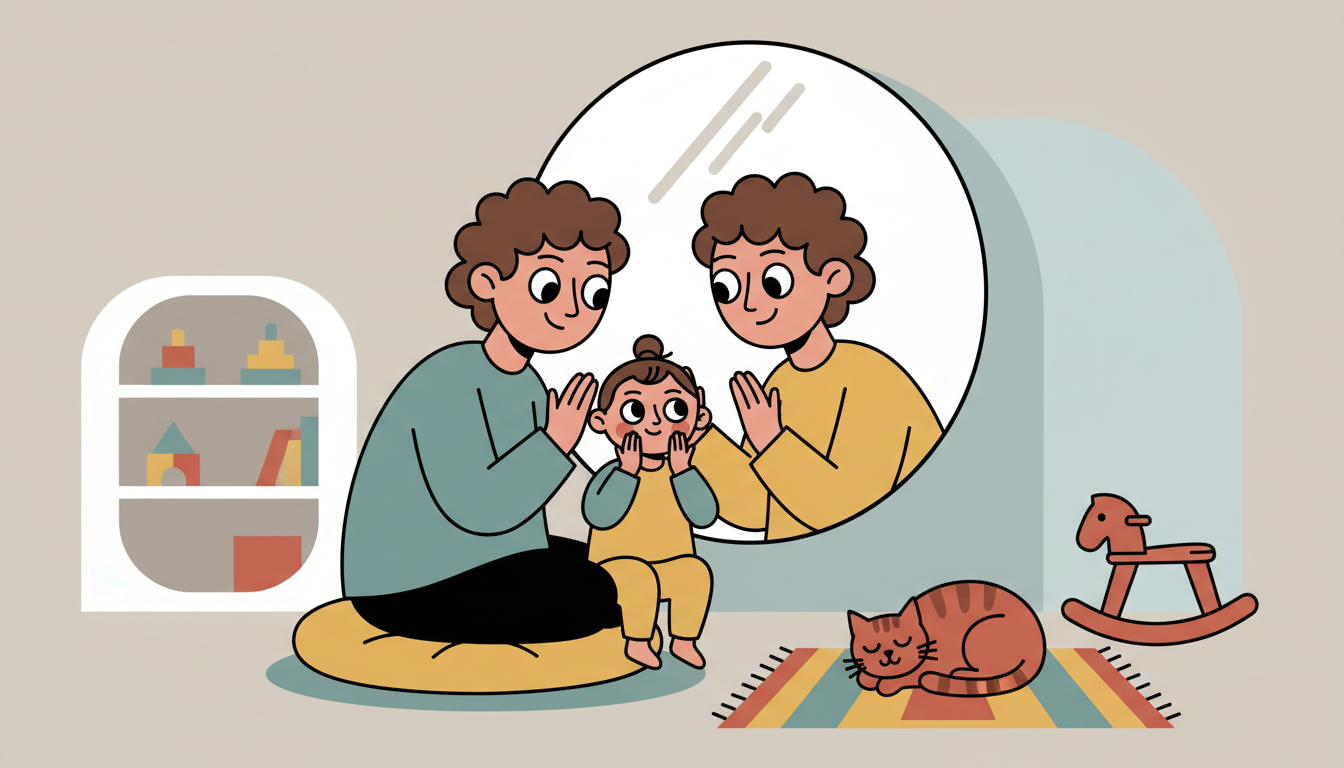
Sit with your child in front of a mirror and make different facial expressions together. Name each emotion as you make the face. Try happy, sad, surprised, angry, and silly faces.
Teil der Steadily-Entwicklungsreise — personalisiert für dein Kind.
So geht diese Aktivität
Sit with your child in front of a mirror and make different facial expressions together. Name each emotion as you make the face. Try happy, sad, surprised, angry, and silly faces.
This activity builds emotional vocabulary during natural play time. Your child learns to connect facial expressions with feeling words, which is the foundation of emotional recognition.
Warum es funktioniert
At this age, children are developing the language skills needed to label emotions for the first time. Research shows that children whose emotions were acknowledged and labeled by parents at age 2-3 showed significantly better emotional regulation and understanding at age 4-5 (Goleman, 1995). Making faces in the mirror helps children connect internal feelings with external expressions, building the foundation for emotional intelligence including self-awareness and empathy.
Tipps für Eltern
Start with your child's current mood and name it. Let them lead sometimes and guess what feeling they're showing.
If they resist making certain faces, that's okay. You can model the expression and simply say the word.
Benötigte Materialien
Mirror
Lernmethoden
Symbolic and Pretend PlaySongs, Stories, and RhymesSocial Learning Through Peers

Hat dir diese Aktivität gefallen? Lass uns die Planung für dich übernehmen.
Steadily personalisiert jede Aktivität für dein Kind — seine Interessen, seine Entwicklungsstufe, die Eigenschaften, die es aufbaut — damit die Spielzeit mehr Spaß macht und jeder Moment zählt.
Erfahre, wie Steadily funktioniert →