How do you feel today
2–3 JahreFamily ConnectionKeine Materialien erforderlich
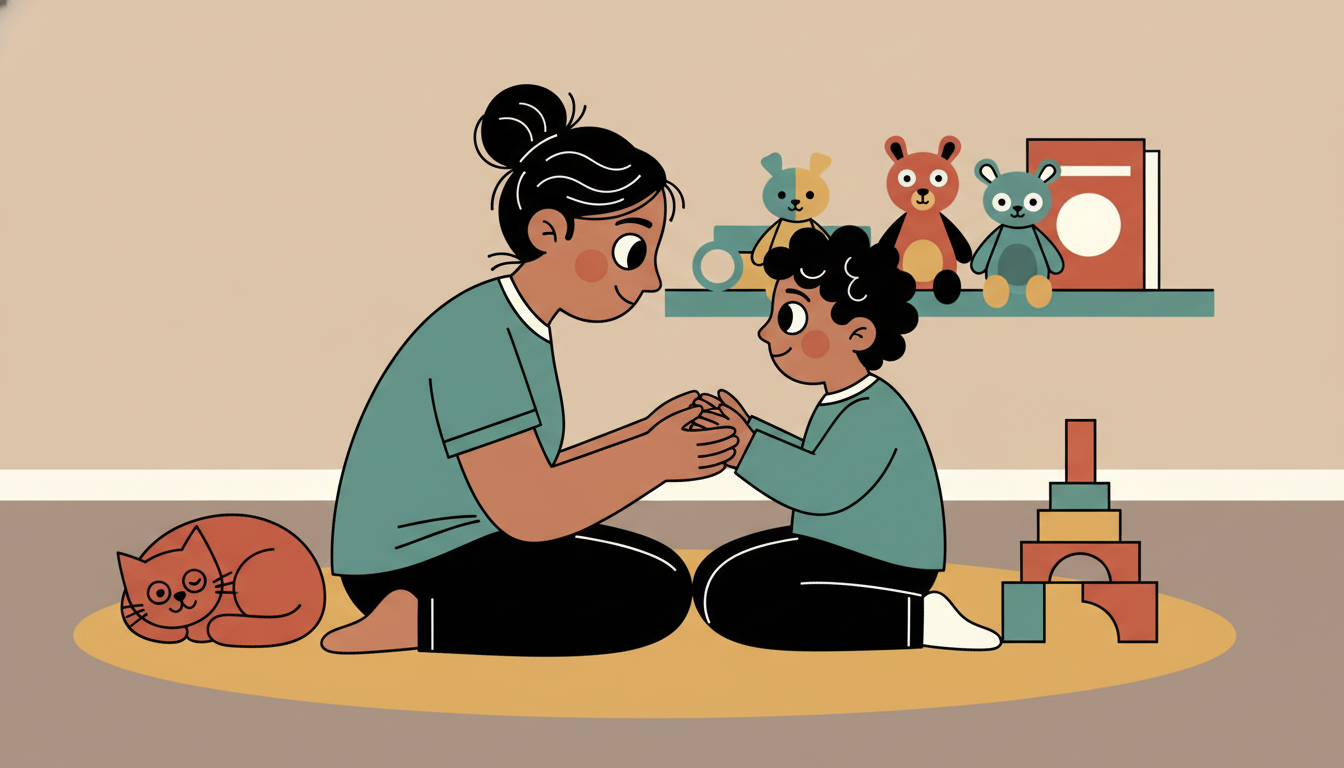
During a quiet moment together, talk about feelings. You might start with 'I feel happy today because we are playing together.' Then ask 'How do you feel?' Accept whatever your child says. Name the feeling and connect it to something specific, like 'You feel excited about the park.'
Teil der Steadily-Entwicklungsreise — personalisiert für dein Kind.
So geht diese Aktivität
During a quiet moment together, talk about feelings. You might start with 'I feel happy today because we are playing together.' Then ask 'How do you feel?' Accept whatever your child says. Name the feeling and connect it to something specific, like 'You feel excited about the park.'
Warum es funktioniert
Labeling emotions in self and others builds the foundation for empathy. When parents model empathy and validate children's emotional experiences, children develop better social competence and fewer behavioral problems (Liu, S., Wang, L., Zhang, L., & Tian, L., 2020). Children at this age are beginning to develop language for emotions, making this the ideal time to practice emotional vocabulary together.
Tipps für Eltern
Use simple feeling words. Happy, sad, mad, and scared are good starting points.
Share your own feelings first. This models emotional awareness and makes it safe for your child to share.
Benötigte Materialien
None
Lernmethoden
Symbolic and Pretend PlaySongs, Stories, and RhymesSocial Learning Through Peers

Hat dir diese Aktivität gefallen? Lass uns die Planung für dich übernehmen.
Steadily personalisiert jede Aktivität für dein Kind — seine Interessen, seine Entwicklungsstufe, die Eigenschaften, die es aufbaut — damit die Spielzeit mehr Spaß macht und jeder Moment zählt.
Erfahre, wie Steadily funktioniert →