Giving hugs for help
1–2 JahreEmotional WellbeingKeine Materialien erforderlich
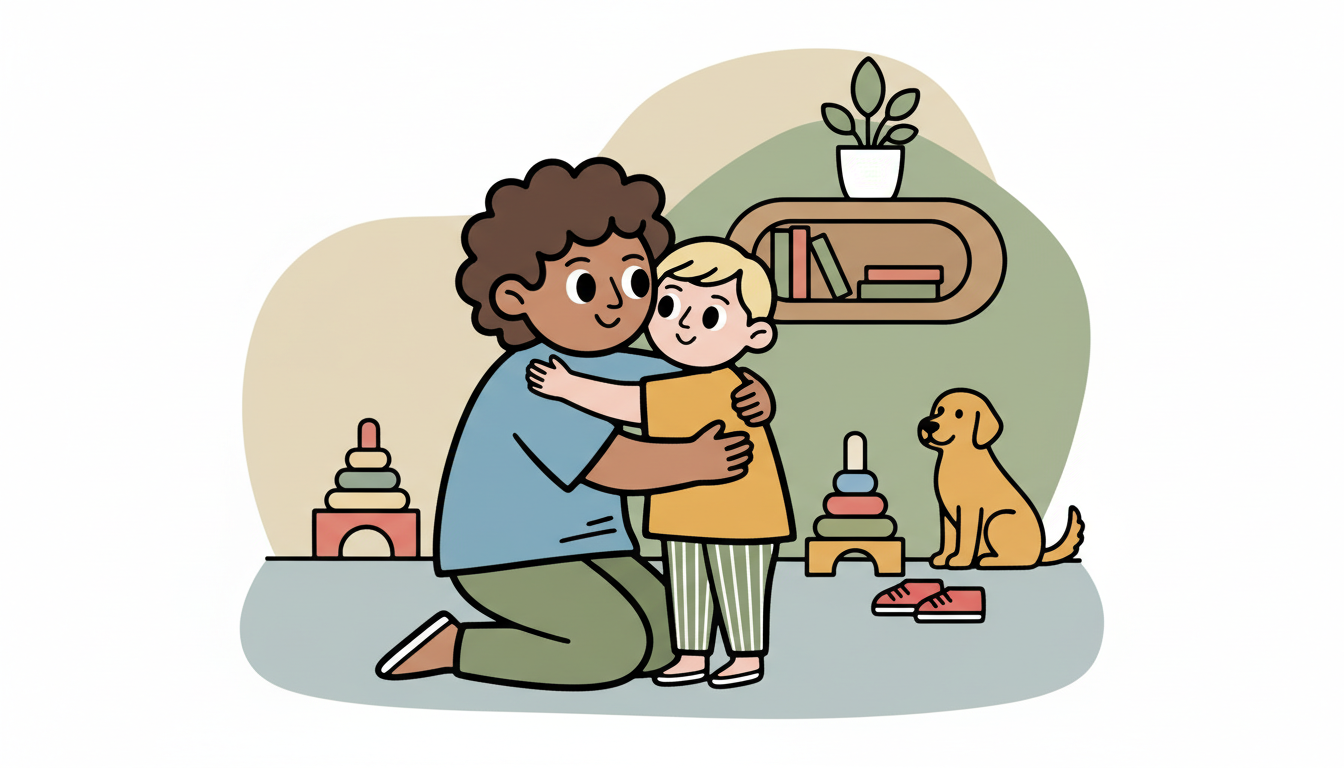
When someone helps your child with something like putting on shoes or cleaning up toys, suggest a thank you hug. Model by giving a hug yourself, then encourage your child to do the same. This physical expression of thanks feels natural for toddlers. It connects appreciation with warm, positive feelings and strengthens relationships through affection.
Teil der Steadily-Entwicklungsreise — personalisiert für dein Kind.
So geht diese Aktivität
When someone helps your child with something like putting on shoes or cleaning up toys, suggest a thank you hug. Model by giving a hug yourself, then encourage your child to do the same. This physical expression of thanks feels natural for toddlers. It connects appreciation with warm, positive feelings and strengthens relationships through affection.
Warum es funktioniert
Physical expressions of gratitude match the developmental stage where toddlers are learning non-verbal communication. Showing appreciation through hugs reinforces positive relationships and creates emotional connections to thankfulness. Research shows that childhood gratitude habits developed through regular acknowledgment predict adult gratitude practices, which are linked to 15% greater life satisfaction and reduced stress (Emmons & McCullough, 2003).
Tipps für Eltern
Always ask if the other person wants a hug before encouraging your child.
Model gentle, brief hugs so your child learns appropriate touch.
Praise your child when they show appreciation in any way.
Benötigte Materialien
None
Lernmethoden
Language-Rich EnvironmentImitation and Modeling

Hat dir diese Aktivität gefallen? Lass uns die Planung für dich übernehmen.
Steadily personalisiert jede Aktivität für dein Kind — seine Interessen, seine Entwicklungsstufe, die Eigenschaften, die es aufbaut — damit die Spielzeit mehr Spaß macht und jeder Moment zählt.
Erfahre, wie Steadily funktioniert →