Feelings in picture books
1–2 JahreEmotional WellbeingMaterialien: Picture books with expressive characters
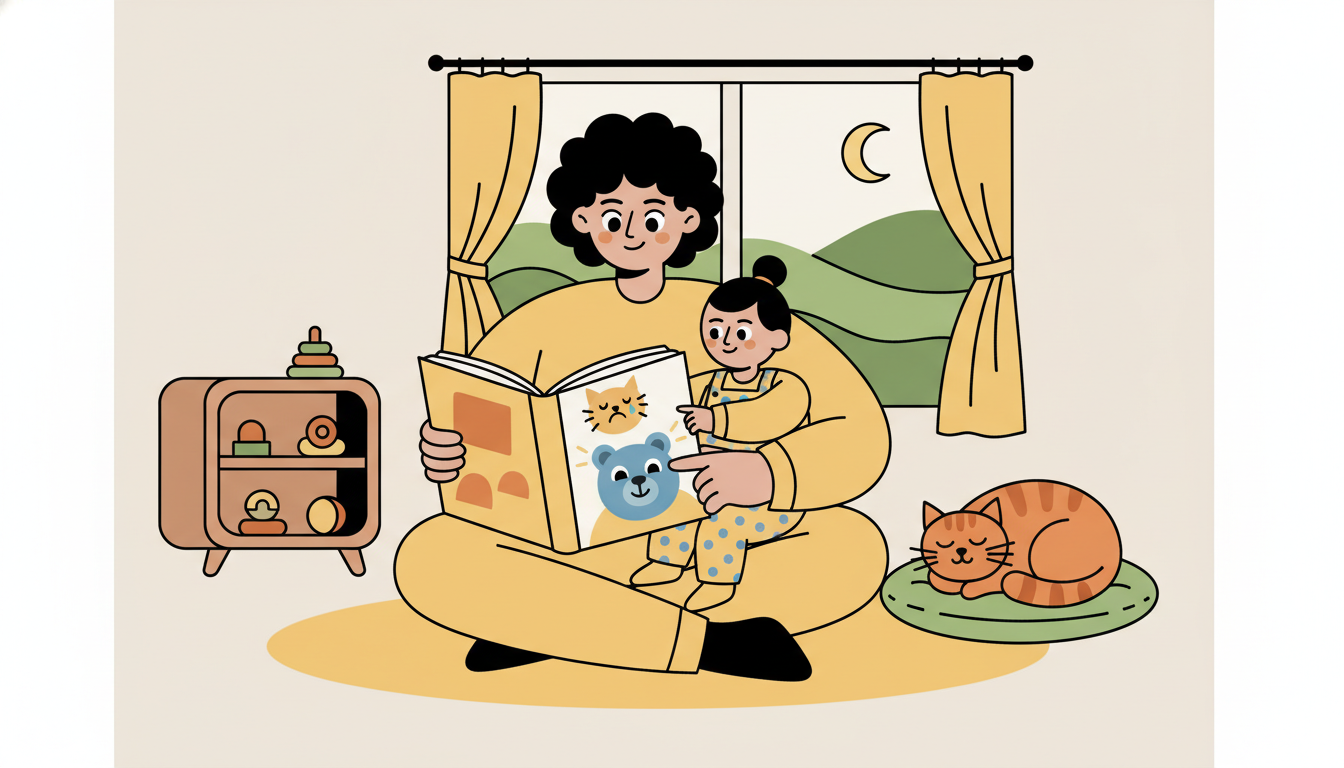
During reading time, point to characters' faces and name their emotions. Ask simple questions like 'Is the bear happy or sad?' Let your child point to the faces. You can use the same book many times, focusing on different emotions each time. This builds emotional vocabulary naturally during a routine you already do.
Teil der Steadily-Entwicklungsreise — personalisiert für dein Kind.
So geht diese Aktivität
During reading time, point to characters' faces and name their emotions. Ask simple questions like 'Is the bear happy or sad?' Let your child point to the faces. You can use the same book many times, focusing on different emotions each time. This builds emotional vocabulary naturally during a routine you already do.
Warum es funktioniert
Reading about feelings in a language-rich environment supports the vocabulary explosion happening at this age. Research shows that emotional intelligence development in early childhood leads to better emotional recognition and expression skills in adulthood, with improved concentration and study habits (Goleman, 1995). Books provide safe scenarios to explore emotions.
Tipps für Eltern
Choose books with clear, expressive illustrations of faces.
Pause to let your child look at and process the pictures.
Connect the character's emotions to your child's experiences, like 'The rabbit is sad, just like when you dropped your toy.'
Benötigte Materialien
Picture books with expressive characters
Lernmethoden
Language-Rich EnvironmentImitation and ModelingBeginning Symbolic Play

Hat dir diese Aktivität gefallen? Lass uns die Planung für dich übernehmen.
Steadily personalisiert jede Aktivität für dein Kind — seine Interessen, seine Entwicklungsstufe, die Eigenschaften, die es aufbaut — damit die Spielzeit mehr Spaß macht und jeder Moment zählt.
Erfahre, wie Steadily funktioniert →