Emotional storytelling with toys
1–2 JahreEmotional WellbeingMaterialien: Stuffed animals or dolls your child already has
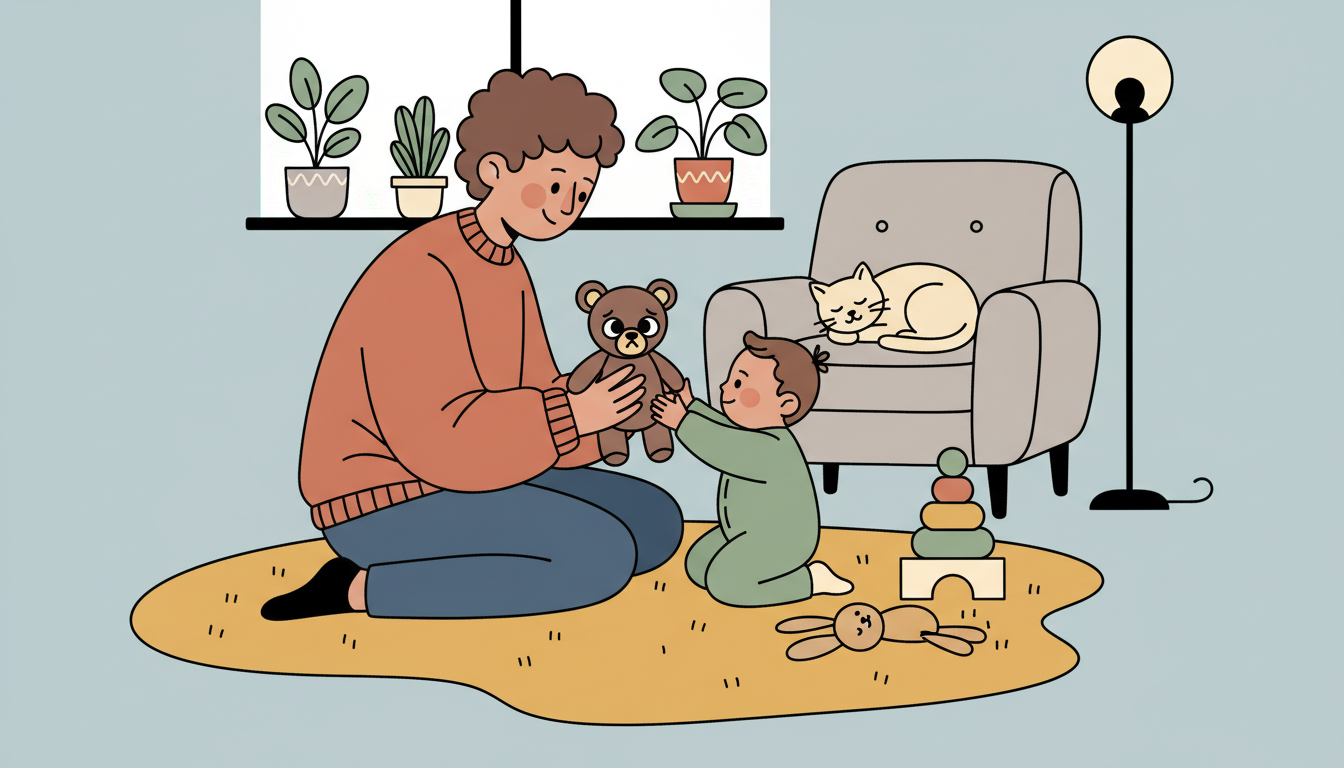
During play time, use your child's toys to act out simple emotional scenarios. Make a stuffed bear sad because it lost its toy, then help it feel better. Use simple language like 'Bear is sad. Bear needs a hug.' Invite your child to help comfort the toy. This uses symbolic play to explore feelings safely.
Teil der Steadily-Entwicklungsreise — personalisiert für dein Kind.
So geht diese Aktivität
During play time, use your child's toys to act out simple emotional scenarios. Make a stuffed bear sad because it lost its toy, then help it feel better. Use simple language like 'Bear is sad. Bear needs a hug.' Invite your child to help comfort the toy. This uses symbolic play to explore feelings safely.
Warum es funktioniert
Beginning symbolic play at this age allows children to explore emotional scenarios safely. This builds both emotional understanding and empathy as children practice helping others feel better. Children with higher emotional intelligence show significantly better relationship satisfaction and job performance in adulthood (Bar-On, 2006). Pretend play supports emotional skill development.
Tipps für Eltern
Keep scenarios very simple with clear emotions and resolutions.
Let your child lead sometimes and respond to their play ideas.
End scenarios positively to show that emotions pass and problems can be solved.
Benötigte Materialien
Stuffed animals or dolls your child already has
Lernmethoden
Language-Rich EnvironmentImitation and ModelingBeginning Symbolic Play

Hat dir diese Aktivität gefallen? Lass uns die Planung für dich übernehmen.
Steadily personalisiert jede Aktivität für dein Kind — seine Interessen, seine Entwicklungsstufe, die Eigenschaften, die es aufbaut — damit die Spielzeit mehr Spaß macht und jeder Moment zählt.
Erfahre, wie Steadily funktioniert →