Sitting challenge support
6–12 MonateSuccess MindsetKeine Materialien erforderlich
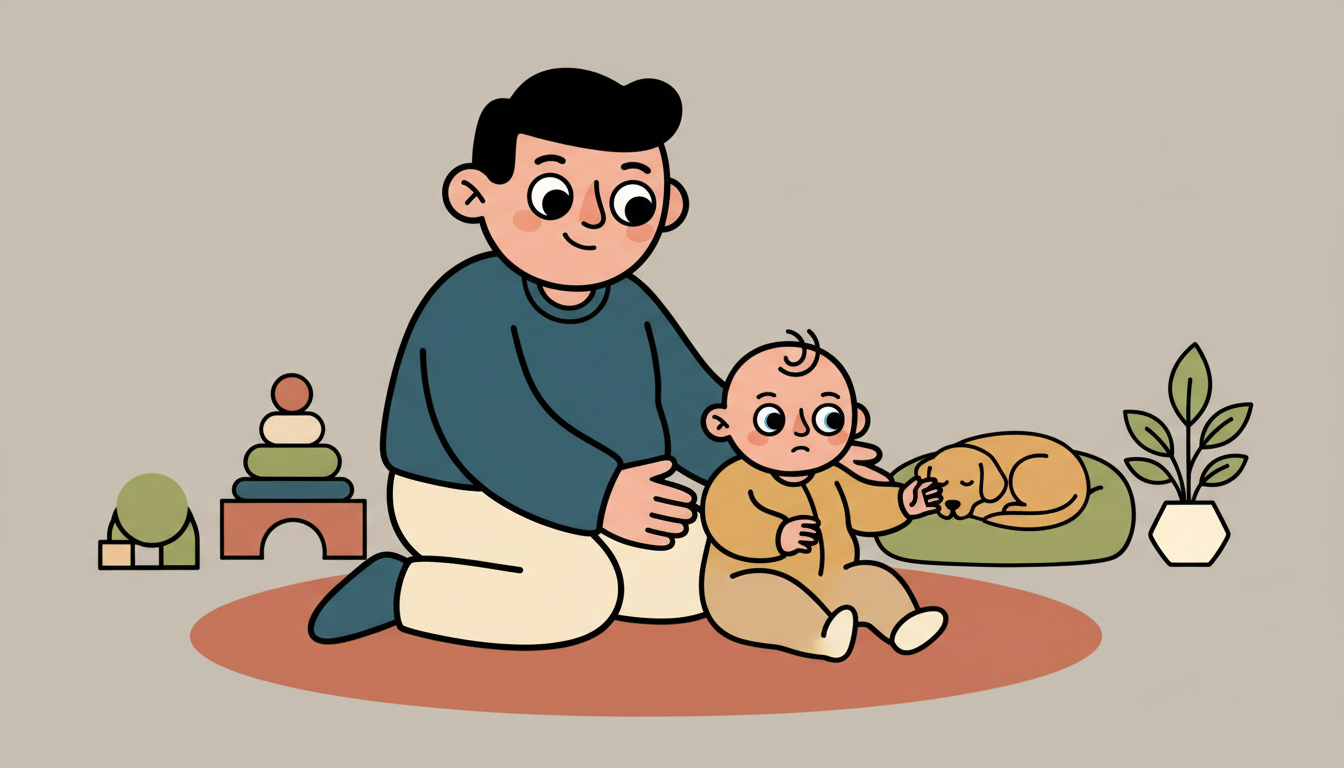
As your child practices sitting independently, stay close but let them balance on their own. When they wobble or tip, describe what's happening: 'You're working to stay up' or 'Your body is learning to balance.' Offer support only when needed. Each time they try again after tipping, acknowledge their persistence with simple words.
Teil der Steadily-Entwicklungsreise — personalisiert für dein Kind.
So geht diese Aktivität
As your child practices sitting independently, stay close but let them balance on their own. When they wobble or tip, describe what's happening: 'You're working to stay up' or 'Your body is learning to balance.' Offer support only when needed. Each time they try again after tipping, acknowledge their persistence with simple words.
Warum es funktioniert
Learning to sit requires repeated attempts and frequent failures. By staying present but not rescuing immediately, you teach your child that setbacks are normal and that trying again is valued. Students with growth mindset show 30 to 40 percent greater likelihood of completing challenging tasks compared to fixed mindset peers (Duckworth, A. L., Peterson, C., Matthews, M. D., & Kelly, D. R., 2007). This persistence begins in infancy when caregivers respond to struggles with calm support rather than immediate solutions.
Tipps für Eltern
Sit nearby with hands ready but not hovering. Give them space to problem-solve their balance.
Keep sessions short. Two to three minutes is enough for this age.
Benötigte Materialien
None
Lernmethoden
Responsive InteractionMovement-Based Learning

Hat dir diese Aktivität gefallen? Lass uns die Planung für dich übernehmen.
Steadily personalisiert jede Aktivität für dein Kind — seine Interessen, seine Entwicklungsstufe, die Eigenschaften, die es aufbaut — damit die Spielzeit mehr Spaß macht und jeder Moment zählt.
Erfahre, wie Steadily funktioniert →