Respond to their signals
6–12 MonateFamily ConnectionKeine Materialien erforderlich
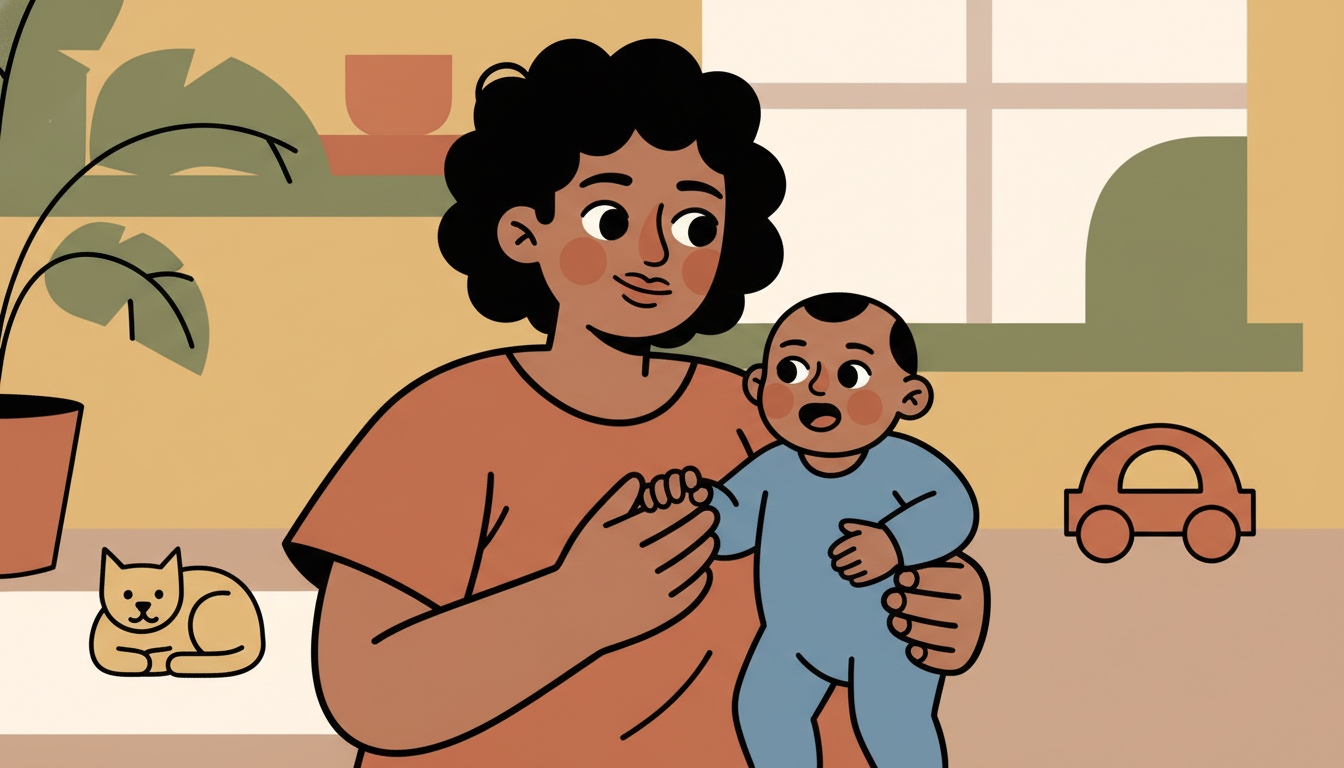
Pay attention to your child's sounds, gestures, and facial expressions. When they reach for you, respond by moving closer. When they coo or babble, answer back with words or sounds. When they look away or seem fussy, give them space. This back-and-forth communication shows your child that their signals matter and that you respect their needs.
Teil der Steadily-Entwicklungsreise — personalisiert für dein Kind.
So geht diese Aktivität
Pay attention to your child's sounds, gestures, and facial expressions. When they reach for you, respond by moving closer. When they coo or babble, answer back with words or sounds. When they look away or seem fussy, give them space. This back-and-forth communication shows your child that their signals matter and that you respect their needs.
Warum es funktioniert
Responsive interaction creates trust through back-and-forth exchanges that build neural connections. When you respect and respond to your child's signals, they develop trust in relationships and in their own ability to communicate. Reciprocal trust and respect established early predict lower rates of parent-child conflict and better cooperation during challenging developmental periods (Collins & Steinberg, 2006).
Tipps für Eltern
Watch for your child's cues before acting. If they're reaching toward a toy, you might hand it to them and say, "You wanted this toy."
It's normal to sometimes misread signals. If your child seems upset by your response, try something different. This teaches them that communication is a two-way process.
Benötigte Materialien
None
Lernmethoden
Responsive InteractionRepetition and Routine

Hat dir diese Aktivität gefallen? Lass uns die Planung für dich übernehmen.
Steadily personalisiert jede Aktivität für dein Kind — seine Interessen, seine Entwicklungsstufe, die Eigenschaften, die es aufbaut — damit die Spielzeit mehr Spaß macht und jeder Moment zählt.
Erfahre, wie Steadily funktioniert →