Pause before responding
6–12 MonateSuccess MindsetKeine Materialien erforderlich
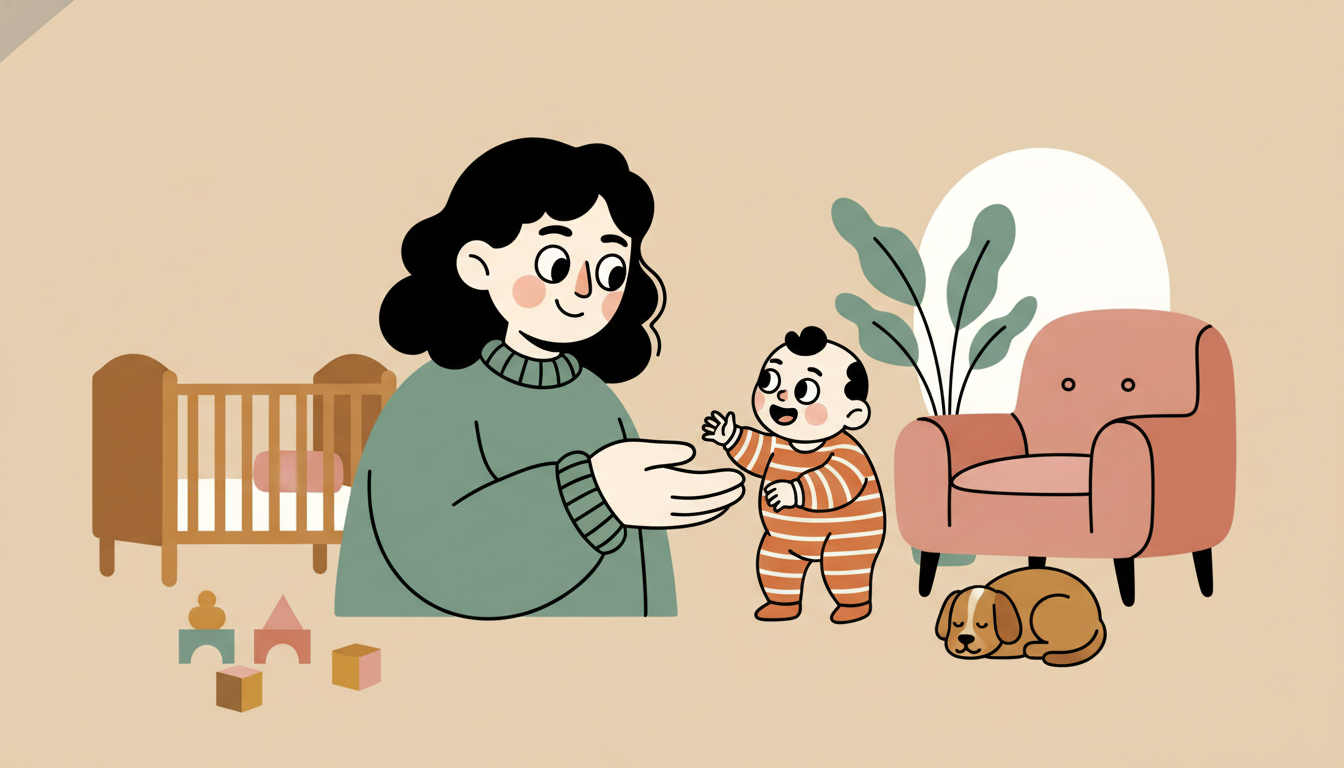
When your child babbles or makes sounds to get your attention, make eye contact and smile, then wait two to three seconds before responding with words or actions. This brief pause is not ignoring but rather giving your child a moment to experience anticipation. It teaches that communication involves brief waiting periods and turn-taking.
Teil der Steadily-Entwicklungsreise — personalisiert für dein Kind.
So geht diese Aktivität
When your child babbles or makes sounds to get your attention, make eye contact and smile, then wait two to three seconds before responding with words or actions. This brief pause is not ignoring but rather giving your child a moment to experience anticipation. It teaches that communication involves brief waiting periods and turn-taking.
Warum es funktioniert
Responsive interaction with appropriate pauses builds neural connections that support self-regulation and executive function. These serve-and-return exchanges are crucial for brain development. Research shows that self-regulation capacities developed early in life predict later academic achievement and success across multiple domains (Blair, C., & Diamond, A., 2008).
Tipps für Eltern
Keep your expression warm and engaged during the pause so your child knows you heard them.
Start with very short pauses and lengthen gradually over weeks.
Respond consistently after the pause so your child learns to trust the pattern.
Benötigte Materialien
None
Lernmethoden
Repetition and RoutineResponsive Interaction

Hat dir diese Aktivität gefallen? Lass uns die Planung für dich übernehmen.
Steadily personalisiert jede Aktivität für dein Kind — seine Interessen, seine Entwicklungsstufe, die Eigenschaften, die es aufbaut — damit die Spielzeit mehr Spaß macht und jeder Moment zählt.
Erfahre, wie Steadily funktioniert →