The feelings faces practice
3–4 سنواتFamily Connectionالمواد: Paper and crayons or markers
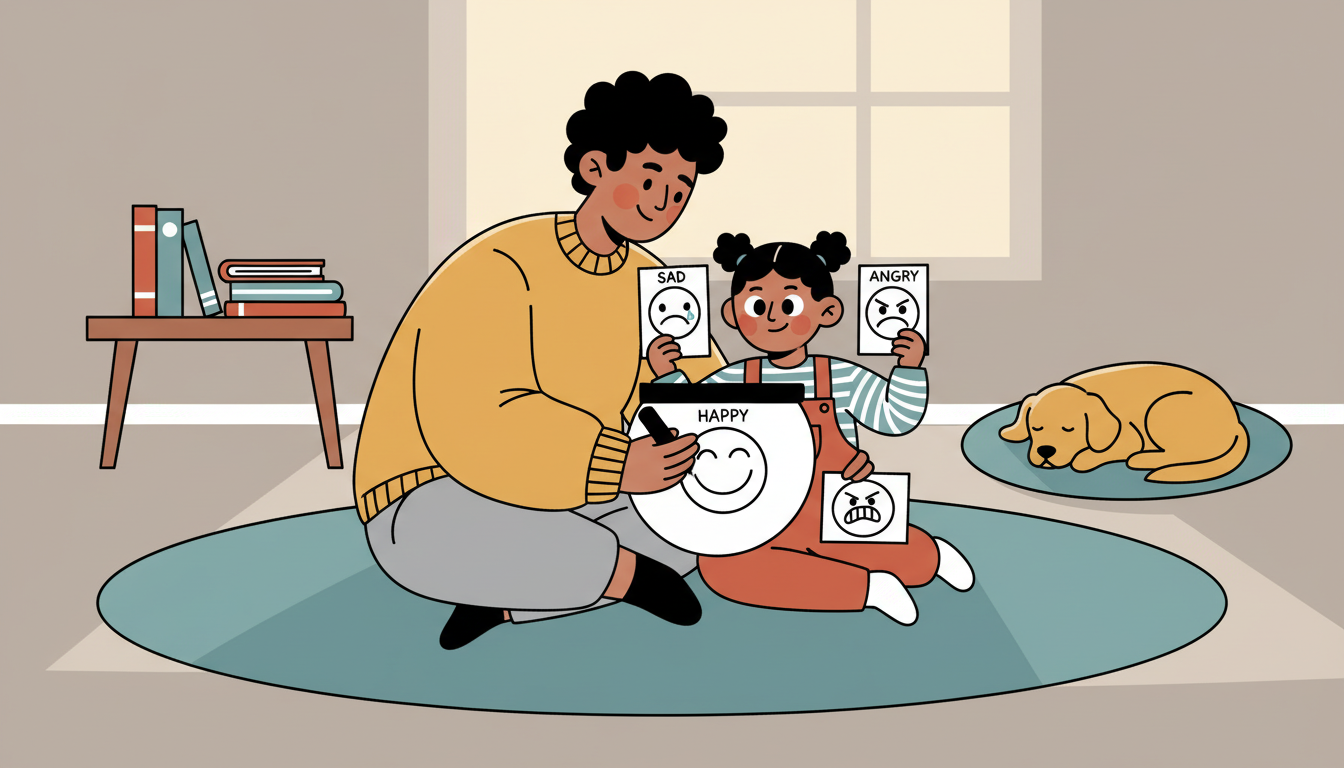
Make simple drawings of faces showing different emotions: happy, sad, angry, frustrated. When conflicts happen, ask your child to point to how they feel. Then you point to how you feel. This helps them understand that both people have feelings in a disagreement. Talk about how to make the sad or angry faces turn into happy faces together.
جزء من رحلة Steadily التطورية — مخصصة لطفلك.
كيفية القيام بهذا النشاط
Make simple drawings of faces showing different emotions: happy, sad, angry, frustrated. When conflicts happen, ask your child to point to how they feel. Then you point to how you feel. This helps them understand that both people have feelings in a disagreement. Talk about how to make the sad or angry faces turn into happy faces together.
لماذا هذا فعال
Understanding emotions is essential for effective conflict resolution. Children who learn to identify and express feelings show 30% better emotional regulation (Shantz, 1987). At this age, children are developing theory of mind and can begin to understand that others have different feelings. The visual faces make abstract emotions concrete and easier to discuss.
نصائح للوالدين
Keep the face drawings simple. Even basic circles with different mouths work well.
Use the faces during small, everyday conflicts to build the habit.
Validate whatever feeling your child identifies. All feelings are okay, even if the behavior needs to change.
المواد المطلوبة
Paper and crayons or markers
طرق التعلم
Collaborative and Cooperative PlayNarrative and Literacy-Rich ExperiencesStructured Learning Activities

هل أعجبك هذا النشاط؟ دعنا نتولى التخطيط بالنيابة عنك.
يضفي Steadily طابعاً شخصياً على كل نشاط ليناسب طفلك - اهتماماته، ومرحلته العمرية، والسمات التي يبنيها - ليكون وقت اللعب أكثر متعة وتكون لكل لحظة قيمتها.
تعرّف على كيفية عمل Steadily ←